Doesn’t every child bite their nails? Did you? I definitely did.
Nail biting may seem like a harmless habit, but it can take a toll on a child’s teeth. Frequent nail biting can increase the risk of chipped teeth, irritated gums, and even introduce extra bacteria into their mouth.
If you’re working on breaking the habit, there are a few things you can do to help combat the nail biting.
Here’s what I want you to know.
When Does Nail Biting Start?
Nail biting begins during childhood, increases during adolescence, and declines as children get older. Although for some this may continue into adulthood.
This Is My Favorite Nail To BiteI’ve Bitten My Nails For Forever
Why Do Children Bite Their Nails?
It’s important to understand their Why!
Nail biting can be a sign of:
Stress relief,
Nervous about difficult situations or tasks,
Need to put something in their mouth,
Boredom.
Hiding My NailsTrying To Hide Biting My Nails
How To Help Stop Nail Biting
Tips for you to help your child stop nail biting:
Keep hands busy with activities, fidget toys or games like puzzles;
Gently remind in a kind way,
Come up with a code word as a reminder so as not to draw attention to the child,
Try to identify the reason and in what situations the behavior occurs,
Take weekly pictures of their nail growth to show their progress,
Take care of their nails to keep them looking nice,
Look up videos about the germs under the nails,
Reward positive changes.
No More Nail Biting For MeGetting My Nails Done Like Mommy
What I Want You To Know
If you’ve noticed your child biting their nails, you’re not alone. Nail-biting is something so many children (and parents) deal with.
This isn’t something you have to fix overnight. This isn’t something you’ll change overnight. What’s most important is helping your child feel seen, heard, supported, empowered; and definitely not judged.
I’m Biting My Nails
Anyone in the family bite their nails? Have they stopped? How long did it take? What did they do to stop their nail biting? What do you wish you knew sooner? If you’ve found something that helped your child stop biting their nails, Tell us, We’d really like to know! Send us an email at kidstoothhotline@proton.me Like Us on Facebook
More tips? We have lots. We’re here just for kids!
I Feel So Much Better Knowing What To Do For Both Of Your Teeth
In the Know for You to Know
Whether you’re a new mom or a mom of a teen, there’s always something new to learn. This is especially true when navigating your child’s dental health.
Who knew teeth were so complicated?
Did you know? I for sure didn’t know this before dental school.
So I’ve put together some “Did you know?” tips to help guide you through your child’s dental milestones.
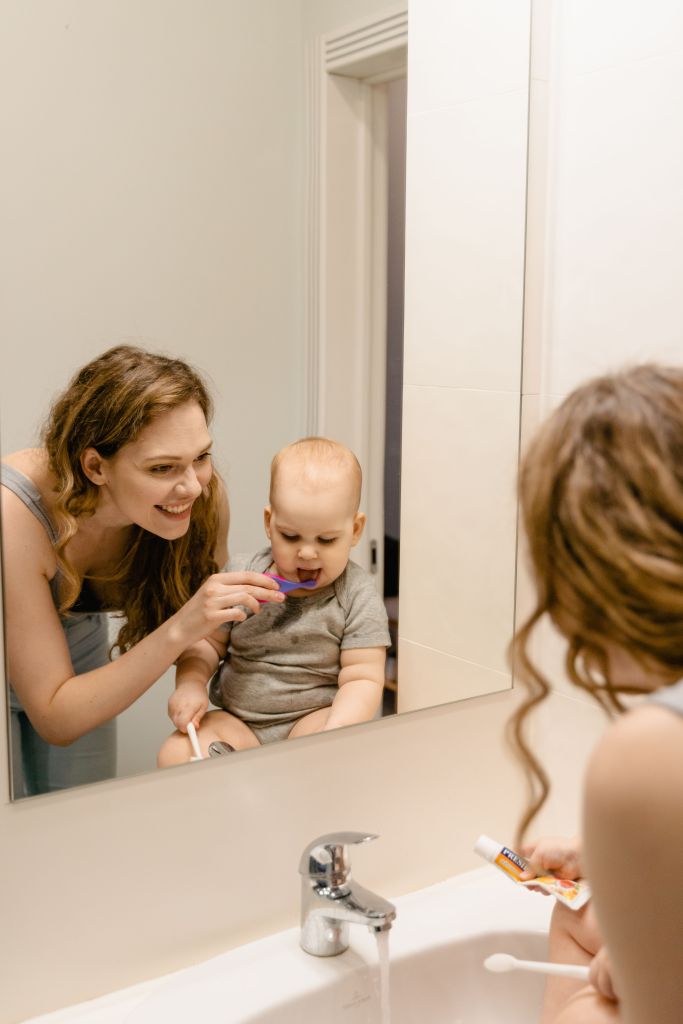
Did You Know you should lift your baby’s lips when you’re cleaning their front teeth?
Lifting your baby’s lips does 2 things:
You’re cleaning their teeth more effectively,
You can see changes in color, lines or spots on your child’s teeth; which can be signs of potential problems.
Did You Know that flossing is equally important as tooth brushing?
Honestly not many adults enjoy flossing. But it really is essential for healthy teeth and gums. Start flossing your child’s teeth when they’re young and you’ll create a life long healthy habit for them.
We Didn’t Know And Now We DoNow Grandma Knows Too
Did You Know sippy cups aren’t the best for your child’s teeth?
Why? 2 reasons:
Sippy cups allow teeth to constantly be in contact with sugars and acids in drinks, especially those found in fruit juices and milk. This prolonged exposure can lead to tooth decay.
They can cause oral development and speech pattern issues if the cup is used to long. Prolonged use of sippy cups can cause improper tongue tip development, which is crucial for speech development.
Did You Know I have a few favorite questions I’m always happy to have parents ask me?
My favorite is, “What should we be doing next?” I love being asked this so we can discuss for example their child’s dental milestones, or how teeth affect speech development.
Parenting is hard, so being present and helpful is extra important when a parent can actually find a little time to plan ahead.
Did You Know how much breakfast matters?
Toddler to teenager, start your child’s day off with a delicious healthy breakfast. Did you know this limits their cravings for sweets later in the day?
On Our Way To The Pediatric DentistI Want To Know Everything I Can To Protect Her Teeth
Did You Know there are 5 possible causes why a child’s teeth can be sensitive?
The most common causes of tooth sensitivity are:
Permanent tooth coming into their mouth,
Chipped or cracked tooth,
Brushing to hard which can lead to tooth enamel wearing away and the gums moving away,
Cavity,
Sinus concerns can cause their top teeth to be sensitive.
Did You Know that medicines can have added sugars and some medicines cause dry mouth?
Your child still needs to take their medicine. It’s important to know this puts them at risk for tooth decay.
This is because:
Sugar is added to some medicines to make them taste better,
Medicines used to treat cerebral palsy, seizures and mental health challenges and conditions can cause dry mouth by lowering the amount of saliva in the mouth,
Saliva plays an important role in preventing tooth decay,
Medicines given to children who have asthma or allergies can also cause dry mouth.
Did You Know not all adolescents and young adults have their wisdom teeth removed?
That’s right, some have the space in their mouth for these teeth to come in fully. These teeth still need to be monitored just like their other teeth. Tooth brushing and flossing around wisdom teeth is important because the potential for cavities still exists in the same way as for their other teeth.
We’re All About Teenage TeethThanks Mom For Helping Me With My Hair, Can You Help Me With My Teeth?
Did You Know about the Tell-Show-Do technique?
The Tell-Show-Do technique is a step by step approach in pediatric dentistry which helps alleviate anxiety, builds trust, and allows children to feel more involved and informed during their dental appointments.
How does this work? Before performing any procedure, your dentist explains the purpose of their visit to your child, shows them the instruments (and allows them to touch) , and then proceeds with the treatment.
This approach is a great way to make children of all ages, toddlers to teens to young adults feel more at ease and comfortable at the dentist.
So Many Stages, So Much To Know About Teeth
As a parent I understand, parenting is hard. What’s frustrating as a parent is that you don’t know until you know. So rest assured, no question is silly and no question is too small or too big. Did you know? It’s always okay to ask.
Learning About Teeth For 2
What pediatric dental question have you been wanting to ask? Has anyone explained to you what to expect for your child’s dental growth over the next 6 months? If you don’t have a pediatric dentist, do you know where to find one for your child? Tell us, We’d really like to know! Send us an email at kidstoothhotline@proton.me Like Us on Facebook
We Still Have A Lot To Learn About Our Teeth
More tips? We have lots. We’re here just for kids!
Baby teeth play a vital role in your child’s dental health. They allow them to eat the healthy foods that help their bodies to grow and thrive, they’re essential to speech development, and they hold space for their adult teeth to grow into.
However, there are times when baby teeth don’t last as long as we’d all like them to; which is why a space maintainer is needed.
The purpose of a space maintainer is to hold the space of the missing tooth. It helps to ensure that the permanent tooth has the necessary space to come into when it’s time and hopefully limits the need for orthodontic treatment in the future.
Understanding why a space maintainer is important for your child’s needs is one thing. Knowing what to do you do once your child’s space maintainer is placed in their mouth is entirely different.
So, What do you do? How will they adjust to their space maintainer? How do you properly maintain it everyday? Let’s get started together.
Adjusting To A Space Maintainer
Just like their new sneakers, adjusting to having a space maintainer in their mouth can be tough for children, and parents also.
I’ve put together these 5 tips to help your child get used to their new space maintainer:
Be encouraging and supportive – Now that your child has a space maintainer it becomes part of your normal everyday. And, if you had one yourself, explain to your child how normal it is, and how your smile benefitted from having a space maintainer.
Practice smiling and talking – At first, your child’s space maintainer can feel strange in their mouth. This can cause them to speak or smile a little differently until they get used to it. To help, we recommend they practice smiling and talking in front of a mirror. This way, they can see that their new space maintainer isn’t visible, and only shows if they want it to. You can also have your child get used to talking by reading a story out loud to you, to their younger siblings or cousins. The more they practice talking, the more their tongue will become accustomed to their new space maintainer.
Start with soft foods – The first few days after getting a space maintainer can be rough. Your child may feel their mouth is “different.” This is totally normal. To help make meals easier, start with soft and easy to chew foods for the first few days. Soup or broth, mashed potatoes, scrambled eggs, pasta, oatmeal, applesauce, yogurt, or smoothies gives them nourishment and provides comfort. As your child gets more used to and comfortable with their space maintainer, you can begin to add back in their regular favorite foods.
Keep their space maintainer clean – It is important to keep your child’s space maintainer clean. This is an absolute. While the appliance looks smooth, there are areas within and around it where food particles and plaque easily get trapped, which leads to irritated red gums and cavities. Use a soft bristle tooth brush to brush around the band and wire. It’s also important to floss for them and especially around the band and wire. It’s also a good idea to brush after every meal. There are also some things to avoid such as gooey and sticky foods and candies like taffy, caramel, hard candies, and chewing gum. These are best to avoid so that their space maintainer isn’t pulled off.
Schedule follow up visits – It’s important to have routine monitoring for their space maintainer with their dentist. Regular follow up allows your dentist to monitor the fit as well as the growth of their adult teeth into their mouth.
My Dentist Is Checking My Teeth After She Removed My Space MaintainerChecking If I Can See My Space Maintainer And I Can’tExplaining To My Daughter About Her Space MaintainerMy Dentist Is Explaining To My Daddy Why I’ll Need A Space Maintainer
How To Take Care Of Your Child’s Space Maintainer
Caring for your child’s dental space maintainer becomes part of their daily oral hygiene routine, with your help:
Remind your child not to touch or play with the band and wire of the space maintainer with their fingers or their tongue. You don’t want it to become loose, come out or break.
Sticky, chewy and crunchy foods and carbonated beverages can cause the space maintainer to become loose or break. It’s best to avoid fruit snacks, chewing gum, lollipops, taffy, caramel, hard candies, popcorn, ice, juice and soda.
The space maintainer needs to be cared for the same as your child’s teeth, with proper brushing twice per day and regular daily flossing. Their gums around a space maintainer can become red and irritated if it is not cleaned well. A sign that you’re doing a good job is that the metal sparkles and is shiny!
At your child’s regular dental visit your dentist will check the fit, stability and integrity of the space maintainer.
When the time is right, their dentist will remove the space maintainer to allow the permanent tooth to come into their mouth.
It’s extremely important that if at any time the space maintainer becomes loose, breaks, comes off or causes discomfort you need to call your child’s dentists office immediately so that they can check everything out.
You Can’t See My Space Maintainer When I SmileMy Space Maintainer Is Off And My Teeth Look GreatAdmiring My Smile After My Space Mainter Is Taken OffMommy Had A Space Maintainer And Now I Have OneMy Dentist Is Explaining Why I Need A Space Maintainer
What To Remember
A dental space maintainer is used to preserve the space of a missing tooth. When a child premature loses a baby tooth it causes serious problems. With the space left open, the surrounding teeth move into that opening which leaves little or no room for the permanent tooth to come into their mouth.
To prevent this from happening, a space maintainer is placed in their mouth, to hold the space open until the permanent tooth comes in.
Yes, this takes time to get used to and to incorporate into your child’s daily oral hygiene routine. With patience and guidance the transition can be a smooth one.
Has your dentist told you that your child needs a space maintainer? Does your child have a space maintainer in their mouth now? How did they get used to it? Did you have a space maintainer when you were a child? What’s been your experience? Tell us, We’d really like to know! Send us an email at kidstoothhotline@proton.me Like Us on Facebook
My Dentist Put In My Space Maintainer And I Did GreatSpace Maintainer All Good
More tips? We have lots. We’re here just for kids!
Summer’s here and everyone is excited to have fun in the sun!
Summer time is busy for your family. With pool parties, bbq’s, ice cream treats, camp and summer vacations, it’s easy to let dental care slide a little.
With our help you don’t have to. We’ve put together our top tips to help you keep your children’s teeth healthy all summer long.
Tip #1 – Stay With Your Routine
While you may be on summer vacation your children’s teeth aren’t.
Brushing and flossing is just as important in the summer, especially with all the icy sugary treats to keep cool.
Stay with your consistent daily routine and add a twist:
Do something fun while brushing to keep your child’s attention long enough for you to brush all their teeth,
Brush and floss together and have a brush-a-thon to your child’s favorite tunes,
Pack a sticker chart for a fun daily tooth brushing reminder. and,
Look for your child’s favorite flavor toothpaste or toothbrush and flossers with their favorite character for camp.
During your travels bottles and sippy cups may be good for comforting your child. However falling asleep with either one in their mouth greatly increases your little one’s risk for cavities.
Tip #2 – Keep A Traveling Dental Kit On Hand
Put together a dental kit for your travels whether you’re taking a car trip, a plane trip, a train ride or sending your child to summer camp.
This is what you’ll need in your kit:
Pack a kit and a spare (or 2) with floss, soft toothbrush, and tube of fluoride toothpaste for everyone,
Remember to keep it on you in a carry-on bag so it’s easily accessible.
Tip #3 – Stay Hydrated, Drink Water
Juice boxes and cans of soda may be convenient, but the soda and fruit juices don’t quench thirst for long and even make children thirstier.
Plus, the sugars in those beverages weaken the outermost tooth layer (aka enamel) causing teeth to look dingy and increases the risk of cavities.
It’s best for keeping your child hydrated and for helping to keep their teeth healthy,
Drinking water helps wash away food particles and bacteria, and,
Keeps saliva flowing which is essential for helping prevent cavities.
Summer Is The BestWe’re Smiling Because Our Teeth Look And Feel GreatSummer, Friends, Healthy Teeth, What More Could You Ask For?My Teeth Are A-OK
Tip #4 – Enjoy Healthy Summer Snacks
Special foods are fun to look forward to and even more fun to eat.
Whether you’re home or away consider eating the fun stuff along with tooth friendly options like fresh fruit, veggies, whole grains, and dairy.
What To Choose
Fresh fruits and veggies like apples, carrots, and celery which provide essential vitamins and also help clean teeth,
Same for cheese and yogurt (without added jellies, jams or crunchies).
These snacks are high in calcium and phosphate, which helps strengthen tooth enamel.
We Love Our FruitWe Love Having Lunch Ouside In The Summer
Tip #5 – Follow The Pool’s Rules
Everyone loves the pool.
With so much excitement, so many people, and water splashing everywhere there’s always a chance for a slip, a fall, and potential tooth injury.
It’s important to follow the pool’s rules about diving, diving boards, jumping into the pool and running poolside.
No one wants to leave the pool to go to the dentist because of a tooth accident. Stay safe and follow the rules.
Tip #6 – Remember Their Smile Protector
Summer means long days being outside. It’s the time to have fun swimming, biking, skate boarding, riding their scooter, or playing sports.
However, this fun can sometimes lead to a dental accident.
It’s important to make sure your child wears a mouthguard when playing sports and other physical activities.
This one step can help protect their teeth from potential injuries.
After Last Time, Mommy Always Remembers My Mouthguard Before We Come To The Park
Tip #7 – Have Fun And Enjoy Your Children’s Endless Summer Smiles!
Watching A Show And Enjoying Our Favorite Fruit, GrapesSupersoaker Time Then It’s Tooth Time
What To Remember
Summer is filled with fun, sports, extra sweet treats, and changes in routine. While this makes for a memorable time, they can also increase the risk of cavities, toothaches, and other unexpected dental concerns.
By staying consistent with dental habits and dental care you can help protect your children’s smiles all summer long.
Being Outside Is The BestBlowing Bubbles Is So Much FunWe’re Having So Much FunSmile, It’s Summer
What is your family looking forward to doing most this summer? What is your child’s most favorite snack?, Most asked for drink? Their favorite summer food? What are your summer family traditions? Tell us, We’d really like to know! Send us an email at kidstoothhotline@proton.me and Like Us on Facebook
More tips? We have lots. We’re here just for kids!
When it comes to children’s dental health nothing sparks confusion and controversy as much as fluoride. There are some parents who are totally anti-fluoride. Some parents aren’t sure how much their child needs. While others are on-board with using fluoride.
Truth be told, fluoride for children is safe when used correctly. Not only that, it’s essential in the fight against tooth decay.
Understanding the facts about fluoride can help you feel confident about incorporating it into your child’s dental care routine while ensuring their safety.
So, what is this mineral that is so effective in protecting children’s teeth against cavities?
What Is Fluoride?
Fluoride is a naturally occurring mineral found in water, soil, and certain foods. In dentistry, it’s found in toothpaste, mouth rinses, gels, varnish and supplements.
When used in the correct amount and on a regular schedule, fluoride helps prevent cavities by strengthening tooth enamel. The tooth enamel that’s weakened by those not so healthy foods and drinks.
Is Fluoride Safe?
Yes, fluoride is completely safe when used correctly and in the recommended amounts. Only small amounts of fluoride are necessary for the maximum benefit.
Is Fluoridated Water Safe For Children?
Yes, fluoridated water at recommended levels (0.7 ppm) is safe and effective for preventing tooth decay. The Centers for Disease Control and Prevention recognizes water fluoridation as one of the greatest public health achievements of the 20th century.
Why Is Fluoride Important For Children’s Teeth?
Since children’s teeth are still developing, fluoride plays a key role in building strong, decay resistant enamel from an early age.
Building strong tooth enamel is important. Making enamel more resistant to the acid attacks that cause cavities, increases the life expectancy of teeth.
The American Dental Association (ADA), the American Academy of Pediatric Dentistry (AAPD), and the American Academy of Pediatrics (AAP) each recommend fluoride use for all children as a part of their preventive dental care.
How Does Fluoride Protect Children’s Teeth?
Fluoride works in 2 specific ways, systemically and topically:
Systemically (during tooth development) – When children drink fluoridated water, take prescribed fluoride supplements or eat foods that contain fluoride, their developing teeth absorb the fluoride mineral through the bloodstream. This helps form stronger enamel even before the teeth appear.
Topically (directly applied to teeth) – Fluoride in toothpaste, mouth rinses, or professional treatments initially coat the tooth enamel and it’s then absorbed into the enamel. The fluoride remineralizes any weakened or damaged enamel and can even reverse the very early signs of tooth decay.
This dual action makes a strong tooth enamel helping to build a defense against cavities.
At What Age Should Children Start Using Fluoride Toothpaste?
As soon as their 1st tooth appears, usually around 6 months of age, you can start using fluoride toothpaste.
Remember to use only a smear (no larger than a dry rice grain sized amount) of toothpaste and brush 2x’s daily.
Daddy Put A Pea Size Amount Of Toothpaste On My Tooth BrushI Will Protect You From Cavities Forever
Do Children Need To Use A Fluoride Rinse?
Only Children age 6 years and older can use a fluoride mouth rinse and only if it is recommended to you by their dentist.
Younger children should avoid them because of the risk of swallowing excess fluoride.
How Much Fluoride Is Safe?
Fluoride safety entirely depends on proper dosage and supervision at home and in the pediatric dental office.
The American Academy of Pediatric Dentistry (AAPD) provides clear and consistent guidelines:
First Tooth-3 years of age – Children under 3 should use a smear (no larger than the size of a dry rice grain) of fluoride toothpaste twice daily,
3-6 years of age – Children aged 3–6 should use a small green pea sized amount of toothpaste twice daily,
6 years old and Older – Children 6 years and older would continue to use a small green pea size amount of toothpaste.
It’s important to always supervise children during brushing to ensure they spit out toothpaste rather than swallowing it, since children naturally want to swallow the great tasting flavors.
If your dentist prescribes a fluoride supplement for your child it’s because the area where you live has low water fluoride levels. The dosage of these supplements is based on your child’s age and the amount of fluoride in the water. These supplements need to be supervised by you at home and by your pediatric dentist; so tell them if anything changes.
Are There Any Potential Risks Of Too Much Fluoride?
Fluoride is safe when used appropriately and correctly. However, excessive consumption can lead to fluorosis, a condition that affects tooth appearance.
Dental fluorosis occurs when children consume too much fluoride during tooth development causing faint white streaks or, in severe cases, brown staining on teeth.
Acute fluoride toxicity from accidental ingestion is rare, but it can cause nausea and vomiting. Skeletal fluorosis is extremely rare in developed countries with monitored and regulated fluoride levels.
How Parents Can Ensure Safe Fluoride Use
Safe fluoride use requires consistency in following established guidelines and continuing proper supervision.
In addition:
Store toothpaste, mouth rinses, and prescribed fluoride products out of children’s reach,
Teach them to spit out toothpaste after brushing,
Monitor total fluoride intake from water, toothpaste, and other sources,
Choosing age appropriate fluoride products and following instructions carefully helps reduce the risk of excessive intake.
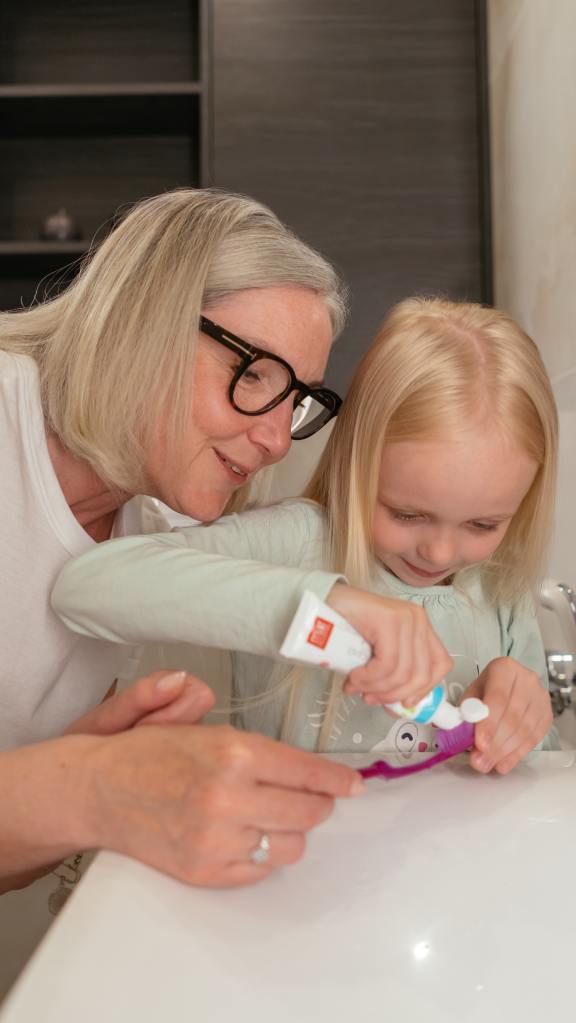
Grandma Is Showing Me How Much Toothpaste Goes On My Brush
What Should You Do If Your Child Swallows Fluoride Toothpaste?
Small amounts of fluoride toothpaste are not harmful if rarely swallowed.
However, if a child consumes a large amount, contact your pediatric dentist or poison control center immediately.
What To Remember
Don’t skip fluoride. It’s not something to fear. When used correctly, fluoride for children is safe and important in preventing cavities, and setting the foundation for a healthy smile.
Our world is filled with snacks, juice boxes, eating on the go, and busy schedules. Remember, fluoride isn’t just about preventing cavities for the short term, it’s an investment in your child’s long term oral health.
Mommy and Daddy are Watching How I Brush My TeethLaughing And Smiling Brushing Teeth with Daddy
What’s your opinion? Do you think children need fluoride if they eat a healthy diet? Is bottled water just as good a source of fluoride as tap water? Do you think fluoride bad for children? Does your chid have fluoride treatments at their dentist? Do you use fluoridated toothpaste? How much fluoride is in your drinking water? Tell Us, We’d really like to know! Send us an email at kidstoothhotline@protonmail.me Like Us on Facebook
More tips? We have lots. We’re here just for kids!
Do you know over 51 million school hours are lost each year due to dental related absences? Cavities are the most common chronic childhood disease, but the good news is they are largely preventable. Keep your child smiling and in the classroom by building strong, healthy dental habits every day.
To help you achieve this, we’ve put together super practical teeth tips to encourage and ensure bright, healthy smiles.
Building Life Long Healthy Smiles
Investing in your child’s oral hygiene isn’t just about having clean teeth today. This lays the foundation for a lifetime of healthy habits and confident smiles.
The Foundation
Brushing harder does not mean brushing better. Brushing too hard can actually wear down teeth and gums over time.
Having trouble getting your child excited to brush? Try making it a group activity. Brushing together can turn a daily routine into something fun and help kids build healthy habits by following your lead.
Rushing through brushing? Turn it into a game. Set a 2 minute timer, play their favorite song, or use a brushing app. Making brushing fun helps kids stick to good habits that last a lifetime. Remember, don’t rush when you brush.
Want to make brushing even more special? Encourage independence for your older ones by creating a reward system such as a sticker chart, a special song, or a small toy prize for brushing independently. Using motivating words and phrases is a great way to kickstart your child’s independence.
Even little gums need attention. Help your child brush along the gum line and floss once a day to remove food and plaque that can cause irritation. Healthy gums support strong teeth and confident smiles for years to come.
Studies show that people who brush and care for their teeth are at a lower risk for heart disease and health problems. When children learn to take care of their oral health, they can establish habits that last a lifetime.
The tongue plays an important role in your child’s oral health and even reflects their overall health. Keeping it clean with a toothbrush or a tongue scraper is a simple step that helps support a healthy, happy smile.
Friendly reminder, Is it time for a new toothbrush? Toothbrushes should usually be replaced every 3 months or sooner if the bristles start to look frayed. When choosing a toothbrush for your child, look for one designed for smaller hands with a head size made for their mouths. Soft bristles are typically the best choice for keeping smiles clean and comfortable.
When picking out a toothbrush for you or your child softer is the better choice. Soft or extra-soft bristles are gentle on tooth enamel and gentle on the gums, while still doing a great job removing plaque. Hard bristles will wear down enamel and irritate gums over time. Choosing a soft brush helps keep smiles clean, comfortable, and healthy everyday.
Want to keep your toothbrush as clean as possible? Store it upright, make sure it’s not touching other brushes, and keep it in a cabinet or closet instead of out in the open air (especially near flushing toilets and sinks, yuck!). If you use a toothbrush cover, choose one with small holes so moisture can escape.
Preventing Cavities
A little toothpaste goes a long way. Most people use more than they need. Using the right amount makes brushing safer and more effective. Children under age three only need a small smear of toothpaste, while older kids should use a pea sized amount. Small changes like this help build healthy brushing habits for a lifetime.
One of the easiest ways to fight cavities is by drinking water. Drinking water after meals helps wash away leftover food that cavity causing bacteria love.
Establishing Positive Daily Routines
Most school age kids are not getting enough sleep, and bedtime can feel like a whole event. If your child has trouble winding down, try turning off screens a little earlier and keeping the same simple routine each night. The more consistent it is, the easier bedtime gets. And of course make brushing and flossing part of the routine so their smile is ready for their sweet dreams.
Lifestyle Choices Support Oral Health
Can you use a smile today? Just 1 little smile? Smiling naturally boosts all the feel good hormones that improve mood and reduce stress. It has even been linked to supporting your immune system. A simple smile can go a long way, so keep sharing yours!
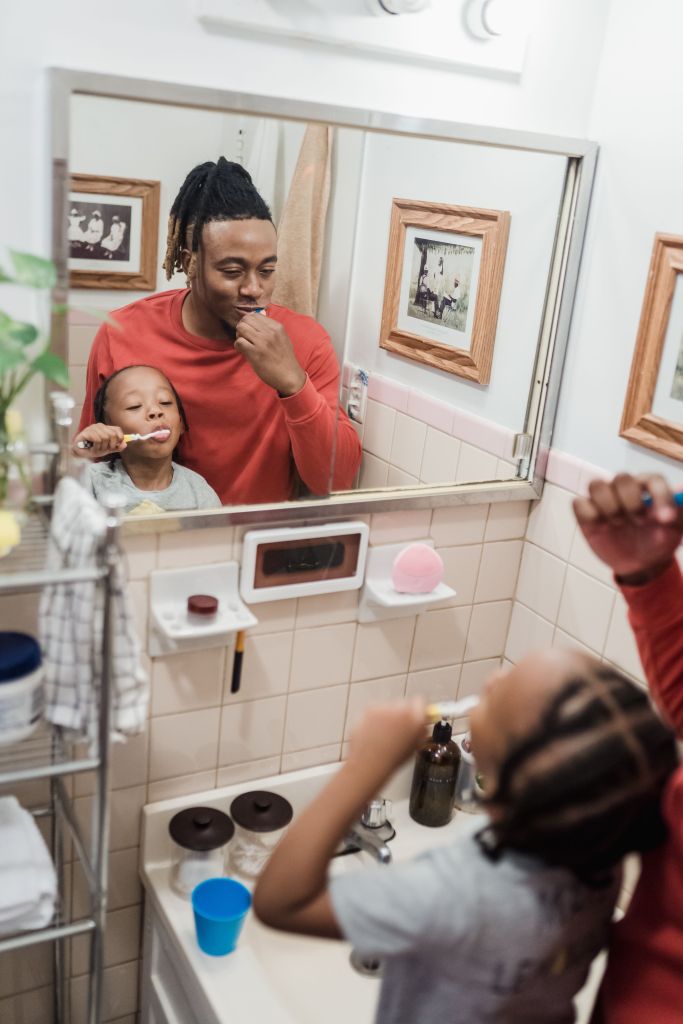
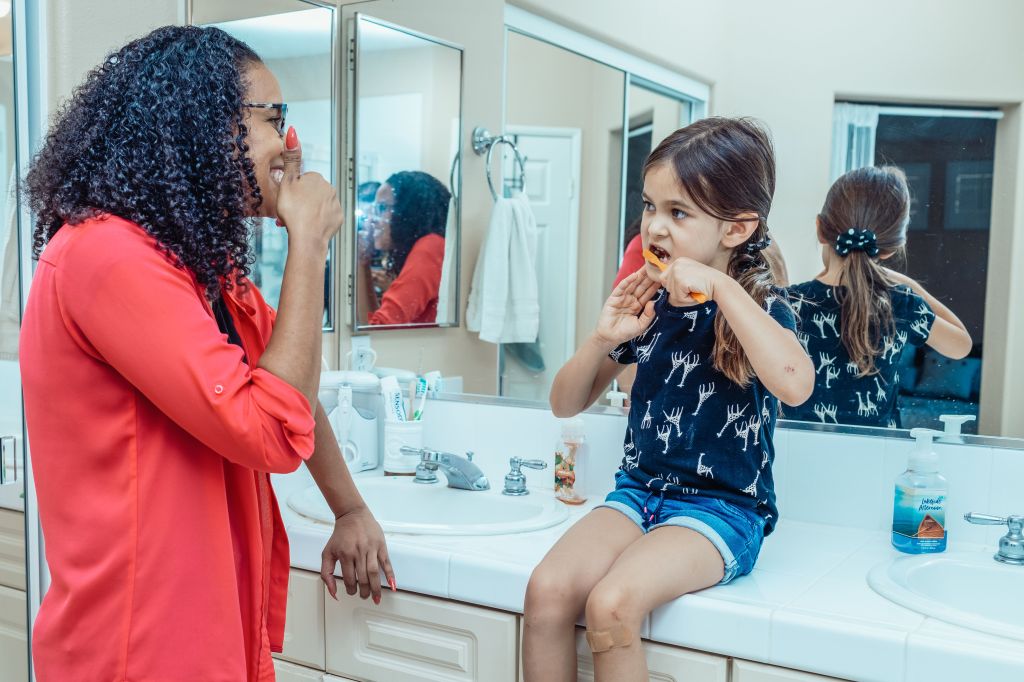
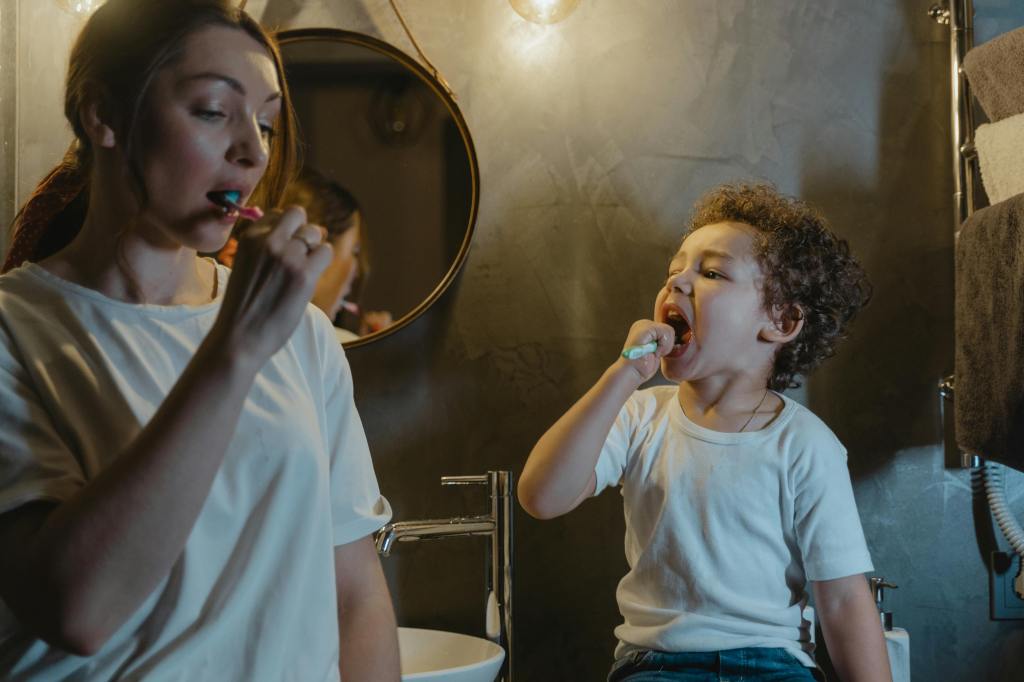
Mommy Got Me My First ToothbrushI’ve Been Brushing My Teeth ForeverI’m Brushing My Teeth With My DadPracticing Toothbrushing With My Mom Before I Brush My TeethBrushing My Teeth Just Like I Was TaughtBrushing My Teeth Just Like Mommy
What To Remember
Today, kid’s oral health emphasizes not only preventive care but also creating positive habits and experiences. Dental professionals encourage using age appropriate toothbrushes, exploring toothpaste brands, and incorporating fun routines.
Investing your time in your child’s oral hygiene isn’t just about having clean teeth today. This lays the foundation for a lifetime of healthy habits and confident smiles. When children learn early, they develop both responsibility and self care routines that extend into their adulthood.
Are you ready to put these tips into action? Share your tips and experiences that has worked your child. Tell Us, We’d really like to know! Send us an email at kidstoothhotline@proton.me Like Us on Facebook
Mommy’s Brushing My TeethDaddy’s Showing Us How Much Toothpaste To UseFlossing Like My Mom and Dad Taught Me When I Was Little
More tips? We have lots. We’re here just for kids!
Parents always make their children their top priority, and this also includes their oral health. It doesn’t matter how well you brush their teeth or how good you are about making their regular dental appointments. Emergencies happen. And they happen when you least expect them.
The weather is getting nicer and everyone wants to be outside. Children want to ride their bikes, go to the park, the pool, run, play sports, skateboard… Fun is in the air.
Then you hear screaming and crying, or they come running to you pointing to their mouth. What do you do?
When your child is hurting, everything feels urgent. But how do you know if it is?
This is why it’s important for you to know about the 4 most common types of pediatric dental emergencies.
What Is A Pediatric Dental Emergency?
A pediatric dental emergency involves bleeding, trauma, infection, or pain. It can include 1 aspect or any combination.
4 Most Common Pediatric Dental Emergencies
1. Permanent Tooth Knocked Out
A permanent tooth that’s knocked out due to a fall, sports injury, or other type of accident or trauma is a dental emergency.
Time is of the essence. You need to contact your pediatric dentist immediately.
Next, find the tooth as quickly as possible.
Be careful to pick it up only by its crown. Rinse it off gently and, if possible replace it back into the socket. If this isn’t possible, place the tooth in a a cup or plastic bag with cold milk or saliva.
It’s important not to let the tooth dry out. The longer the tooth is out of its socket the less chance it will be able to be saved. Doing this swiftly will help save the tooth so long as you can be seen by the dentist right away.
2. Chipped Or Broken Tooth
A chipped or broken tooth will require a dental visit.
But, when it’s a large chip or is broken down to the gum line this is a dental emergency and you need to contact your pediatric dentist right away.
3. Severe Tooth Ache
Toothaches can be caused by cavities, infections, even a piece of food stuck between the tooth and the gums. Toothaches do mean a visit to the dentist.
However, if the pain is severe or if there is swelling, redness, fever, crying, not eating, not sleeping contact your pediatric dentist immediately.
It’s visible on the gums overlaying the tooth. A dental abscess looks like a pimple or large bump. Pus or blood may be inside the abscess.
An abscess is extremely painful. If an abscess spreads it can lead to swelling of the gums, face, jaw, neck or surrounding teeth.
Because this infection can spread not only to other teeth but to other areas of the body, a dental abscess is an absolute emergency that requires immediate attention.
Stay Calm
Easy to say, hard to do.
As a parent, staying calm is one of the most important things you can do during a dental emergency. Your child will take cues from your reaction. Talk to them reassuringly, offer comfort, and focus on getting the right help.
Keep your pediatric dentist’s contact information easily accessible. Whether it’s in your phone, on the fridge, keep it somewhere you will know where to find it because you never know when you will need it.
Daddy, Why Is My Face Swollen?Mommy And Daddy Please Make My Tooth Stop HurtingDaddy’s Taking You To The Dentist To Check Your GumsPlease make my teeth stop hurtingMy Tooth Hurts So Much My Head HurtsMy Tooth Hurts!
Has your family experienced a dental emergency? Do you know a child who had their tooth knocked out? How did everything go? Tell Us, We’d really like to know! Send us an email at kidstoothhotline@protonmail.me Like Us on Facebook
More Tips? We have lots. We’re here just for kids!
Last week we talked about spaces between baby teeth being ideal, to allow enough room for the permanent teeth to come in to the mouth.
Now you’re looking at your child’s teeth and they’re getting their adult teeth. You’re asking yourself, why are their teeth coming in with gaps? Are permanent teeth supposed to come in this way?
Think back to yourself at that age. Did you have spaces?
I did. In fact I created spaces between my bottom canines and lateral incisors (on both sides) with my tongue. How? When my baby canines came out I got used to putting my tongue in those spaces and my adult canines grew in with the gap between the teeth. So I totally get gaps.
For today, let’s talk about permanent teeth with gaps.
Why Permanent Teeth Can Come In With Gaps
As children lose their baby teeth their permanent teeth begin to grow into their mouth. During these times it’s common to see gaps, especially between the front teeth.
The gaps are there because:
Their jaws are growing and expanding,
Early (premature) loss of a baby tooth due to tooth decay or trauma and the neighboring teeth move,
Baby teeth are lost at different times as a child grows so their adult teeth grow in at different times,
Since adult teeth are larger than baby teeth, they take time to adjust into place,
Baby tooth is lost and there is no permanent tooth to replace it,
The adult tooth may be smaller in size (not larger) and is called a microdont tooth,
Muscle attachment connecting the upper lip to the gum can sometimes attach too low between the front teeth, keeping them apart and preventing the gap from closing naturally.
Gum disease can lead to tooth and bone loss, resulting in gaps between the teeth.
A good example, which we all remember is “the ugly duckling stage.” During this time, the top front teeth may look spaced apart or uneven in length. With time this corrects itself as the teeth come in and more teeth come.
I Like My Gappy SmileMy Top Teeth Have GapsMy Teeth Have Gaps
Do Habits Play A Role In Tooth Spacing?
Habits definitely have an impact in how teeth are aligned.
The 4 most common habits which can push teeth outward or prevent proper jaw growth are:
Mouth breathing,
Thumb sucking (finger sucking, pacifiers),
Tongue thrusting,
Low tongue posture.
How Does Jaw Growth Affect Tooth Gaps?
Jaw development is a major factor in determining whether spacing is helpful or problematic to tooth position.
Jaw growth affects gaps in 3 ways:
Spaces don’t close and gaps remain as adult teeth come in,
Teeth come into the mouth in different positions,
Bite issues.
Will Gaps Close On their Own?
Most of the time spacing improves naturally as more permanent teeth come into their mouth. The pressure from neighboring teeth and continued jaw growth can help close these smaller gaps.
However, some gaps can remain. This may be the case due to:
Genetics,
Habit-related changes,
Missing teeth,
Jaw-size differences.
I Have Gaps Between My Teeth And My Brother Doesn’t Have ThemMy Gaps Make Me SingWhen Will My Gaps Go Away?
What To Look For
If it’s in-between dental visits the signs to look for and know it’s time to schedule an evaluation with your pediatric dentist or orthodontist are:
Gaps aren’t changing or they’re getting larger in size as more teeth are coming in,
Teeth are out of position,
Tooth position is affecting their eating and speaking,
They feel like they’re always biting their lip.
What To Remember
Tooth gaps in children are common. Most of the time, they’re part of normal growth. Sometimes they need treatment. Sometimes they don’t. The key is knowing when to watch, when to wait and when to do.
Mommy Says She Loves My Gappy TeethMy Teeth Are Growing In With Gaps
Does your child have spaces in-between their adult teeth? Do they have the same gaps you had? What do you think? Is it time to watch, time to wait, time to have an evaluation? Tell Us, We’d really like to know! Send us an email at kidstoothhotline@protonmail.me Like Us on Facebook
We Have Gaps Between Our Teeth
More Tips? We have lots. We’re here just for kids!
Mom You Light Up My Life Because You Are The Light Of My Life
Wishing every Mom a fabulous Mother’s Day!
For the most amazing Moms on your special day, you will always be your family’s heart, soul and smile!
From all the diaper changes, meal times, putting up with temper tantrums, school pick-ups, being the family cheer-leader, looking after and making every day so much fun, YOU really are amazing!!
From each of us at kidstoothotline to you, HAPPY MOTHER’S DAY
You absolutely love your child’s adorable toothy smiles looking up at you. And why not? They’re so precious, so white, so engaging.
When you’re gazing at their smile, have you noticed the spaces between their teeth? These gaps make their teeth so endearing.
Have you wondered why your child has these gaps between their teeth? Is it better to have gaps or no gaps? How do gaps develop? Why do some children have gaps while others don’t? And, are these tooth gaps a cause for concern?
Wonder no more. Today we’ll be looking into why tooth gaps in children’s teeth are good.
Gaps Between Baby Teeth
Small spaces (or gaps) between baby teeth is normal. In fact, this is something good.
Spacing can occur between the front teeth, or the back teeth, or between all the teeth. When the spaces are in-between front teeth, this is called physiologic spacing. Primate spacing is when the gaps are between the back teeth.
Causes Of Gaps In Baby Teeth
3 reasons for spacing in-between baby teeth:
Baby teeth are smaller than adult teeth – Baby teeth serve as placeholders for the much larger adult teeth. The gaps allow room for the adult teeth to come in properly,
Genetics – If spacing runs in your family, your child may very well have gaps between their teeth,
Tooth eruption order – The order baby teeth are lost and adult teeth come in sometimes differs. This may leave temporary gaps until the adult teeth come into the mouth.
I Have Spaces Between My Teeth
Gaps Between Baby Teeth Are Normal
It’s completely normal for children to have gaps between their baby teeth. In fact, gaps between baby teeth are normal, natural and beneficial to a child’s oral development.
These are 3 signs that spacing is part of normal development:
Consistent spacing rather than a single unusually large gap,
Baby teeth that feel secure and aren’t shifting due to injury or tooth decay,
No pain, swelling, or signs of infection.
The Role Of Baby Teeth
Baby teeth may be present for a short time, but they carry great importance for the long term.
Baby teeth are important for 3 reasons:
Speech,
Chewing,
Guiding adult teeth into the correct position.
Properly spaced baby teeth give adult teeth the place and space they need to come into the mouth. This can also support a child’s long term oral health.
In contrast, a child whose baby teeth don’t have any spaces or are tight together is actually more likely to experience crowding.
I Like My Teeth With Spaces
Monitoring Spacing In Baby Teeth
Pediatric dentists check spacing within the context of your child’s overall growth and dental development.
This includes:
Checking jaw development,
Bite alignment, and
Whether the spacing is normal developmental spacing or caused by factors such as early tooth loss or habits that influence tooth position and alignment.
Baby Teeth Gaps Close On Their Own
Spacing between children’s teeth often naturally close as their permanent teeth come into their mouth. In addition, the pressure from neighboring adult teeth and continued jaw growth can help close the smaller gaps.
We Have Spaces Between Our Teeth
When Gaps Between Baby Teeth Are A Concern
While gaps between baby teeth are expected, there are times when they are a concern:
Extra large gaps – If a gap is significantly larger, it may indicate an incorrectly positioned, missing or extra adult tooth,
Missing teeth – If a baby tooth never comes in and there’s an unfilled space, it’s important to check for any underlying issues,
Persistent front gap after permanent teeth erupt – If the gap between the top front teeth persists after the adult canines come in, it’s important to look at the muscle attachments as they may be preventing the gap from closing,.
Habits such as tongue thrusting, thumb sucking, finger sucking or pacifier use – Prolonged habits can push teeth forward, creating gaps or tooth-jaw misalignment,
Early tooth loss – If a baby tooth is lost early due to decay or injury, the surrounding teeth shift affecting spacing for the developing adult teeth.
Saying Cheese Shows Off The Spaces Between My Teeth
What To Remember
Every child’s smile develops differently.
During the baby teeth stage spacing between teeth isn’t a problem. It’s expected. Small gaps between these teeth create the space needed for larger permanent teeth to come into the mouth properly.
So what do you think? How do you feel about spacing between teeth? Does your child have gaps in-between their baby teeth? Did you have the same gaps? Tell Us, We’d really like to know! Send us an email at kidstoothhotline@protonmail.me Like Us on Facebook
More Tips? We have lots. We’re here just for kids!