In the Know for You to Know
When it comes to children’s dental health nothing sparks confusion and controversy as much as fluoride. There are some parents who are totally anti-fluoride. Some parents aren’t sure how much their child needs. While others are on-board with using fluoride.
Truth be told, fluoride for children is safe when used correctly. Not only that, it’s essential in the fight against tooth decay.
Understanding the facts about fluoride can help you feel confident about incorporating it into your child’s dental care routine while ensuring their safety.
So, what is this mineral that is so effective in protecting children’s teeth against cavities?
What Is Fluoride?
Fluoride is a naturally occurring mineral found in water, soil, and certain foods. In dentistry, it’s found in toothpaste, mouth rinses, gels, varnish and supplements.
When used in the correct amount and on a regular schedule, fluoride helps prevent cavities by strengthening tooth enamel. The tooth enamel that’s weakened by those not so healthy foods and drinks.
Is Fluoride Safe?
Yes, fluoride is completely safe when used correctly and in the recommended amounts. Only small amounts of fluoride are necessary for the maximum benefit.
Is Fluoridated Water Safe For Children?
Yes, fluoridated water at recommended levels (0.7 ppm) is safe and effective for preventing tooth decay. The Centers for Disease Control and Prevention recognizes water fluoridation as one of the greatest public health achievements of the 20th century.
Why Is Fluoride Important For Children’s Teeth?
Since children’s teeth are still developing, fluoride plays a key role in building strong, decay resistant enamel from an early age.
Building strong tooth enamel is important. Making enamel more resistant to the acid attacks that cause cavities, increases the life expectancy of teeth.
The American Dental Association (ADA), the American Academy of Pediatric Dentistry (AAPD), and the American Academy of Pediatrics (AAP) each recommend fluoride use for all children as a part of their preventive dental care.
How Does Fluoride Protect Children’s Teeth?
Fluoride works in 2 specific ways, systemically and topically:
- Systemically (during tooth development) – When children drink fluoridated water, take prescribed fluoride supplements or eat foods that contain fluoride, their developing teeth absorb the fluoride mineral through the bloodstream. This helps form stronger enamel even before the teeth appear.
- Topically (directly applied to teeth) – Fluoride in toothpaste, mouth rinses, or professional treatments initially coat the tooth enamel and it’s then absorbed into the enamel. The fluoride remineralizes any weakened or damaged enamel and can even reverse the very early signs of tooth decay.
This dual action makes a strong tooth enamel helping to build a defense against cavities.
At What Age Should Children Start Using Fluoride Toothpaste?
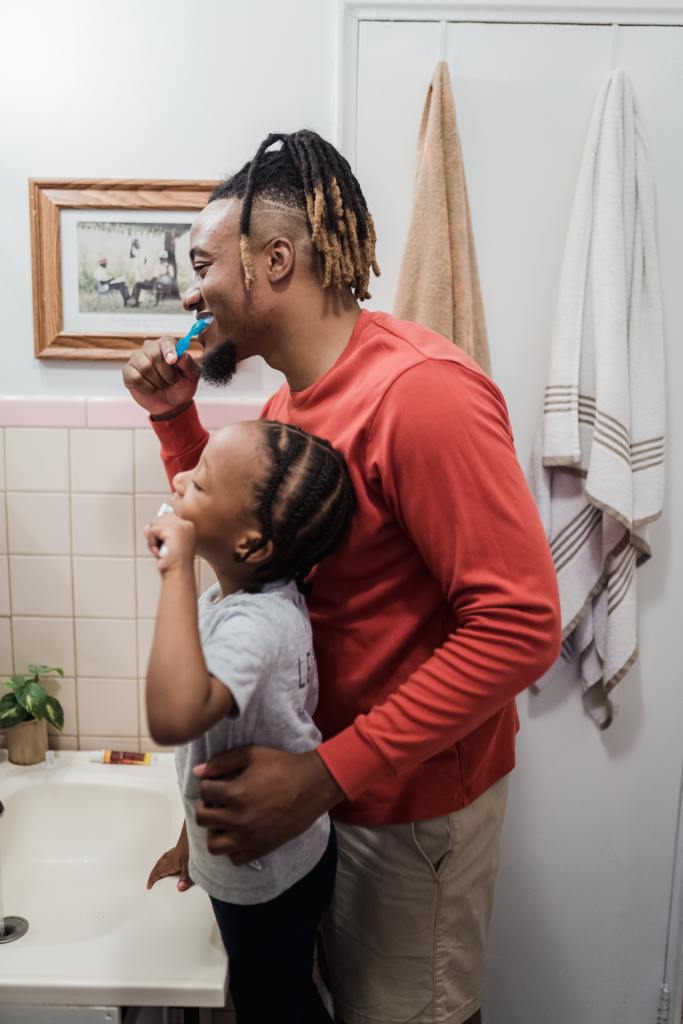
As soon as their 1st tooth appears, usually around 6 months of age, you can start using fluoride toothpaste.
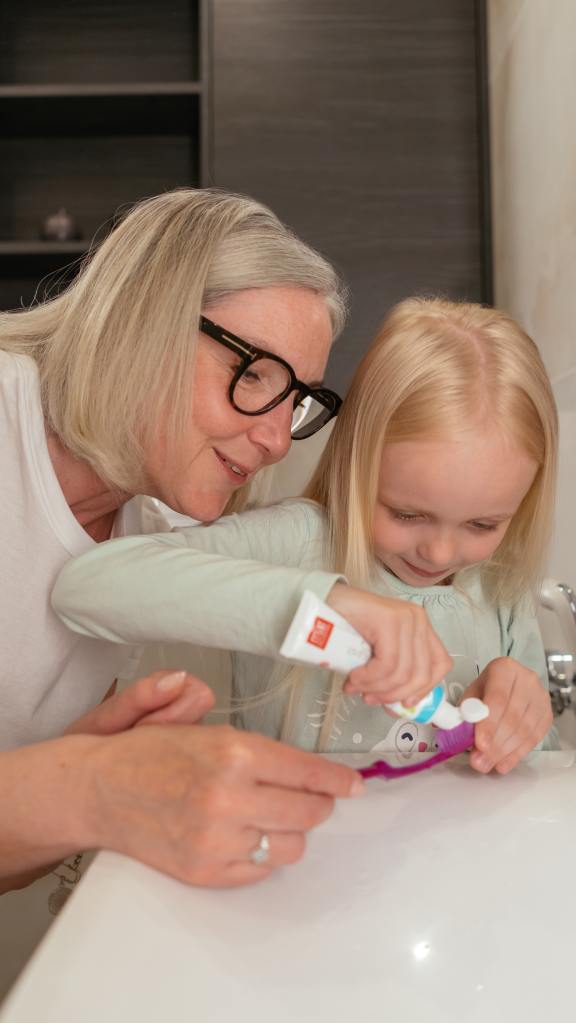
Remember to use only a smear (no larger than a dry rice grain sized amount) of toothpaste and brush 2x’s daily.


Do Children Need To Use A Fluoride Rinse?
Only Children age 6 years and older can use a fluoride mouth rinse and only if it is recommended to you by their dentist.
Younger children should avoid them because of the risk of swallowing excess fluoride.
How Much Fluoride Is Safe?
Fluoride safety entirely depends on proper dosage and supervision at home and in the pediatric dental office.
The American Academy of Pediatric Dentistry (AAPD) provides clear and consistent guidelines:
- First Tooth-3 years of age – Children under 3 should use a smear (no larger than the size of a dry rice grain) of fluoride toothpaste twice daily,
- 3-6 years of age – Children aged 3–6 should use a small green pea sized amount of toothpaste twice daily,
- 6 years old and Older – Children 6 years and older would continue to use a small green pea size amount of toothpaste.
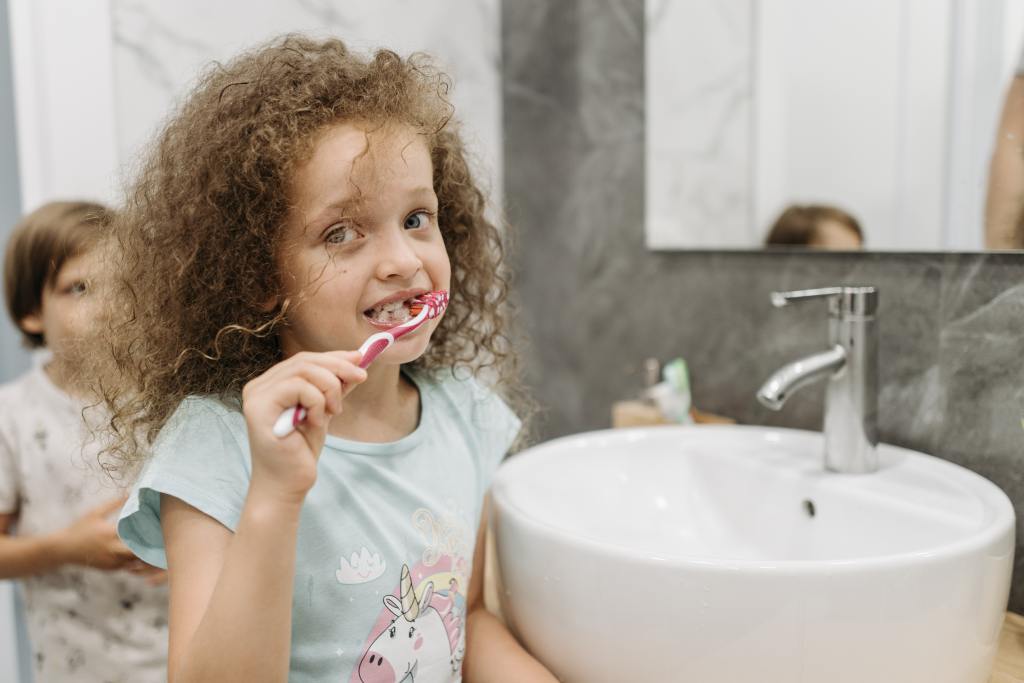
It’s important to always supervise children during brushing to ensure they spit out toothpaste rather than swallowing it, since children naturally want to swallow the great tasting flavors.
If your dentist prescribes a fluoride supplement for your child it’s because the area where you live has low water fluoride levels. The dosage of these supplements is based on your child’s age and the amount of fluoride in the water. These supplements need to be supervised by you at home and by your pediatric dentist; so tell them if anything changes.
Are There Any Potential Risks Of Too Much Fluoride?
Fluoride is safe when used appropriately and correctly. However, excessive consumption can lead to fluorosis, a condition that affects tooth appearance.
Dental fluorosis occurs when children consume too much fluoride during tooth development causing faint white streaks or, in severe cases, brown staining on teeth.
Acute fluoride toxicity from accidental ingestion is rare, but it can cause nausea and vomiting. Skeletal fluorosis is extremely rare in developed countries with monitored and regulated fluoride levels.
How Parents Can Ensure Safe Fluoride Use
Safe fluoride use requires consistency in following established guidelines and continuing proper supervision.
In addition:
- Store toothpaste, mouth rinses, and prescribed fluoride products out of children’s reach,
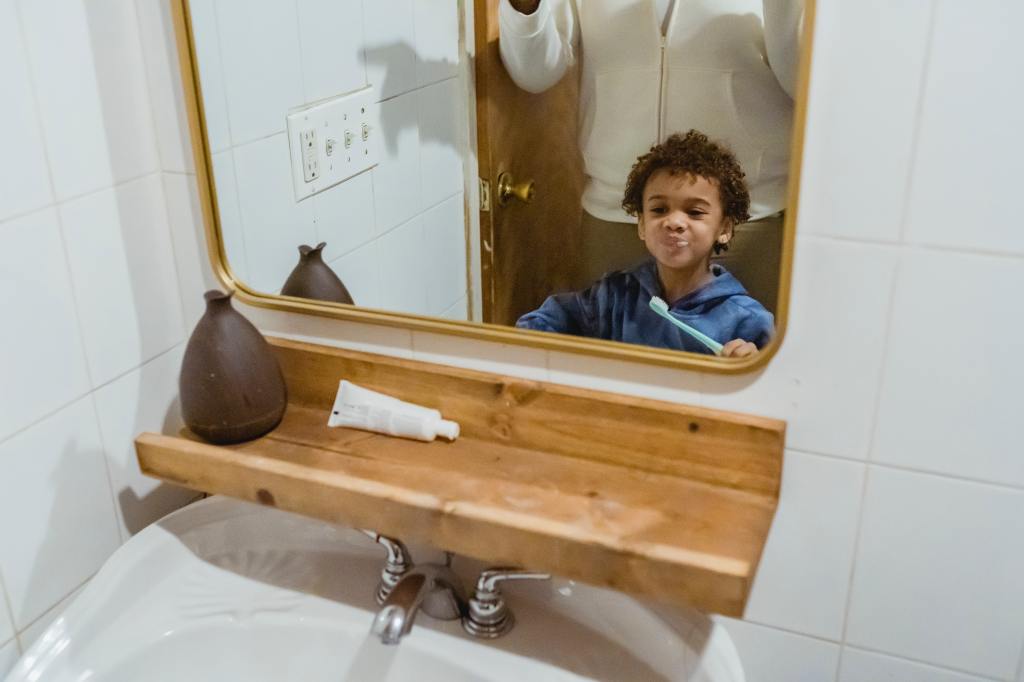
- Teach them to spit out toothpaste after brushing,
- Monitor total fluoride intake from water, toothpaste, and other sources,
- Choosing age appropriate fluoride products and following instructions carefully helps reduce the risk of excessive intake.
What Should You Do If Your Child Swallows Fluoride Toothpaste?
Small amounts of fluoride toothpaste are not harmful if rarely swallowed.
However, if a child consumes a large amount, contact your pediatric dentist or poison control center immediately.
What To Remember
Don’t skip fluoride. It’s not something to fear. When used correctly, fluoride for children is safe and important in preventing cavities, and setting the foundation for a healthy smile.
Our world is filled with snacks, juice boxes, eating on the go, and busy schedules. Remember, fluoride isn’t just about preventing cavities for the short term, it’s an investment in your child’s long term oral health.
What’s your opinion? Do you think children need fluoride if they eat a healthy diet? Is bottled water just as good a source of fluoride as tap water? Do you think fluoride bad for children? Does your chid have fluoride treatments at their dentist? Do you use fluoridated toothpaste? How much fluoride is in your drinking water? Tell Us, We’d really like to know! Send us an email at kidstoothhotline@protonmail.me Like Us on Facebook
More tips? We have lots. We’re here just for kids!

 kidstoothhotline