
In the Know for You To Know
As a parent, you know preventing dental related issues is important, and you also know that this is not so simple when your child has Autism.
Whether your child is sensitive to light and sounds or smells and tastes or does not know how to express these feelings; you want them to have a positive experience.
You’re thinking, how do you do this? Once you’ve made their appointment think about telling them a story about going to the dentist. Not just any story. This is a personalized story you’ve written just for them.
Now you’re thinking, why tell them a story about going to the dentist? Story telling is a great way to introduce new or unfamiliar experiences to your child. It’s also a way to re-introduce unpleasant experiences in a positive way.
Since we all love to tell a really good story or listen to one, today we’re helping you write your own dental social story.
When To Start Preparing Your Child For Their Dental Visit
Once you’ve made your child’s appointment you know when it’s best to introduce this to them. Your approach needs to be tailored to your child’s individual needs.
Your child may do well if you wait until the day before or day of the appointment to talk to them about their visit. Most children do not. So preparing them starts weeks before their appointment.
Preparing a child with autism for their trip to the dentist well in advance can be very helpful in easing anxiety and having a calm and successful visit.
You’re thinking, what is the best way to prepare them?, and how do I write a social story?
What Is A Social Story?
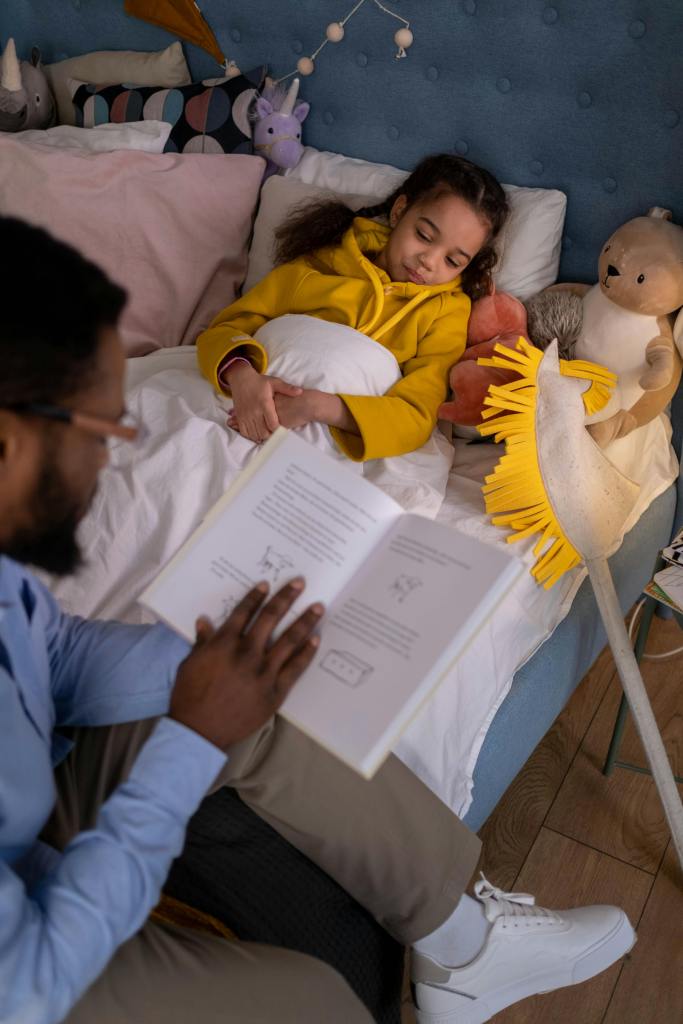
Social stories use positive, simple, straight forward language to describe the sequence of events your child will experience. The stories usually have photos or pictures to help show the things they will see, hear, and do.
Writing Your Own Social Story
After you’ve made your child’s dental appointment consider taking pictures of the street the office is on, the parking lot, the outside of the building, the office’s front door with the dentist’s name.
You might want to stop by and ask if you can take some pictures of the office to include in your social story. Introducing yourself and your child ahead of time helps everyone, especially your child.
This way you’re showing your child what to expect step by step.

Things To Keep In Mind When Writing Your Social Story
- Write your story for your child, use their name;
- Stay positive;
- Give examples;
- Pictures help explain;
- Leave room for questions;
- Include a “The End” to complete your story.
Using a scrap book or empty picture book can help you organize your child’s story. You can also use your phone, since children love the phone.
Your Social Story
| Steps | What Will Be Happening |
|---|---|
| 1 | We’re going to the Dentist and we’ll be driving down this street. Then we’ll park our car near the Dentist’s office. After we park the car we’ll walk to the Dentist’s office. The office is upstairs/downstairs/on the walk-in floor so we may/may not need to take an elevator ride; or we may/may not take the stairs. When we get to the Dentist’s office we’ll open the door and walk in. |
| 2 | There is a lady sitting behind a desk. She’s the receptionist. She’ll say hello to us when we walk in. After we say hello, we’ll tell her your name. She may ask us to sit down and watch a movie, or play one of the games until it’s our turn. |
| 3 | When it’s our turn the hygienist will call your name. The hygienist is the lady/man who cleans your teeth. Then we’ll all walk together to a room with a few special chairs that look like Daddy’s recliner chair. |
| 4 | The hygienist will ask you to sit down in the chair. The hygienist will tell you that this chair is special because it moves up and down and reclines back almost like a bed, but you don’t have to take a nap. The hygienist will show you the buttons that make the chair move and will show you how the chair moves. |
| 5 | The hygienist will show you how the chair moves back so she and the Dentist can look at all your teeth even the one’s all the way in the back. The hygienist will also tell you that when you’re lying down on the chair you can hold my hand and put your legs straight out. |
| 6 | Then the hygienist will ask you to sit on the chair. After you sit down the hygienist will tell you that she’s going to press the button for the chair to lay down. Let’s ask if you can press the button. |
| 7 | The hygienist will ask you how big you can open your mouth?, and count how long you can stay open wide. The hygienist will show you the big light she and the dentist use so they can see all your teeth. Before she turns the light on, the hygienist will ask you if I want to wear sunglasses because the light is bright or if you want to close your eyes. |
| 8 | The hygienist will show you the special mirror she and the dentist use to look at your teeth. She’ll let you touch the mirror will also show you what the mirror feels like on your lips and tongue and cheeks. Then the hygienist will show you and let you touch the tooth counter she and the dentist use to count and check your teeth. |
| 9 | The hygienist will show you the special floss string she uses to clean in-between your teeth, she’ll let you touch the floss and she’ll show you how it feels in-between your fingers. Then she’ll floss your teeth. |
| 10 | The hygienist will show you the special power toothbrush and special toothpaste she uses to clean your teeth. Then she will let you touch this special toothbrush and she’ll show you what the brush feels like on your finger and then on your teeth. The best part is that the hygienist says you get to pick the flavor of your toothpaste. The hygienist will show you the special tooth vitamins she puts on your teeth after the dentist checks your teeth with his mirror and tooth counter. And you also get to pick your flavor. |
| 11 | The dentist may want to take special pictures of your teeth. The hygienist will explain that these photos are called x-rays and you get to wear a super special emoji apron to take the x-rays. The apron may feel heavy to take the pictures. |
| 12 | When you’re all finished the hygienist will give you a fun bag filled with a brand new toothbrush and toothpaste, and you’ll get to choose a super special prize and sticker. |
| 13 | After you get your prize we’ll go back and make your next appointment with the receptionist. |
| 14 | Then it’s time to say Goodbye and go to our car. Maybe we’ll go someplace special afterwards since you did such a good job. |
| The End |
Why Social Stories Are Helpful
Remember last week when we talked about positive dental visits? We also talked about a technique called Tell-Show-Do. This is essentially what a social story is doing.
You are introducing your child to their dental visit by Telling them about their visit. You’re explaining their entire visit to them step by step from beginning to end.
When you’re at their visit the Tell is reinforced and then it’s adding the Show and Do.
Helpful Information For Parents And Caregivers
- Explaining the reason for the visit helps your child know what to expect. This helps to decrease worrying and begins to build trust.
- Meeting the Receptionist is the first step into the office and helps start on a good note. Activities during wait time helps time pass and reduce anxiety.
- Knowing people’s roles helps identify them and make them familiar.
- Clear instructions using everyday words helps reduce anxiety and provides structure.
- Knowing what to expect increases comfort and helps to establish expectations.
- Describing what will be happening during their appointment and being part of this builds confidence.
- Wearing sunglasses or closing their eyes can reduce light sensitivity.
- Seeing and touching the instruments first helps build consistency and predictability.
- Describing what they will feel during their visit ahead of time helps to prevent surprise.
- Involving your child helps them look forward to and focus on their specific part of their visit.
- A clear end to the visit with a prize helps end the visit in a positive way.

What To Remember
Social stories help to better prepare your child for their dental visit. These stories walk you and your child through what you can expect at their appointment. Each step shows where they’ll be going and what they’ll be doing.
With practice and preparation, dental visits for children with autism can become more accepted and predictable over time.
I hope this is helpful and reassuring for you as a parent. Every child deserves to have a positive experience at each dental visit.
Have you heard about social stories? Have you written your own social story for your child? Was it helpful? Do you want to start all over again with a new story? Tell us, We’d really like to know! Send us an email at kidstoothhotline@proton.me Like Us on Facebook
More tips? We have lots. We’re here just for kids!


