In the Know For You To Know
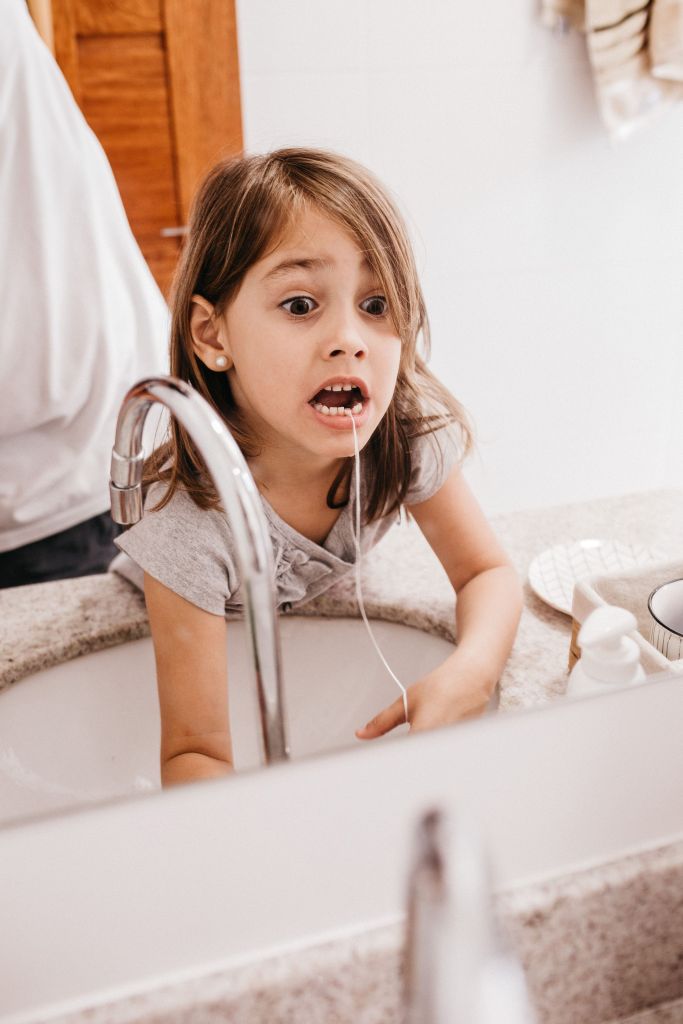
Having something stuck in-between teeth isn’t only annoying, it’s down right painful. Whether it’s a piece of food, a popcorn kernel or floss the feeling of having something pushing between teeth is uncomfortable.
When it’s your child’s teeth that’s even more unbearable.
This happens to children a lot. Usually it’s popcorn kernels, fruit skins or seeds that become stuck. Children with braces, retainers, or other dental appliances are also more likely to experience objects getting stuck because food can catch around brackets and wires. One time I saw a teenager who had floss stuck between their teeth.
So you’ve tried everything you can think of and nothing is working. What do you do when something is stuck between your child’s teeth or caught in their gums?
This is what I want you to know.
Stay Calm
Keep your child calm. It’s hard to know what’s happening when they’re upset and panicking.
Sit down with them, at eye level and calmly reassure them that you’re going to help. Tell them you’re going to tell them what you’re doing at each step; and you need their help.
Why An Object May Become Lodged Between A Child’s Teeth
There are several reasons why an object becomes lodged in-between a child’s teeth. Some relate to the way a child’s teeth develop, while others involve eating habits or dental appliances.
One of the most common causes is tooth spacing. Gaps between teeth make it easier for objects and materials to become trapped.
Loose baby teeth can also create temporary gaps where things can also lodge. Children who have braces, retainers, or space maintainers are also at increased risk because of the brackets and wires.
Dental conditions can also contribute. A cavity, chipped tooth, or damaged filling can create spaces where objects become trapped.
Young children may also place small non-food objects in their mouths, such as toy pieces, beads, paper, or bits of plastic. These objects can become wedged between teeth.
Chewing habits can play a role. Children who chew on pencils, fingernails, toys, or other hard objects are more likely to trap fragments or damage their teeth, creating areas where objects can become lodged more easily.
Common Foods Likely To Become Stuck Between A Child’s Teeth
- Popcorn kernels,
- Seeds,
- Nuts,
- Fruit skins,
- Meat,
- Sticky candy,
- Caramel,
- Chewy snacks.
What Does It Feel Like When An Object Is Stuck In-between A Child’s Teeth?
When something is stuck between your child’s teeth the symptoms can range from mild irritation to noticeable pain.
Older children can explain that something feels stuck, while younger children may only show changes in behavior or eating habits.
Common signs for you to watch out for –
- Complaining that something is stuck between their teeth,
- Pointing to one specific tooth or area of their mouth,
- Pain or discomfort while chewing,
- Avoiding chewing on one side of their mouth,
- Red, swollen, or tender gums between their teeth,
- Bleeding when brushing or flossing,
- Bad breath or an unpleasant taste in their mouth,
- Sensitivity to cold, sweet, or pressure,
- Visible food particles or debris between their teeth,
- Irritation around braces or other dental appliances.
Object Remains Lodged For An Extended Period
If the object remains lodged for an extended period, the surrounding gum tissue becomes inflamed because bacteria collect around the trapped material. This irritation makes brushing and flossing uncomfortable and increases the risk of a gum infection.
Same Symptoms Other Causes
It’s also important to know that these symptoms can also resemble other dental problems. For example, a cavity may cause pain when eating sweets or cold foods, while a loose baby tooth can create tenderness during chewing. Gum irritation from hard brushing or a minor mouth injury can also cause redness or bleeding.
Because there are several dental conditions that share similar symptoms, it’s best for parents to consider other causes of their child’s discomfort; even if nothing is visible.
Contact your child’s pediatric dentist for them to determine whether the symptoms are caused by trapped food, tooth decay, gum inflammation, or another dental issue.


Understand What’s Going On
Before trying to remove anything, it’s important to know what’s stuck and where it is –
- Ask your child to point to where they feel the discomfort. Then have them describe what it feels like.
- Look at the area your child is pointing to. You may need to use a flash light to see in their mouth. Where exactly is the object?, Is it above or below the gum line?, Is there swelling or bleeding?, Is the tooth loose or damaged?
- Sometimes it’s as easy as rinsing with water to dislodge the object.
Remove Safely
As long as you can see the object clearly you can safely remove it.
What You Can Use To Safely Remove An Object In-between A Child’s Teeth
Dental Floss
- Flossing – Gently place dental floss around the object to try to dislodge it. If you push to hard it will be harder to remove.
- Tie a small knot in the floss to help push the object up and out as you gently pull the floss out.
Interdental Brush
- Rubber Tipped Stimulator – This is usually used to massage the gums. They are soft tipped so you can try to use one to gently remove what’s stuck.
- Interdental Brush – This is a small metal brush with bristles so you need to be careful not to hurt the gums. It’s designed to go between teeth but you’ll need to be gentle.
Water Flosser
- Direct Controlled Water Stream – A water flosser delivers a stream of water to the gum line or in-between teeth. The pressure of the water can be adjusted low or high. High pressure will cause the item to become harder to remove or push it somewhere you don’t want it to go. Use the lowest setting and direct the stream of water to the area to dislodge the object.
What Not To Use To Remove An Object From In-between A Child’s Teeth
It’s equally as important to know what not to use, so as not to create a worse situation.
Never use:
- Anything sharp – no needles, no pins, no scissors, no tweezers, no knives, no metal picks. Nothing like this. The risk of cuts and trauma is to great.
- Toothpicks, pen caps, fingernails – they can hurt your child’s gums, chip their tooth, or push the object deeper into the space between their teeth.
- Excessive pressure or force – being too forceful can cause harm to their gums and the soft tissues in their mouth.
When To Call Your Pediatric Dentist
There are times when you need professional help.
What To Look For
- Object remains stuck after you’ve gently tried to remove it.
- Pain – Pain from the stuck object before or after you’ve attempted to dislodge it.
- Bleeding – Any sign of bleeding.
- Swelling – Any swelling, redness, or tenderness around the area of the wedged in item, and any swelling inside or outside the mouth or on the face.
- Your child has difficulty chewing or refuses to eat because of discomfort.
- A sharp object is lodged between their teeth or gums.
- A piece of dental floss breaks and remains trapped.
- Food repeatedly gets stuck in the same location.
- Braces or another dental appliance appear to be involved.
- There is a chipped tooth, broken tooth, or damaged filling.

A child’s tooth pain can come out of nowhere. Sometimes it’s a trapped object in-between their teeth. It may seem like a small problem. But what’s surprising for parents is how painful it can be for their child and what they can do to take care of it.

Has your child ever had anything caught in-between their teeth? What did you do? How did you get the object out? Tell us, We’d really like to know! Send us an email to kidstoothhotline@proton.me Like Us on Facebook.
More tips? We have lots. We’re here just for kids!


