In the Know for You to Know
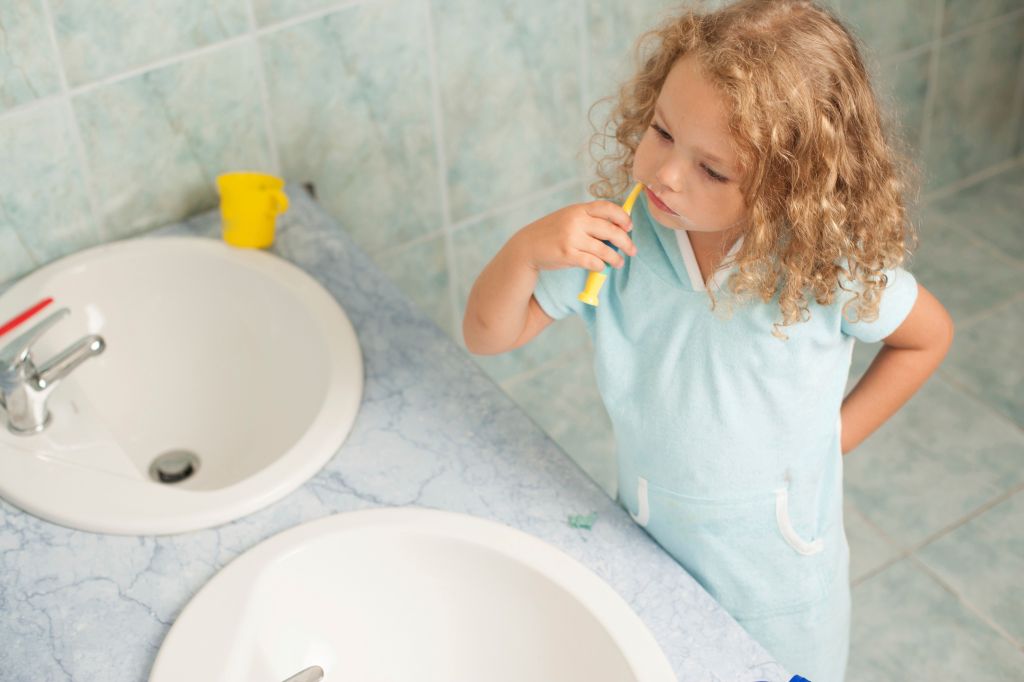
Mom, I can brush my own teeth! Let me brush by myself Mom! Mom, I can do this!
Sound familiar?
As a mom I’ve been there. As a mom and a pediatric dentist I totally understand.
Part of you wants to let your child brush their own teeth. You’ve been doing this for them since they were babies. On the other hand you’re not sure they’re ready and if they’ll do a good job.
When should you start letting your child brush their own teeth? How do you support your child’s healthy habits?
Here’s what I want you to know.
What To Look For, 5 Signs Your Child Is Ready To Brush On Their Own
1. Do They Have The Basic Motor Skills?
3 questions to ask yourself first,
- Can they tie their own shoes?
- Can they wash and dry their hair from start to finish on their own?
- Can they write their name legibly?
Why ask these questions? This is because brushing teeth requires a lot of coordination. So it’s important to look at their fine motor skills.
What are these motor skills?
- You’ll need to look at how they hold their toothbrush?
- Can they hold and turn the toothbrush to reach all around their mouth? and all all all the way in the back behind their most back (molar) teeth?
- Are they able to move the toothbrush in small gentle circles around their teeth?
- Can they angle the toothbrush to gently brush at the gum lines on both sides of each tooth?
- Can they wrap the floss around their fingers and move the floss along as they go from tooth to tooth?
2. Can They Follow Instructions?
Understanding and following directions is important. Taking the right amount of time when toothbrushing is just as important.
Can they brush for a full 2 minutes? Why 2 minutes? This is the right amount of time to make sure all their teeth get touched with toothpaste and to allow the toothpaste to do a proper job.
3. Do They Show An Interest In Brushing By Themselves?
Has your child asked you if they’re holding their toothbrush correctly? Are they trying to imitate the way you brush?
Taking an active part in their own health gives them a genuine sense of accomplishment and confidence.
4. Can They Maintain A Routine?
How many reminders does it take for them to clean up their room or brush their hair? Can they remember to brush their teeth without you constantly reminding them?
The more you need to say this the more likely that’s a day teeth won’t be brushed; because let’s face it everyone is rushed and tired.
If your child is able to stay consistent then give independent brushing a try.
5. Do They Understand The Importance Of Oral Hygiene?
Proper brushing removes plaque so they’re actually cleaning their teeth effectively.
Look at your child’s teeth after you’ve let them brush. Are they clean? Do you see any food or plaque left behind?
Your Guidance Supports Your Child’s Independent Brushing
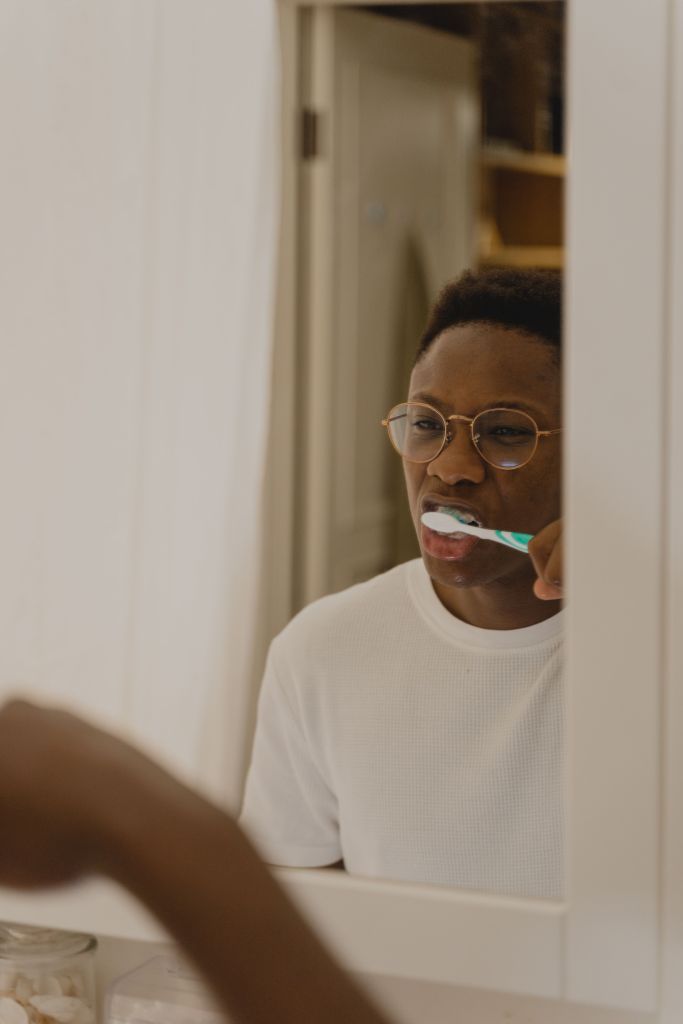
Monitoring and supervising is key. It’s always okay to watch from the bathroom door and to step back in with reminders and assistance. Remember to always check when they’re done.
When brushing feels like their achievement rather than a chore imposed by you, your child approaches their oral hygiene with less resistance.
This positive association matters more than you realize. That’s why this transition should be gradual, not rushed.
Make Toothbrushing Fun And Engaging
Let your child pick their toothbrush color, toothpaste flavor, flosser color, and their 2 minute timer. Allowing them to make these choices makes this fun, encourages their interest and allows them to do a good job.
Lead By Example
Children learn by watching. Flossing and brushing together, side by side reinforces the correct techniques and instills proper daily habits.
Offer Encouraging Suggestions
There are times when you’ll need to step in and give gentle reminders. Resist the urge to take over.
You may need to offer a few reminders again (and again) when (or if) you notice plaque buildup, or inconsistency in these habits.
As your child grows and becomes more accustomed to their routine you can gradually step back while still checking on how they are doing.
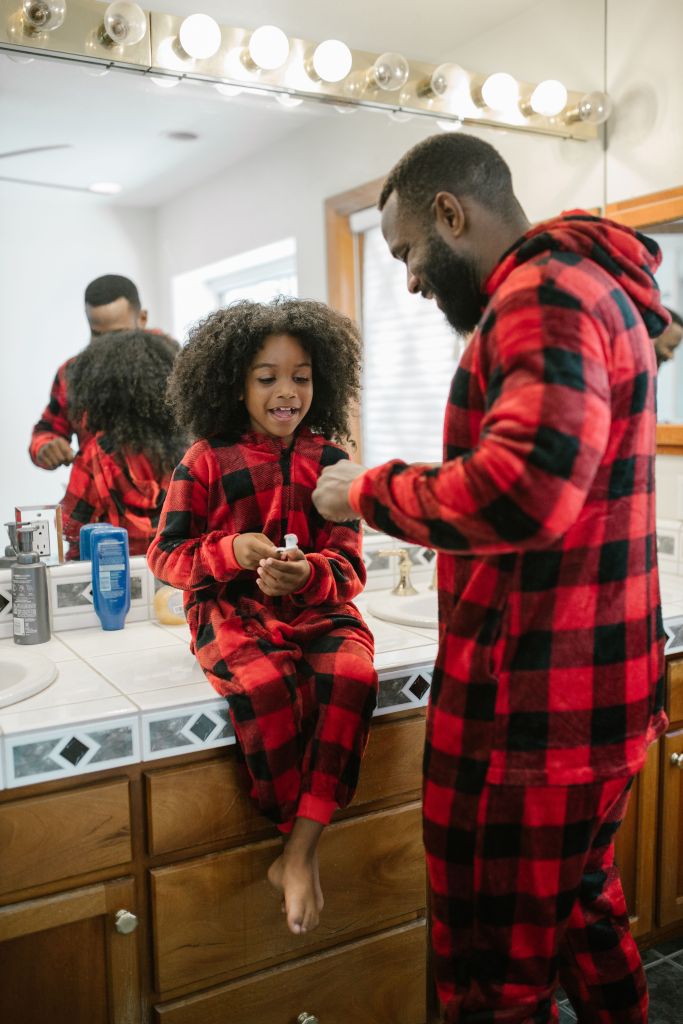
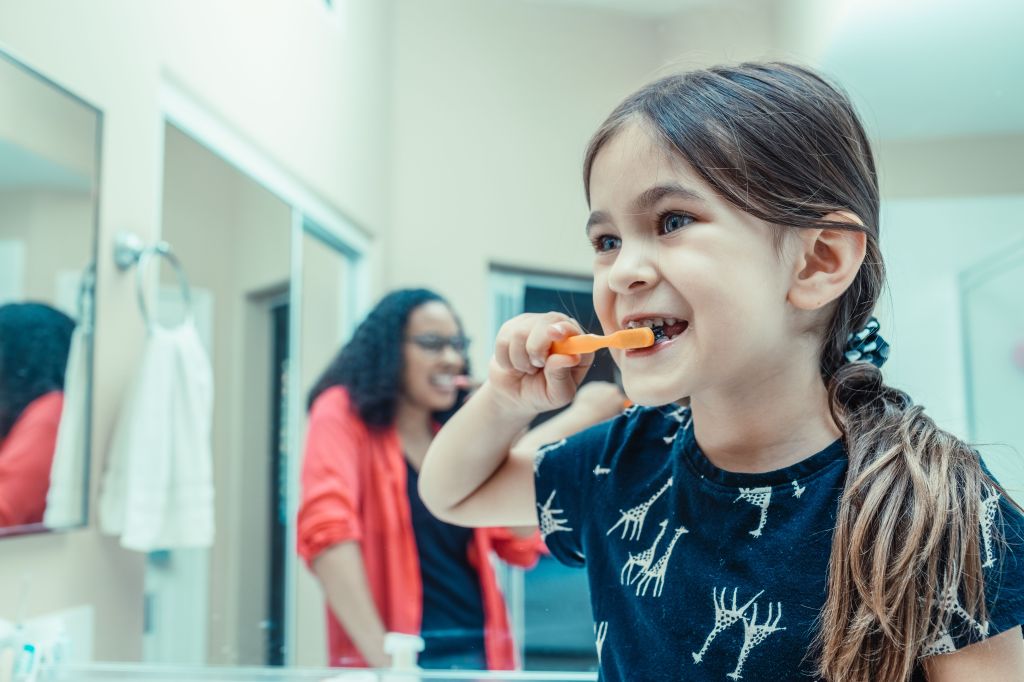
Are They Ready?
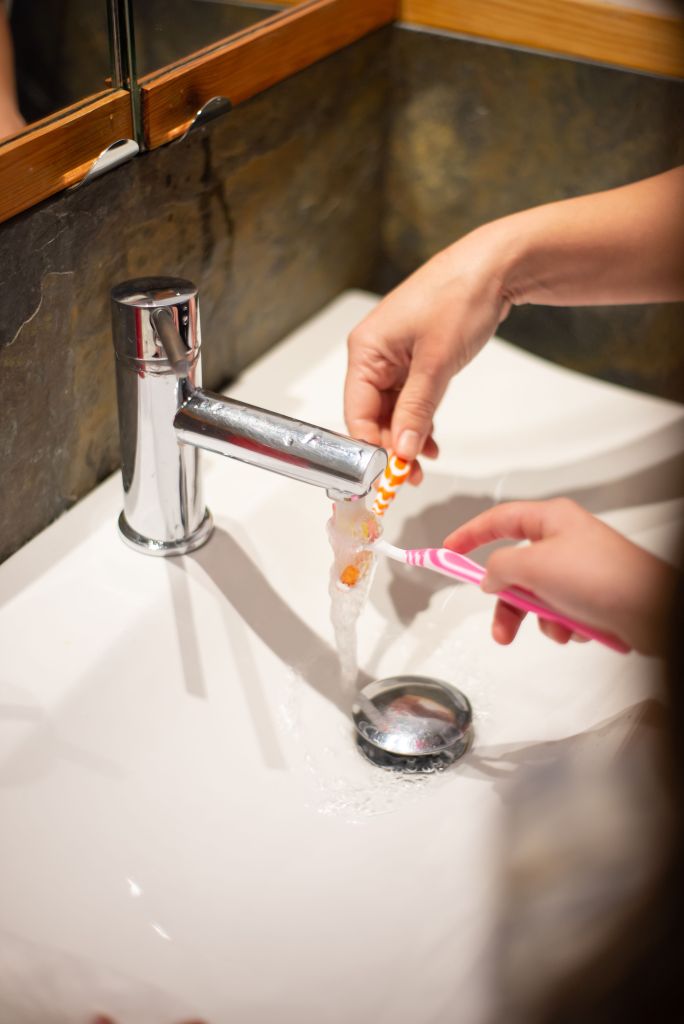
Every child develops at their own pace. There are children who can do this when they’re 8 or 9 years old. For others it’s 10 or 11 years old. Like with all milestones it takes time and what works for one might need tweaking for another.
What do you do if your child isn’t ready but wants to be an independent brusher? That’s okay!
There’s no definite time that all kids must be able to brush their teeth on their own. You can continue to help them learn and practice.
- Encourage their independence but you continue to floss and brush their teeth.
- Ask them questions about why and how you’re brushing.
- Once or twice a week have them hold their toothbrush with your hand over theirs and talk with them about what you’re doing as you’re doing this. Remember to have them look in the mirror to watch.
- Use a flosser or put the floss around their fingers and floss together. Remember to use a mirror so they can see.
- Once a week let them try on their own with you in the bathroom, check their teeth and then it’s your turn.
Transitioning to independent brushing is a big step and important milestone for both of you.
Finding the right balance between independence, supervision and encouragement will take time. Taking this day by day allows you to set your child up for their consistent long term oral hygiene routine.
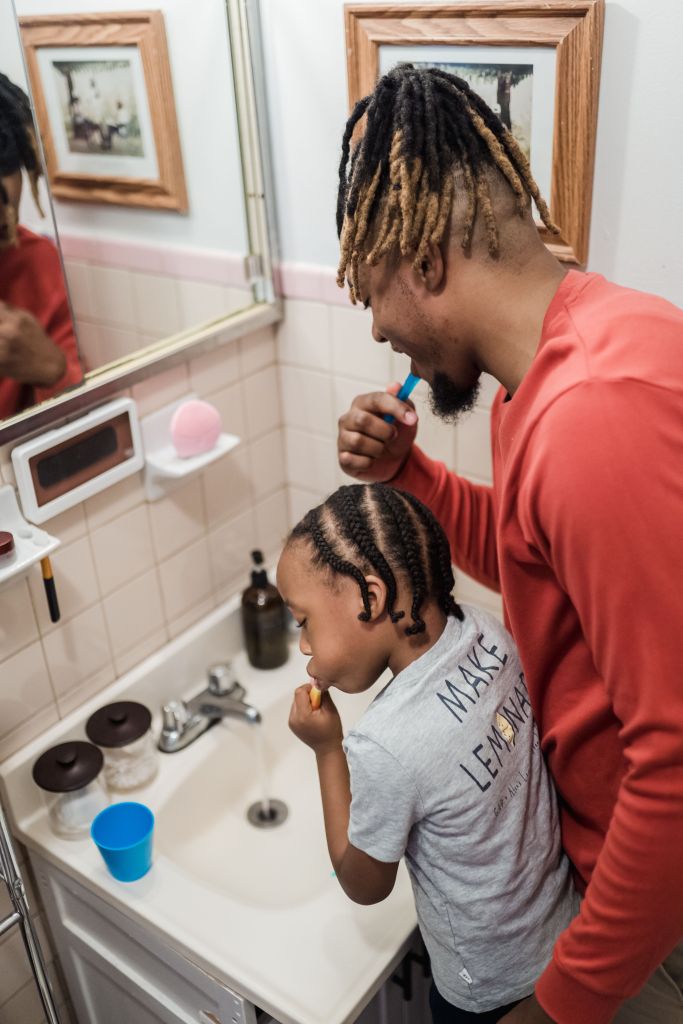
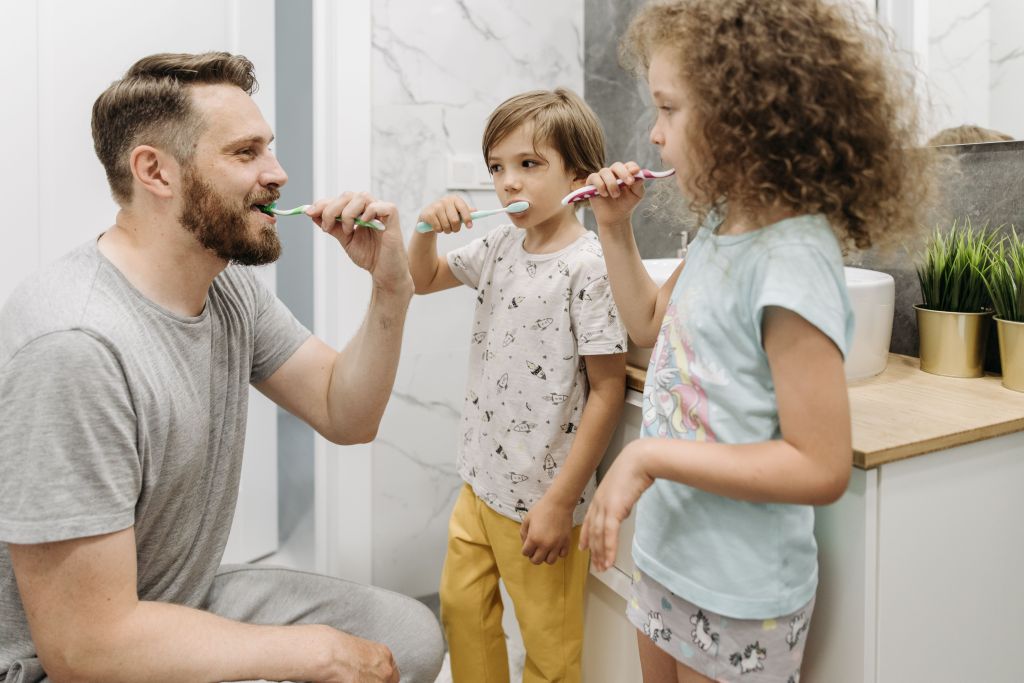
Has your child told you they want to brush their own teeth? Do you think they are ready to floss and brush on their own? How old were you when you started brushing on your own? What tips have you found is the sweet spot to encourage independent brushing? Tell Us, We’d really like to know! Send us an email at kidstoothhotline@proton.me Like Us on Facebook
More tips? We have lots. We’re here just for kids!


