In the Know for You to Know


Children’s oral health (aka dental health) is an extremely important part of healthy everyday life. As a parent, one of your first goals is to focus on prevention and at home oral hygiene routines.
However, for some children who have Autism Spectrum Disorder (ASD) following a brushing and flossing routine can be quite difficult. This makes establishing and maintaining these daily routines challenging.
For some children this may be due to sensory sensitivities, for some it’s due to taste and texture sensitivities, and for some it’s their inability to communicate which leads to everyone’s frustration.
Last week we discussed the challenges and strategies to help you help your child achieve successful dental care in the office.
Today we’re breaking down the basics on challenges and strategies for your at home tooth care routine.
Strategies For Your At Home Tooth Care Routine
Almost everyone thinks you need to brush teeth in the bathroom, it is not always the case.
A Few Ways For You To More Easily Brush Your Child’s Teeth
- Try brushing your child’s teeth with your child lying down on your bed, or
- With you sitting on a chair have your child sit down on the floor in front of you and lean back against your legs. Have them tip their head up so you can see inside their mouth, or
- Have your child lie down on the floor. You can either sit beside your child, or put a pillow on your lap and place your child’s head on the pillow, or
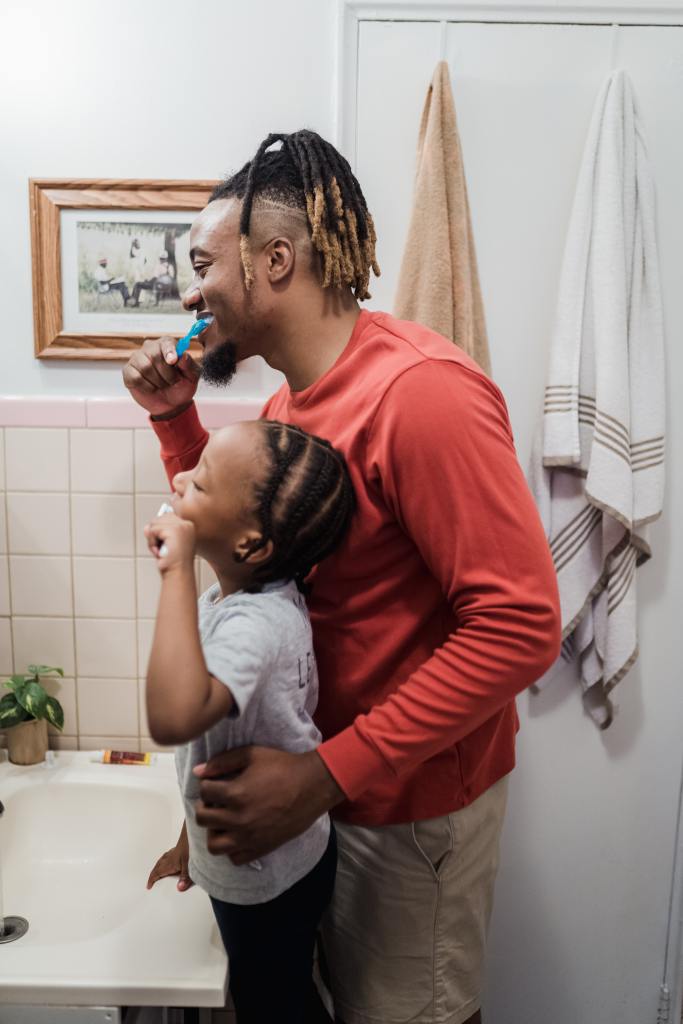
- Standing in the bathroom with your child standing in front of you, have them face the bathroom mirror with their head slightly tilted against your body. Place your hand gently over their hand so that you can help guide the toothbrush around their mouth.
What You Need To Get Started Brushing Your Child’s Teeth
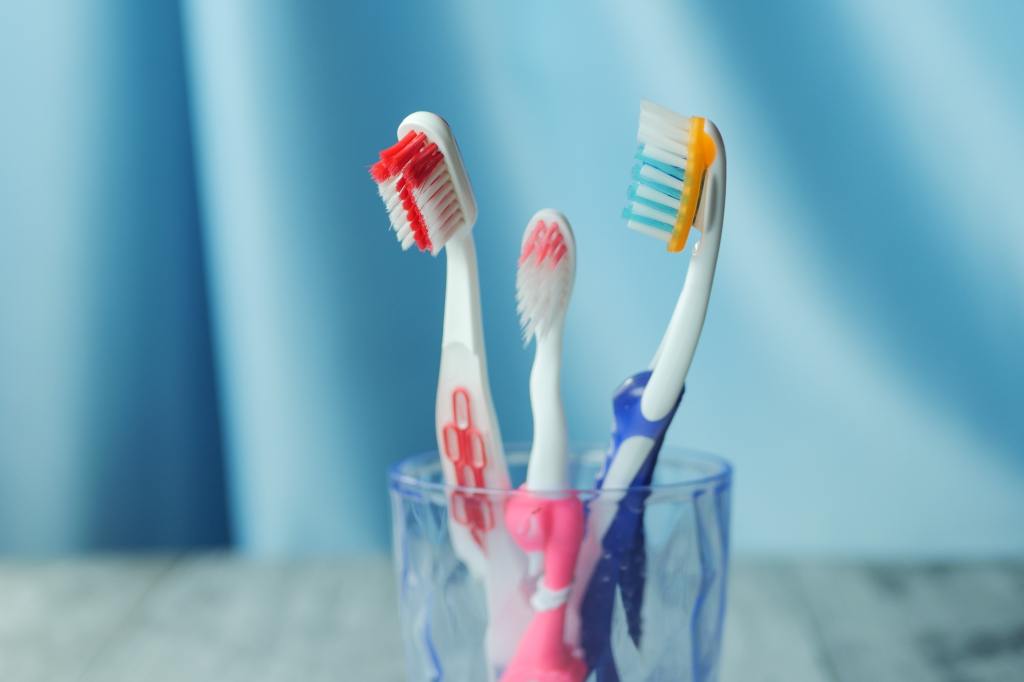
- Soft-bristled toothbrush-choose your child’s favorite color or cartoon character
- Electric toothbrush
- Bubble gum or fruity flavored toothpaste
- Hand held Flossers in fun colors
- 2 Minute Timer-a traditional fun colored plastic timer and watch the sand as you brush teeth, play a favorite song, or sign up for the 2 Minute 2X A Day App
- Fluoride Rinse- which is available in several flavors
Parent Choices
- Electric toothbrush-some children like the feeling of the moving bristles in their mouth and some children do not
- Toothpaste- if you’re concerned about sodium lauryl sulfate (SLS) in your child’s toothpaste, there are toothpastes without SLS, you may want to consider the Hello brand or Tanner’s Tasty Paste (Disclaimer: I do not receive any endorsements and do not have any affiliations with any of the mentioned products).
Toothbrushing Steps
Start by showing your child their toothbrush and have them touch the brush handle and then the bristles with their fingers, then rub the bristles gently in small circles on the back of their hand.
You can then touch the toothbrush bristles to their lips. Ask them to open their mouth (as big as they can) and touch the bristles to one or two of their front teeth. Count together to see how long they can keep their mouth open.
Place a rice grain size (if your child is younger than 3 years old) or a small green pea size (if your child is older than 3 years old) amount of toothpaste on their toothbrush.
Next Comes Toothbrushing—
- Brush the outside, inside and chewing surfaces of the top right back teeth five times,
- Brush the outside, inside and biting edges of the top front teeth five times,
- Brush the outside, inside and chewing surfaces of the top left back teeth five times,
- Brush the inside, outside and chewing surfaces of the bottom left back teeth five times,
- Brush the outside, inside and biting edges of the bottom front teeth five times,
- Brush the bottom right back teeth outside, inside and chewing surfaces five times.
4 Important Tips To Remember When Brushing Your Child’s Teeth
- always support your child’s head,
- have good lighting so you can see inside their mouth as well as what you are doing,
- be able to easily move their tooth brush around their mouth, and
- always find the safest and most comfortable position for you and your child.
A Parent’s Experience Establishing A Daily Oral Hygiene Routine For Their Child With ASD
Remember the child we discussed last week? The child who took 4+ years to be able to accept dental care.
You know that agonizing, tearful, disappointing, painful and frustrating dental appointments are compounded at home when you try to brush your child’s teeth, let alone try to floss.
They read social stories and made step by step story boards. They coordinated their oral hygiene schedule with other parts of their daily AM and PM routines.
They involved anyone in the family they could. They tried distraction and demonstrated through role playing.
They came up with a calendar for their AM and PM routines, made this something fun to look forward to, and they included a rewards calendar.
The hardest part was staying positive and motivated no matter how frustrated or defeated they felt.
Then one day out of the blue it came together after more than 4 years in the making. Yes this may seem amazing, but it can happen because each child is on their own time line.


What To Remember
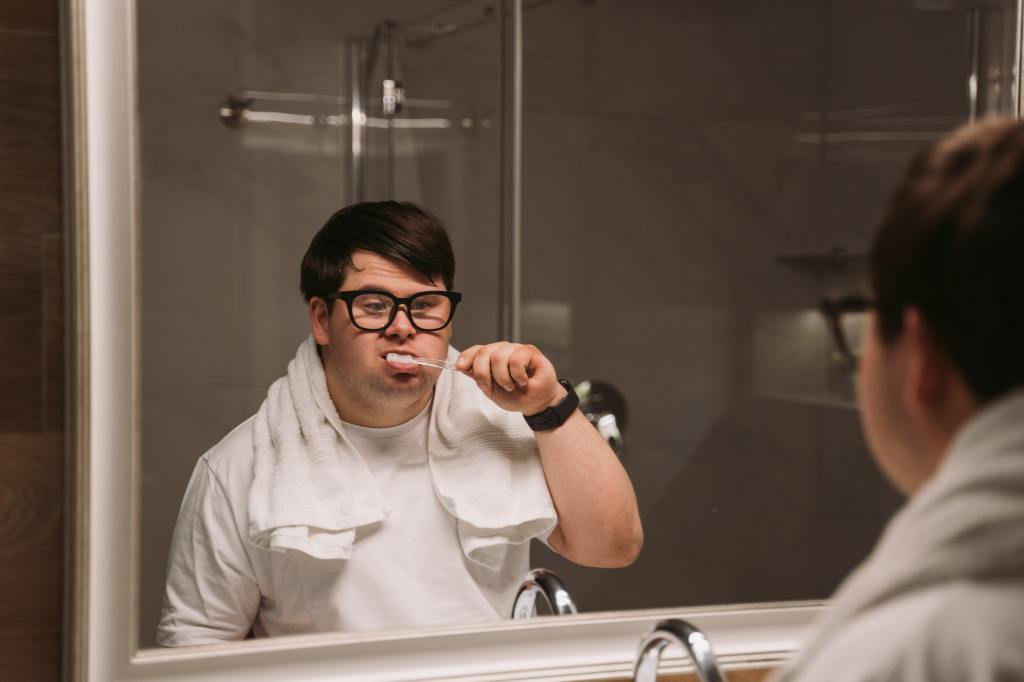
It takes time to establish a routine, and it may take multiple revisions and repeats. Try incorporating oral care into your daily life to become part of what you do everyday.
Consider talking with your child’s teacher, principal or the school district about adding daily oral hygiene to to your child’s Individualized Education Plan (IEP).
It’s important to take this one step at a time, reward your child’s successes and acknowledge that somethings may need to be tweaked.
2 of the most important things to remember—
When you get to where you want your child’s oral hygiene routine to be it will be so worth it!
Reward yourself for a job well done!!
Stay Tuned — We’re looking forward to seeing you next week when we continue discussing Strategies For Your At Home Care Routine with tips for creating your own storyboard.
Does your child have ASD? What are your at home care challenges? How is your routine going? What are your successes? What have you learned works for your child? Tell us, We’d really like to know! Send us an email at kidstoothhotline@proton.me Like Us or Chat with us on Facebook at facebook.com/kidstoothhotline
More tips? We have lots. We’re here just for kids!





































































 kidstoothhotline