Do You Have Trouble Brushing Your Child’s Teeth?

In the Know for You to Know

Like most parents you may have a tough time brushing your child’s teeth. There’s crying, screaming, struggling, chasing and all to brush teeth.

I’ve put together some tips and tricks that will empower you in your brushing dilemma.
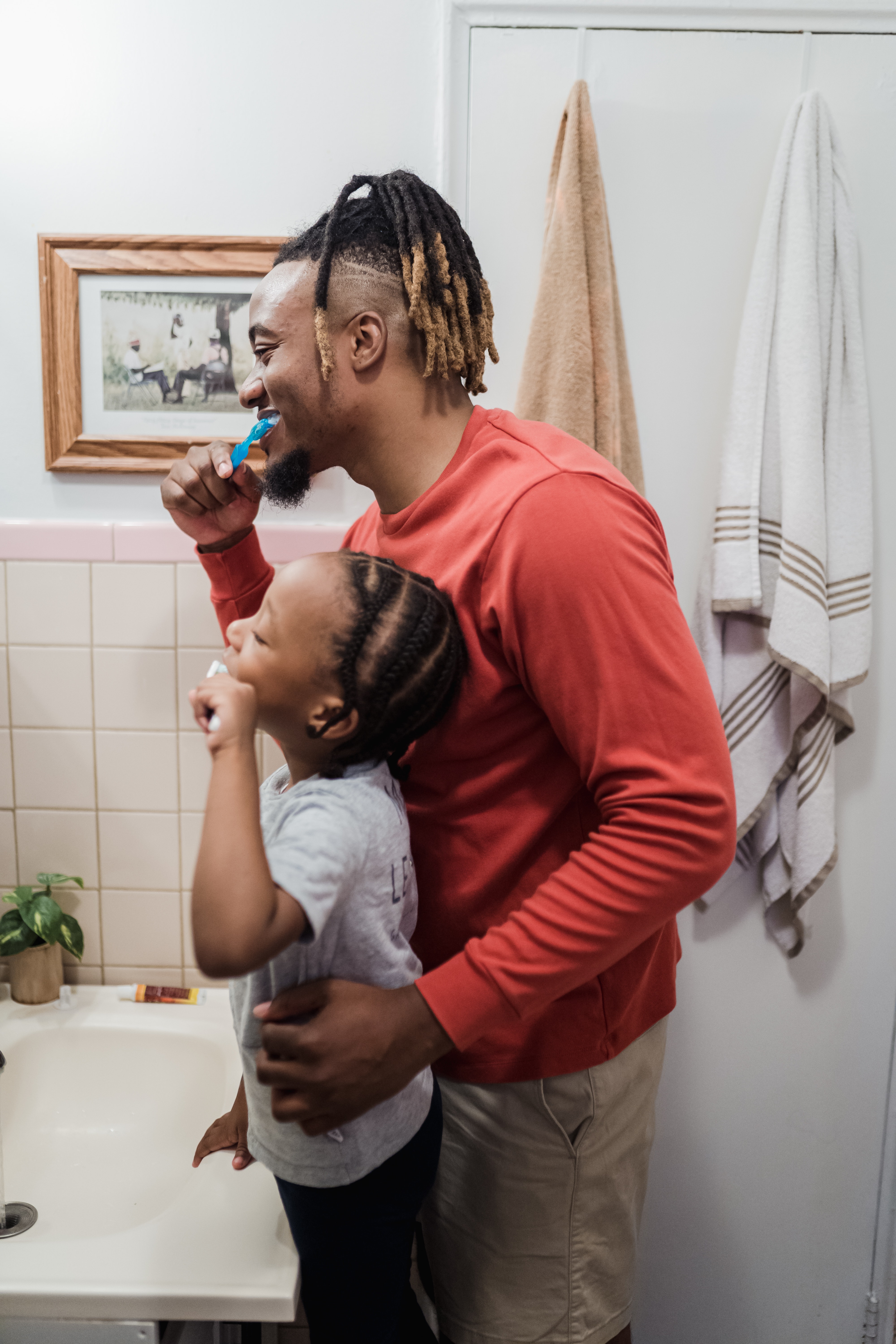
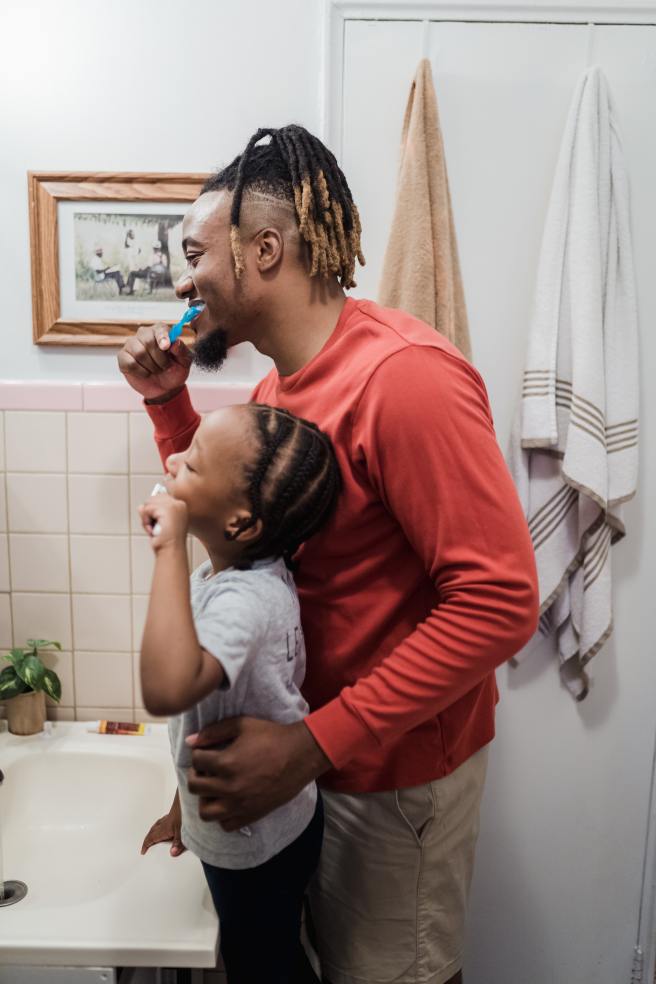
Laughing And Smiling Brushing Teeth with Daddy

Insider Tips To Make Brushing Easier

There isn’t only one way to for you to brush teeth. There are a few different positions you can use to more easily and comfortably clean your child’s teeth.

Lying On The Bed
Try brushing your child’s teeth with your child lying down on your bed. If you’re right handed you sit on their right side, and if you’re left handed sit on their left side. You can use your arm to help cradle your child’s head while brushing.

Sitting On The Floor
With you sitting on a chair have your child sit down on the floor in front of you and lean back against your legs. Have them tip their head up so you can see inside their mouth.

Lying On The Floor
Have your child lie down on the floor. You can either sit beside them, or put a pillow on your lap and place your child’s head on the pillow. If you’re right handed you sit on their right side, and if you’re left handed sit on their left side. You can use your arm to help hold your child’s head while brushing.

Standing In The Bathroom
With your child is standing in front of you, have them face the bathroom mirror with their head slightly tilted against your body. Place your hand gently over their hand so that you can help guide the toothbrush around their mouth.
This helps your child learn how to brush so they can see how tooth brushing is done, and standing behind them may make it easier for you to brush their teeth.

The 4 Most Important Things To Remember

The 4 most important things to remember are —

  • always cradle your child’s head,
  • have good lighting so you can see inside their mouth as well as what you are doing,
  • be able to easily move their tooth brush around their mouth, and
  • always find the safest and most comfortable position for you and your child.

Tooth Brushing By Any Other Name

Does the mention of tooth brushing cause stress in your home? Instead of saying it’s time to brush teeth try calling brushing by another name. For your next brushing time simply say to your child “It’s Smile Check Time”.

Even if helping your child brush twice a day is challenging a little creativity can go a long way to getting them interested, no matter their age.

How do you brush your child’s teeth? Which tip works best for your family? We’d really like to know. Email us as kidstoothhotline@proton.me Like Us on Facebook at facebook.com/kidstoothhotline

More tips? We have lots. We’re here just for kids!

Sippy Cups Are For Kids, What About Their Teeth?

In the Know for You to Know

My Mommy Is Helping Me Drink From My Sippy Cup

You’ve been waiting for this day, your baby has started eating solid foods and is drinking from a cup.

Well maybe not from a regular cup right now, but you’re introducing them to drinking from a no spill training cup. These training cups are also affectionately know as sippy cups.

Children grow to love their sippy cup, but there are a few things you should know about them.

Benefits Of Drinking From A Cup

Pediatricians and Pediatric Dentists stress the benefits of teaching your child to drink from a cup.

1st is to transition from sucking to sipping.

2nd, is that ongoing feeding from a bottle can lead early childhood cavities, which occur when a child’s teeth are constantly bathed in milk, formula, juice or other drinks.

3rd, is that drinking from a cup also helps these little mouths strengthen their smiling muscles.

The Right Cup To Choose

Sippy cups come in a variety of styles. Some have a lid with a wide spout, some have a straw, and some have a one way valve inside the lid to prevent spills.

Cups with valves may sound great but the children have to suck on the spout to get any liquid to come up from the cup and this is just like drinking from a baby bottle.

There are some parents who make their own sippy cups, where they offer their child a regular open cup with or without a straw.

If you choose a sippy cup it’s better to choose one without a valve. The cup should have a snap-on or screw-on lid with a simple spout. Also look for a sippy cup with two handles to help those little hands hold the cup easier. There are some cups that have a weighted base which helps to pull them back upright when they tip over, which is great for helping to minimize spills.

My Mom is Helping Me Learn To Drink From A Cup

Healthy Beverages For Your Child’s Sippy Cup

Plain water is the healthiest drink, plus the fluoride in your tap water helps prevent cavities. P.S. fluoride is safe for children.

Plain milk is also a good choice, but remember milk also has natural sugars so it’s best to offer in small portions with a meal. This way the food and saliva help to dilute and wash away the sugar.

Flavored milks, juices (even 100% juice) and carbonated drinks have added sugars which cause cavities.

No Carrying Around The Sippy Cup My Dear Toddler

Don’t let your child carry the sippy cup around. Toddlers are often unsteady on their feet. It’s a risk if they try to walk and drink at the same time. Falling while drinking from the sippy cup has the potential to injure their mouth.

No Sippy Cups To Bed Is Best But If You Have To

When nap time and bed time come, don’t let your child go to bed with their sippy cup unless it’s filled with plain water. Sugary drinks sit in their mouths during sleep giving their teeth a sugar bath which can lead to cavities.

Congratulations, introducing a sippy cup is a huge step and worthy of a celebration!

What is your sippy cup story? Do you have a tip or a trick that made your child’s and your journey easier or more fun? Tell us, we’d really like to know. Send us an email at
kidstoothhotline@proton.me Like Us on Facebook at facebook.com/kidstoothhotline

More tips? We have lots. We’re here just for kids!


Breast Feeding – What Nursing Moms Should Know About Dental Health

In the Know for You to Know

Lovingly Breastfeeding My Baby

Breastfeeding is special for so many reasons and it is one of the first decisions you make as a new mom about how to feed your child. Breastfeeding is a remarkable experience that also has health benefits for both you and your baby.

Breast milk can help infants fight infection, decrease the risk of allergies, asthma, and obesity, as well as lowering the risk of SIDS. Nursing mothers may lower their chances of developing breast and ovarian cancer.

Did you know breastfeeding also has an impact on both your baby’s and your dental health?

Here’s a look at how —

Mom, You Don’t Have to Wean As Your Baby Gets Teeth

This is an often asked concern about teething and breastfeeding. Many nursing moms decide it’s time to stop breastfeeding when their baby starts teething or they first notice a tooth. Usually, this is because they’ve heard that the baby can nip the breast at the end of a feeding session, or, another nursing parent voiced fears about being bitten. Yet there are many teething babies and babies with teeth who never bite when breastfeeding. So the answer is you don’t have to stop if you don’t want to.

Every mother-child breastfeeding experience is individual and special. The decision to stop breastfeeding is important to discuss with your pediatrician when you think it’s the best for you and your baby, and not just because the teeth are coming in.

Breastfed Babies Can Still Get Cavities

Can breast feeding cause cavities? Is an often asked question by nursing mothers. The short answer is yes, and this is because breast milk does contain sugar in addition to all of the other good things.

The long answer is that the benefits of breastfeeding for infants in their first year of life help to ensure the best possible health for your baby and your family.

However, frequent and nightly (and nap time) breastfeeding (and baby bottle use) beyond 12 months of age is associated with increased early childhood cavity risk.

This is why it’s important to never let your baby fall asleep while feeding. Breastfeeding infants who fall asleep while nursing with milk in their mouths are also vulnerable to cavities.

Take care for your infant’s mouth from the start, even before teeth come in. Starting right after birth begin wiping your baby’s mouth and gums with a clean, moist washcloth after each feeding every day.

Breastfeeding May Help Build a Better Bite

The American Dental Association, American Academy of Pediatrics and the American Academy of Pediatric Dentistry found that babies who are exclusively breastfed for the first 6 months of life were less likely to have teeth alignment issues.

While every baby and every child is different, this doesn’t mean your exclusively breastfed baby won’t need braces someday. Other factors, like genetics, pacifier use, and thumb sucking also affect tooth alignment.

Mom, You Need To Take Care of Yourself

Being a mom is stressful. You have no time to take care of yourself. Remember if you’re not healthy (and this also goes for your dental health), you will not have the time and the energy to make sure your baby is healthy.

So what you need to do —
Eat a healthy diet and stay hydrated by drinking water. Plain, fluoridated water is great for you to stay hydrated, for the tooth protective benefits of fluoride and your mouth to stay moist (as opposed to dry which can make you not feel your best).

Brush your teeth twice a day, Yes you are exhausted but you need to do this because if you let this slide then the bad bacteria in the mouth grows and not only causes cavities but can be transmitted to your baby by kissing and sharing (or licking) their spoon.

Another reason to brush is so that you don’t accumulate that sticky film (plaque) and hard tarter on your teeth which increases the risk for gum disease.

Some new moms may experience jaw pain, sore neck muscles, or grinding (clenching). Tell your dentist if you’re having any of these symptoms, you don’t have to grin and bear it.

Need Dental Care? Let Your Dentist Know You’re Breastfeeding

It’s safe and important for you to go to the dentist while you’re pregnant and while you’re nursing. It’s also very important for the best health of your child.

If you need to have a dental procedure that requires medication while nursing, discuss this with your dentist, your personal physician and your pediatrician.

You can even ask your dentist to call your OB, your primary care provider, and your pediatrician directly before or during your appointment to address any concerns you have.

You’ve got this!

Every woman’s motherhood journey is meaningful and special. What’s your hack for including and taking care of your dental health in your usual mom day? We’d really like to know. Email us at kidstoothhotline@proton.me Like us on Facebook at facebook.com/kidstoothhotline

More tips? We have lots. We’re here just for kids!


Baby On Board Taking Care Of Mom’s Teeth During Pregnancy

In the Know for You to Know

We're Having A Baby
We’re Having A Baby

Taking care of your mouth during your pregnancy is as important for you as it is for your baby. Yes, brushing, flossing, eating healthy foods, having regular dental checkups and dental care go a long way to help keeping you and your baby healthy.

Your body changes when you are pregnant and this includes your teeth and gums. Your gums can get sore, puffy and red, or they may grow over your teeth. So what do you do?

It’s important to know that dental care (aka oral health care) is safe during your pregnancy, and is important for your overall health and wellbeing as well as for your baby.

Oral Health and Medical Health Are Related

Any pain and reluctance to eat associated with untreated dental issues can compromise your nutritional intake.

We all know that the mouth is the entrance to the body, and when teeth and gums are not healthy this can affect other parts of the body and a baby’s growth.

Oral Health Changes During Pregnancy

During pregnancy the body undergoes a lot of changes, including fluctuating hormones. These changes make the gums more prone to dental issues like pregnancy gingivitis, periodontal disease and teeth more sensitive to cavities. Nausea and vomiting are a concern because the protective tooth enamel is vulnerable to being worn away.

Hormone levels during pregnancy affect the way the gums react to plaque, the sticky film that builds up on teeth.

Cavity risks can also rise during pregnancy. If you are eating more carbohydrates than usual, this offers extra fuel for the bacteria that cause cavities. Morning sickness can increase the level of acids in the mouth, causing damage to the shiny, protective enamel.

When Is A Good Time During Pregnancy To See The Dentist?

The American Dental Association, the American College of Obstetricians and Gynecologists, the American Academy of Pediatrics, and the American Academy of Pediatric Dentistry all encourage Mom’s to see their Dentist when they’re expecting.

It is safe and important to have dental care during pregnancy. What’s not advisable is to put this off until after the baby is born.

Remember to tell your Dentist you are expecting, any medications you may be taking, how far along you are and your expected due date.

Checkups and necessary treatment can be provided throughout pregnancy, even in the 1st trimester. The period between the 14th and 20th weeks are the best time to have treatment because it is most comfortable due to the baby’s position. Necessary treatment during this time can prevent problems from coming up in the 3rd trimester.

The time between pregnancies provides an opportunity to maintain good oral health, address any ongoing concerns, and elective treatment.

How To Protect Teeth During Pregnancy

Brush, Floss, Eat Healthy Foods

Now more than ever it’s important to brush twice a day (with a fluoride toothpaste) for two minutes each time, morning and before bed are recommended. Flossing once a day (best is at night before bedtime brushing) to clean away food between teeth. Rinse every night after brushing with an alcohol-free fluoride mouth rinse.

Replace your toothbrush every 3 to 4 months or when the bristles become ragged, and do not share toothbrushes.

You may find it a little more difficult to maintain a regular dental routine while you’re expecting, especially if you feel tired. You may have a more sensitive gag reflex, and if you vomit rinse your mouth with water.

Eat healthy foods and a balanced diet like fruits, vegetables, whole grains and dairy. At the grocery store, read food labels so you can choose foods lower in sugar. Stay hydrated by drinking fluoridated water especially between meals and snacks, instead of juice, fruit flavored drinks and soda.

Taking extra-good care of your teeth and mouth are good for both you and your baby.

You Can Do This

Continue to take care of your mouth and teeth after your baby is born. It’s easy to get off track, but remember to stay up to date with your oral health care visits, keep practicing good oral hygiene and eating healthy foods.

What were your experiences like at the Dentist when you were pregnant? Are you pregnant now and taking care of you dental health? or not? It’s okay, don’t be shy! We’d really like to know! Send us an email at kidstoothhotline@protonmail.com Like us on Facebook at www.facebook.com/kidstoothhotline

More tips? We have lots. We’re here just for kids!

Stopping Cavities With The Silver Bullet

In the Know For You To Know

Here you are, you know your child has a cavity but you also know they won’t sit to have it taken care of. You’re thinking about taking your child to the pediatric dentist and face the music or tough it out, after all it’s only a baby tooth and it will fall out. At first toughing it out sounds like a good idea but then you look at their face then into their mouth and realize you have to go.

But what can they do?

There is a special medication that can be applied directly to teeth which can stop or at least slow down the growth of a cavity. This remedy is Silver Diamine Fluoride.

Please make my teeth stop hurting

What is Silver Diamine Fluoride?

Silver Diamine Fluoride (SDF) is an FDA and ADA (American Dental Association) approved clear topical liquid that is used to treat cavities. It is applied by a pediatric dentist to the cavity area of a tooth to control and help stop the progression of a cavity.

How Does SDF Work?

Silver Diamine Fluoride is composed of two main components, silver and fluoride. The silver part acts as an antimicrobial on the bacteria causing the cavity while the fluoride helps to strengthen and remineralize the tooth. The third accessory component is Diamine which makes the SDF into a liquid.

How Is SDF Applied To Teeth?

Your child’s teeth will be dried and any food or plaque will be removed. SDF is applied to the affected teeth with a small brush and allowed to dry on each tooth for one to two minutes. After this application it is recommended that your child does not eat or drink for at least an hour so the Silver Diamine Fluoride has time to penetrate into the tooth and the cavity.

After SDF is applied the cavity will turn black and stay black. It make take up to a week for the cavity areas to turn black. The black stains on teeth treated with SDF are permanent. The parts of the tooth without the cavity will not turn black.

When Is SDF Recommended?

While Silver Diamine Fluoride is not a substitute for the traditional way cavities are treated, it is another option for treating cavities. Young children, children with special health needs, any child who has a difficult time at the dentist or who may have a lot of cavities may benefit from this type of care.

What Are The Benefits Of SDF?

Silver Diamine Fluoride has a number of benefits — Quick to apply, Painless, May stop cavity progression, Relieves tooth sensitivity, Helpful cavity treatment for children who are very young or any child who struggles with appointments and longer procedure times.

Are There Any Risks With SDF?

Some common risks are — All cavity areas will stain black while healthy tooth structure will not stain; If Sliver Diamine Fluoride touches skin or the gums, a harmless temporary brown or white stain may appear on that area, which will disappear on its own in one to three weeks; Some may notice a metallic taste but this is temporary; SDF may not stop cavities from progressing and other treatments may need to be discussed.

SDF Is Just Not For Some Children

SDF contains silver and children who are allergic to silver or who have mouth sores or ulcers in their mouth should not have it applied to their teeth. It should also not be used when the cavity is very deep and has compromised the tooth. Some parents may not want the cavity areas on their child’s teeth turning black.

Are There Any Alternatives To SDF?

Two possible alternatives may be — No treatment, which may lead to worsening symptom severity as well as increasing breakdown of teeth; Depending on the extent and location of the cavities other treatment options may be necessary which is an important conversation for you to have with your child’s pediatric dentist.

What’s important is that Silver Diamine Fluoride is a safe, effective alternative treatment that can help your child maintain a healthy smile.

Thank You For Taking Care Of Our Teeth

Has your child had SDF applied to their teeth? How did your appointment go? We’d really like to know. Send us an email at kidstoothhotline@protonmail.com Like us or Friend us on Facebook at www.facebook.com/kidstoothhotline

More tips? We have lots. We’re here just for kids!

It’s National Children’s Dental Health Month

In the Know for You to Know

Every February we celebrate Children’s Dental Health Month. We like to celebrate children’s oral health every month but February historically holds a special place in our hearts.

Healthy habits start early and grow as your child grows. Whether your child is a newborn, 6 months old, 6 years old, or 16 years old healthy teeth and gums are important for a healthy smile and a healthy life.

With a consistent home care routine, a balanced diet, injury prevention, and regular dental visits your child’s teeth can be healthy, strong, beautiful and last their whole lifetime.

Keep Those Little Smiles In Your Life Healthy And Happy From The Start!

Cavities are the most common chronic disease among children across all age groups. From infant to college, cavities are 4x’s more common than Asthma.

They are also the most common preventable chronic disease among children of all ages.

Did you know that cavities can form even before a tooth is fully in the mouth?

Happy Healthy Teeth Come Out On Top – What You Can Do At Home

From their 1st tooth, brush your child’s teeth 2x/day with fluoride toothpaste every day. Teeth not in yet? No worries, use a wash cloth to wipe their gum pads and tongue after each feeding.

Teeth touching? Clean between your child’s teeth nightly with dental floss.

To snack and what to snack on? Eat healthy foods and be selective about sugary and starchy (aka high carb) foods and beverages. Yes that includes chips.

Children’s teeth are meant to last a lifetime. And a healthy smile is a happy and confident child.

  • After Your Feeding and Cleaning Your Mouth We Lay You Down To Sleep
  • After Your Feeding Mommy Is Going To Wipe Your Mouth
  • All My Teeth Are Looking Good
  • Daddy And Me Brushing Time
  • Daddy and Me Smiling Our No Cavity Smiles
  • Happy Baby Happy Mommy and Daddy
  • Healthy Teeth Happy Family
  • I May Have A Few Teeth But My Mommy Is Making Sure We Brush
  • Love To Smile
  • Love You Daddy For Playing With Me And Brushing My Teeth
  • Loving My Cavity Free College Smile
  • Mommy and Daddy Brushed Our Teeth Now It's Playtime
  • Mommy And Daddy Love You So Much We Never Want You To Have A Cavity
  • Mommy And Daddy Make Sure I'm In The No Cavity Club
  • Showing Off My Healthy Teeth
  • Smiling Our Best Smiles
  • Still No Cavities!
  • The Thought Of Getting A Cavity Makes Us Laugh

In honor of National Children’s Dental Health Month, we applaud you and encourage you to help your children develop a healthy routine.

What is your goal for Children’s Dental Health Month? Start small and aim high, let us know your plan. Already have a routine in place that you’re working on? Let us know how it’s going. We’d really like to know. Send us an email at kidstoothhotline@proton.me Like us or Friend us on Facebook at www.facebook.com/kidstoothhotline

Happy National Children’s Dental Health Month!

More tips? We have lots. We’re here just for kids!

Why Is My Teenager Grinding Their Teeth?

In the Know for You to Know

You know what it’s like, the house is quiet, your teenager is finally sleeping, and then you hear that nightly nails on a chalk board sound coming from their bedroom. You’re thinking to yourself “Not again, what is going on?”

Teeth grinding is also called clenching or Bruxism, and is quite common especially for teenagers. So what’s a parent to do? The good news is that most teens will stop their teeth grinding habit on their own, so there’s no cause for worry.

But you’re thinking, “What do I do to stop this?”

Grinding My Teeth At Night Wakes Me Up So I Fall Asleep Studying

What Causes Grinding?

You may be worried that your teen is afraid of something, is anxious, stressed, can’t sleep, or is having a nightmare. For some tweens and teens it may be because they are deeply concentrating on something.

However, it can be that their adult teeth are still coming in or their wisdom teeth are pushing against other teeth. When this occurs they try to compensate for the pressure they’re feeling and make their teeth match up.

Sometimes teens grind their teeth because they are deep sleepers. So even if you wake them up, the grinding will continue as they fall back asleep.

This Is Me When I Wake-up After Grinding My Teeth At Night

Is Grinding A Concern?

Sometimes grinding may persist, and you’re noticing that their teeth don’t have the same shape they did before, or they may look flatter. You may notice chips or cracks on teeth, they may complain about having a lot of headaches, or ear pain, or tenderness around their jaw joint (aka temporomandibular joint or tmj) or their neck muscles.

Depending on the dental age your tween or teen is, your pediatric dentist may not recommend a mouth piece (aka mouth guard) as it can affect how their teeth come into their mouth.

If your child snores that can cause them to grind their teeth and this is something to let your pediatrician know.

Sometimes teeth grinding can be due to pain from an ear infection, this is also something to talk with your pediatrician about.

What Can Parents Do?

As children become tweens and teens they tend to get more stressed out about things, which can show up as grinding during sleep. When they grind their teeth during sleep they aren’t getting the healthy restful sleep they need. Knowing how to respond to our children’s stressors is what helps us to help them.

Alleviating anxiety and stress may mean trying some exercise, looking into finding a hobby, deep breathing exercises, or yoga.

During the day your tween and teen may need to remind themselves to relax, open their mouths and smile. This way their top and bottom teeth aren’t touching so they aren’t grinding. Giving up chewing gum (or at least decreasing its frequency) may also help.

Try starting a relaxing pre-bedtime routine. A warm bath or shower, relaxing music, deep breaths or a good book and putting the phone away may help your child fall asleep in a more calm and relaxed way.

If their jaw or neck muscles hurt, you can give them a warm wet compress to hold to the area that bothers them to relieve the tension in these muscles.

Is There A Cure For Grinding?

For tweens and teens it may be a change in routine to help decrease stress and learning to relax their muscles.

You and your teen can think about establishing a routine to set the stage for peaceful quiet time to encourage healthy sleep and help your child feel relaxed at bedtime.

What approaches have you tried for your tweens and teens teeth grinding? We’d love to know your ideas, what you’ve tried, what’s working for you, what hasn’t worked. Email us at kidstoothhotline@proton.me Like us or Message us on Facebook at www.facebook.com/kidstoothhotline

More tips? We have lots. We’re here just for kids!

My Child Is Grinding Their Teeth, Why?

In the Know for You to Know

You’ve been there, the children are in bed, the house is quiet, you’re starting to relax and then you hear that familiar grating, nails on the chalk board sound coming from your child’s bedroom. You think to yourself “Not again, what is going on?”

I Grind My Teeth and My Parents Don't Like It
I Grind My Teeth and My Parents Don’t Like It

Teeth grinding, also called Bruxism is quite common for children and causes a lot of concern for parents. So what’s a parent to do? The good news is that most children outgrow their teeth grinding habit, so there’s no cause for worry.

You’re thinking “But what do I do?”

What Causes Grinding?

You may be worried that your child is afraid of something, is anxious, or is having a nightmare.

However it can be as simple as your child’s teeth coming in and they’re learning how to make their teeth match up with each other. After all having new teeth come in is new for them and for you.

Some children grind their teeth because they are deep sleepers. So even if you wake them up, the grinding will start again as they fall back to sleep.

Is Grinding A Concern?

Sometimes even after children get all their teeth the grinding may persist. You’re noticing that their teeth don’t have the same shape they did before or they may look flatter. For toddlers, pre-schoolers, and school age children we don’t recommend a mouth piece (aka mouth guard) as it can affect how their teeth come into their mouths and how they lose their baby teeth.

If your child snores that can cause them to grind their teeth, and it’s best to let your pediatrician know about their snoring. Sometimes teeth grinding can be due to pain from an ear infection, so again talk with your pediatrician.

Solutions For Parents

Starting a relaxing pre-bedtime routine for your child may be helpful to set the stage for healthy sleep and have your child feel confident and secure at bedtime.

Some comforting bedtime activities to help your child fall asleep in a more calm and relaxed way —

Eating a nutritious snack before bed and then brushing teeth with a silly brushing song, Taking a warm bath, Together time or Cuddle time together with your child and reading stories, Singing songs or playing soft music.

  • Checking To See Why My Son is Grinding His Teeth
  • I May Be Sleeping Peacefully Now But Wait Until I Start Grinding And The Whole House Is Up
  • I'm Helping My Mom and Dad Learn Why I'm Grinding My Teeth
  • My Covers Don't Stop The Sound Of My Teeth Grinding
  • My Mommy and Daddy Are Comforting Me Trying Too Get Me Too Stop Grinding My Teeth

What approaches have you tried for your child’s teeth grinding? We’d really like to know! Email us at kidstoothhotline@protonmail.me Like us or Message us on Facebook at www.facebook.com/kidstoothhotline

Look for our post next week on Tweens and Teens Teeth Grinding

More tips? We have lots. We’re just for kids!

Why Does My Child Have Shark Teeth

In the Know for You to Know

It’s new tooth time again, and this time your child is getting their first adult tooth.

I'm 5 and I have Shark Teeth
I’m 5 and I have Shark Teeth

You’re thinking okay, baby tooth gets loose, baby tooth falls out, the tooth fairy is coming and what is it going to cost me?

Then you look in your child’s mouth and the baby tooth is still there and now the adult tooth is coming in behind it. Now you’re thinking, there’s 2 rows of teeth, that’s not supposed to happen, what’s going on? and what do I do?

The FYI On How Baby Teeth Fall Out

Around the time your child is 5 to 7 years old their bottom and top front adult teeth (aka forever teeth) start to come into their mouths.

Baby teeth start to become loose when the adult teeth push up from under the gums and naturally melts away the baby tooth’s root. Then the adult tooth grows into that same place.

Sometimes the adult tooth isn’t growing directly under the baby tooth, it’s growing a little further back behind the baby tooth. When this happens the baby tooth doesn’t fall out and the adult tooth grows in behind it.

When this happens, these 2 rows of teeth are fondly called Shark Teeth.

Why? Sharks have 2 rows of teeth.

Should You Be Worried?

The long and short answer is No.

This is relatively common even though it looks frightening.

That Adult Tooth Looks Really Big

Yes it does and they’re supposed to look that way.

The front adult teeth are about 2x’s the size of baby teeth. That’s why sometimes they don’t fit in the same spot as baby teeth.

What To Do About Shark Teeth

If the baby tooth is even a little bit loose encourage your child to wiggle it and loosen it more.

Most times the baby tooth will eventually fall out on its own, and the permanent tooth will slowly move into place. It may or may not be in the perfect position.

Remember, your child is growing and so are their jaws, as their jaws grow there is room for more teeth.

If the baby tooth isn’t loose it may be time to visit the pediatric dentist.

Showing Off My Shark Teeth

As a parent, it’s natural to be worried when you see those 2 rows of teeth in your child’s mouth. Knowing that it’s common will help you rest a lot easier.

What’s your Shark Tooth story? Did you have Shark Teeth when you were a child? Let us know, we’d love to hear from you! Send us an email at kidstoothhotline@protonmail.com or Like Us on Facebook at www.facebook.com/kidstoothhotline

More tips? We have lots. We’re here just for kids!

Smart Mom’s Rely On A Specialist To Be In The Know

In the Know for You to Know

Happy 2023 to You! We celebrated the end of another year last week and are looking forward to everything 2023 has to bring. Wishing you all a happy and healthy new year with plenty to smile about!!

Mom Tips For Starting Off 2023 On The Right Tooth

My Mom Showing Me How To Brush My Teeth

Brush And Floss By Example

Show your children that taking care of their teeth and gums is something you do twice a day everyday. Brushing after breakfast and before bed is important, so is flossing before bedtime brushing. Show them how you hold your toothbrush – tilt the bristles toward your gums and move your brush in little circles, making sure to touch every side of every tooth. This doesn’t have to be boring. You can have fun! What’s your favorite songs? You can brush to the music.

Using Fluoride Toothpaste From The Start Is Okay

The American Dental Association (ADA) and The American Academy Of Pediatric Dentistry (AAPD) recommend that parents use fluoride toothpaste as soon as your baby gets their first tooth. All you need is a little bit. A tiny rice grain size of toothpaste is all you need at first, then a peas-size amount once your child turns 3 years old.

Fluoride In The Water

Drinking water that has fluoride in it and using fluoride toothpaste is not too much fluoride. The amount that is put into each is not too little and not too much but the exact right amount because it is strictly enforced so everyone’s teeth benefit.

Water Is Good For Teeth, Soda And Juice Not So Much

The sugar and the fizzy make soda and juice taste so good, and so bad for teeth. What’s left in the mouth sits on teeth and makes their saliva more acidic. The more often teeth have a sugar bath the more likely cavities will form.

New Parents You Can Stop Cavities Before They Start

Wiping your child’s mouth (inside and out) after a feeding and before you put them to bed (or nap) can decrease the potential for a specific type of cavities on baby teeth. That’s right, all you have to do is clean their mouth with a wet washcloth starting before they get teeth and even after teeth start coming into their mouth. P.S. This also means never putting your child to sleep while they are still having their feeding.

Play It Safe

Accidents, falls, sports are common causes of tooth trauma for children. To reduce the risk of injuries, make sure your child is secure in their car seat, wears a helmet when riding a bicycle, and uses a mouthguard when playing contact sports.

Rewards And Praise

Just never candy.

These tips help make it easier for you to set your child up for a lifetime of healthy teeth and bright beautiful smiles!

Have a tip you’d like to share? Have a story to tell us? Want to say Hi! Send us an email at kidstoothhotline@protonmail.com Like us, Message us, Chat with us on Facebook at www.facebook.com/kidstoothhotline

More tips? We have lots. We’re here just for kids!