In the Know for You to Know
Your child’s smile says it all, it’s the window to their overall health and well being.

February is officially National Children’s Dental Health Month, but your child’s dental care is important everyday. A healthy mouth means healthy teeth, a bright smile and fresh breath. This also means your child can talk and laugh with confidence.
We’ve put together for you some facts, ideas and tips on keeping a healthy smile for your tween and teen during these important years.
3 Facts To Know About Tween and Teen Dental Health
FACT 1: Your child has not outgrown tooth decay (aka cavities). In fact, dental decay may be more of a problem for you during their teen years than it has been before.
FACT 2: Gum disease (aka gingivitis) is a risk to their dental health. It is also a threat to their appearance. Gingivitis causes red and swollen gums, bleeding gums and bad breath.
FACT 3: Between the ages of 12 and 14 years old your child may have lost all of their baby teeth and have all of their permanent teeth, with the possible exception of their wisdom teeth (aka third molars).
That’s going from 20 baby teeth in kindergarten to 28 adult (permanent) teeth between middle school and high school.
This is why during these growing years, as their teeth, face and jaws undergo many changes it’s important to keep their teeth healthy by what you do at home and seeing their pediatric dentist every 6 months for checkups.



How Should We Be Brushing And Flossing?
Sometimes they’ll need your help, sometimes they’ll want to brush and floss on their own, sometimes they won’t want anything to do with brushing and flossing. What’s important is for you to patiently support and encourage your at home oral hygiene routine.
How To Brush
4 Steps make it easy, BUT 5 make it fun
- Place a green pea size amount of fluoride toothpaste on their brush and place their toothbrush against their gum line,
- Hold their toothbrush at a 45 degree angle to their gum line to make sure you’ll be reaching the gum line and each tooth,
- Move their toothbrush gently in circles as you move along the gum line and over each tooth surface,
- Before your bedtime brushing, floss between their teeth to remove what the brush won’t reach,
- Make it fun by playing their favorite song and brush to the tune!
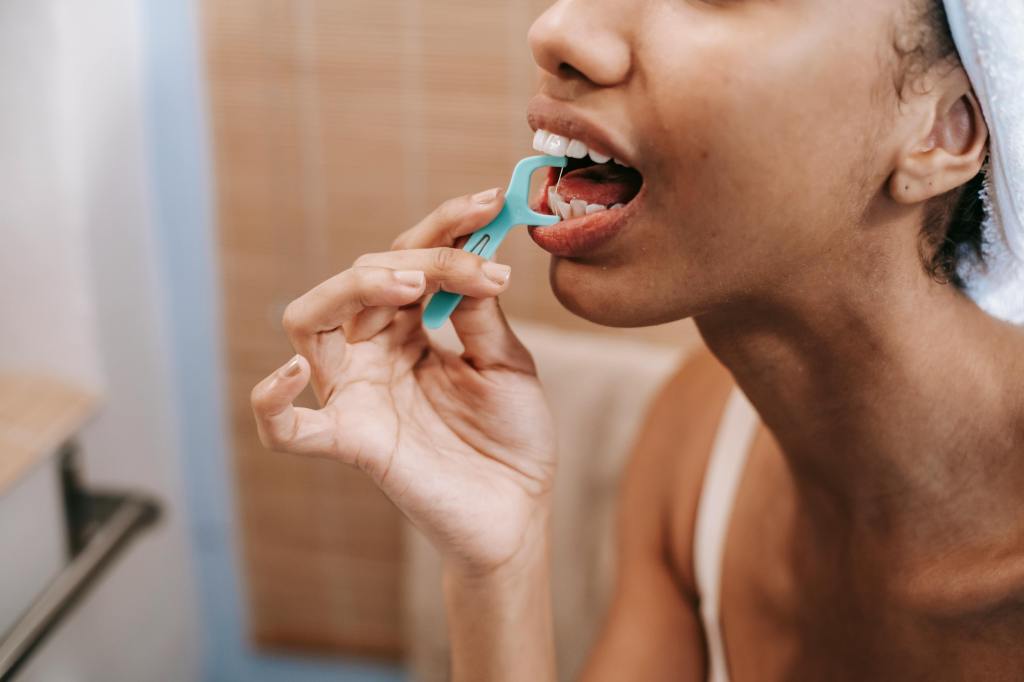
How To Floss
Floss all their teeth, and don’t forget to floss behind their very last back teeth.
- Use about 18 inches of floss wound around one of your middle fingers, with the rest wound around the opposite middle finger,
- Hold the floss tightly between the thumbs and forefingers and gently insert it between the teeth. You may want to start on the top right side and move around to the top left side, then the bottom left until you finish on the bottom right side,
- Curve the floss into a “C” shape against the side of the tooth. Gently rub the side of the tooth with an up-and-down motion. The gums in between the teeth look like a triangle. You’ll place the floss gently under the gums on each side of the triangle as you floss each side of the tooth,
- Rub the floss gently up and down, keeping it pressed against the tooth and following the shape of the tooth. Don’t jerk or snap the floss, and be gentle. Effective flossing is gentle flossing.



Your Check List To Help Your Tween And Teen Keep A Health Smile
- Eat intelligently! Life is going to be more hectic now. If your child has to eat on the run, choose fresh fruits and vegetables instead of junk foods.
- Steer clear of the juice, soda, chips and candy at your child’s school vending machines. If they need to get something, encourage purchasing water. Why water? It’s sugar free and keeps them hydrated.
- Snack smartly. Lot’s of snack food contain sugar which can cause cavities.
- Practice good oral hygiene twice a day. Brush for 2Minutes 2X’s A Day (after breakfast and before bed) with a fluoride toothpaste and floss before tooth brushing every night.
- Replace your child’s toothbrush every three or four months when the bristles are worn down.
- Keep up with their checkups. Cleanings, fluoride treatments and sealants are important protective measures for your child.
- Do Not smoke, chew tobacco, or vape. The warnings are real! Lung (breathing) problems, heart problems and cancer are only a few of the bad tings that can happen. If you notice anything different contact your Pediatrician immediately. Tobacco (in any form) and vaping can stain their teeth and tongue, change their sense of taste and smell, increase
their risk for cavities and tooth loss. - Wear a mouth guard when playing sports or activities where your mouth can be hit. This is to protect your teeth.
- Buckle up in the car, safety first.
5 Reasons Your Tween’s and Teen’s Teeth Are Important To Keep Healthy
Speak clearly – Teeth, tongue and mouth muscles help make specific speech sounds like f, s, sp, v, t, and th.
Eat healthy foods – Eating healthy foods promotes good nutrition and a healthy weight. Cavities can cause teeth to hurt, so they are less likely to want to eat.
Be healthy – Sometimes it’s hard to describe that their teeth hurt, so they can’t tell you. That doesn’t mean that the pain isn’t real. As cavities grow they can cause pain, swelling and significant infections which can affect other parts of their body.
Focus and learn – When teeth hurt performance in school suffers. Keeping teeth healthy allows children to pay attention in school.
Feel good about themselves – At the bus stop, school drop off or pick up, have you seen the child who stays to themselves, is quiet, keeps their hand over their mouth when speaking and doesn’t smile? They’re probably hiding the cavities on their teeth they don’t want anyone to see.





What To Remember
At times teenagers can act indifferent to certain things, it is important for you to help and gently remind and encourage your teen to keep up with their home care.
How to do this? Be your child’s hero, Be their role model for oral health. Brush your own teeth 2Min 2X’s a day with fluoride toothpaste (in the morning and at bedtime) and floss once a day (before bedtime brushing).
This way you’re showing them that a healthy mouth is important for their overall health and well-being; and with a healthy mouth, they can speak clearly, eat healthy foods, be healthy, learn well and feel good about themselves.



What are your struggles to get your tween or teen to brush their teeth? Have you dared to mention the dreaded flossing? Tell us, We’d really like to know! Send us an email to kidstoothhotline@proton.me Like Us or Chat with us on Facebook at facebook.com/kidstoothhotline
More tips? We have lots. We’re here just for kids!

 kidstoothhotline