
In the Know for You to Know
Mom, did you know that 3 months into your pregnancy your Baby’s teeth are already beginning to form?
And, that when you are giving birth all 20 of their Baby teeth are formed and their permanent teeth are beginning to grow?
NEWBORN’S TEETH
Immediately after your Baby is born as parents you can do something in anticipation of their teeth coming in.
What to do? Wipe off your Baby’s gum pads, tongue and all around their cheeks after each feeding. Use a soft wash cloth or a finger contoured cloth or finger toothbrush.
Some babies are born with a tooth or two already visible in their mouth, or may appear within the first month after they are born. There is NO need to be worried. This is normal.
Early baby teeth are called Natal or Neonatal Teeth depending on when they are seen.
Which are which? Natal teeth are present at birth, and Neonatal teeth come in within the first month.
Where will you find these teeth? Natal and Neonatal teeth are found peaking through the bottom front gum pads.
If everything is fine, your Baby is healthy, the teeth are not interfering with feedings or nursing and they do not cause discomfort to their tongue, their teeth should be left in place. I’m saying that if everything is good to keep the teeth because these are their real baby teeth, they just came early.
Sometimes you or your Pediatrician notice small white spots on the roof of your Baby’s mouth. These spots are called Epstein’s Pearls. They are normal, no cause for concern and usually go away on their own within 10-14 days.
When your Baby begins teething you may (or may not) notice bumps on their gum pads that appear bluish. Their teeth are within theses sacs called Eruption Cysts. This is normal, no cause for concern and as their teeth come into their mouth these sacs will pop and dissolve on their own.
TEETHING
Teething usually begins at 6 months of age, and can start as early as 3 or 4 months. This goes on intermittently until your Baby is about 24 to 30 months old.
What to look out for? Drooling and swollen tender gums are common. Sleeping through the night may be interrupted. Some children may run a slight temperature, others may become finicky eaters, or develop isolated episodes of diarrhea.
What to do? Wet a wash cloth with cool water and place it in your refrigerator to make it cold. Then you can hold it and place it on the spot where the tooth is coming in. Frozen cloths are not a good idea because they will freeze to your Baby’s gums. Teething rings, teething beads, teething bracelets, teething necklaces are never good because they contain harmful gels and liquids which leak out and get into the mouth.
During this time it is important to ensure that your child’s usual feedings are maintained.






FIRST TEETH
Where will you see the teeth? As teeth come into their mouth they usually begin in the bottom front followed by the upper front. The lower and upper side come next. Lower and upper back complete the full set of 20 Baby teeth, 10 lower teeth and 10 upper teeth.
With more and more teeth coming into your Baby’s mouth it’s very important to wipe their teeth, lips, tongue, cheeks, and roof of their mouth with a wet wash cloth. Move their lips away from their teeth so you can see the entire teeth to wipe them clean.
TOP TIP
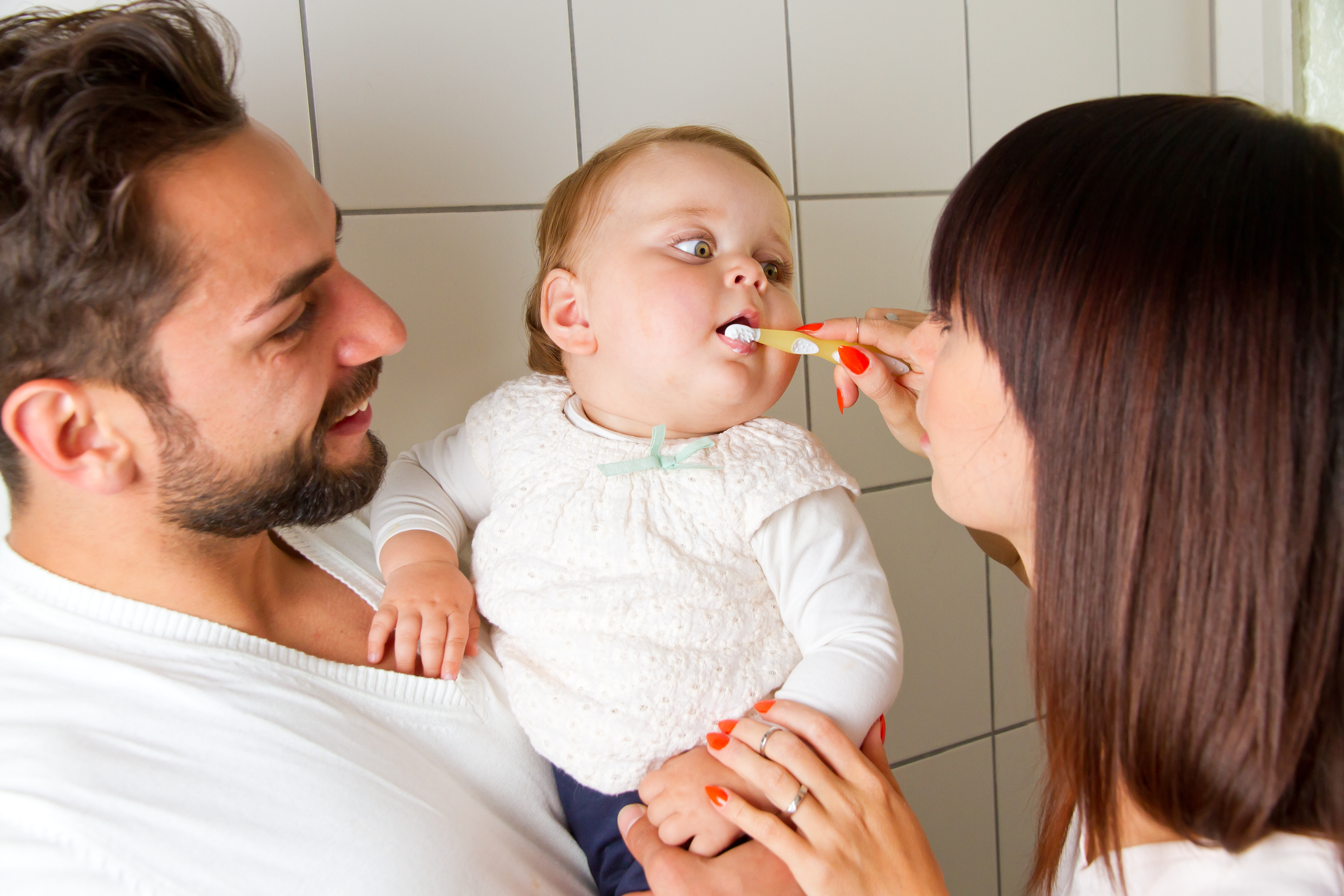
Start cleaning your child’s teeth when they are a Baby, they will get used to this and it will make your life easier when they are older.
The earlier you start the easier this will be for both of you.
More tips? We have lots. We’re here just for kids!

 kidstoothhotline