Can you believe it’s 2026? Here’s to a great year!
Like the saying goes, new year, new dreams, new hopes. This year you’re hoping for only good visits at the pediatric dentist’s office. Finger’s crossed no cavities. Or at least no new ones.
But when cavities are caught early, are they really cavities?
How can you tell if your child has early signs of tooth decay? What do you look for to tell if your child has a potential cavity?
Today we’re talking the tell tale signs of early tooth decay for you to spot.
Early Signs Of Tooth Decay
Recognizing the early signs of decay can help you take action.
What to look for:
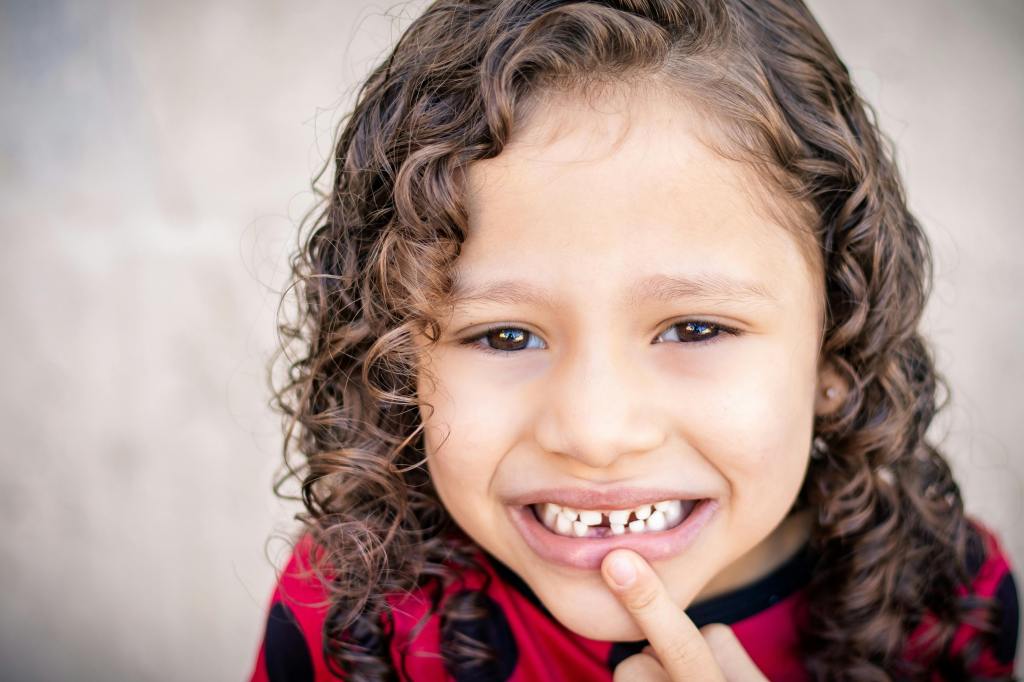
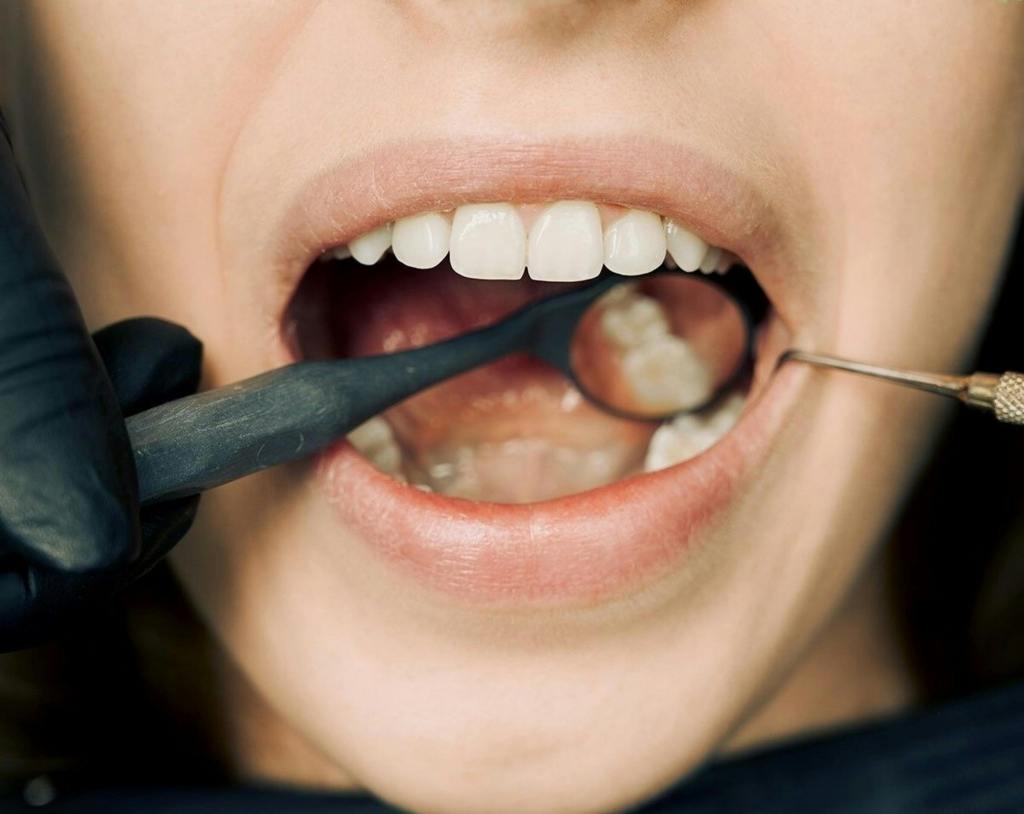
White spots on the teeth – this is also called demineralization, and indicates the earliest sign of enamel damage
Brown or black spots near the gum line – indicates cavities are forming or have already formed
Bad breath
Sensitivity to sweets
Sensitivity to hot and/or cold foods and beverages
Pain or discomfort while chewing – can lead to a decreased appetite
Puffy, swollen or red gums
Why Early Decay Isn’t Only About Baby Teeth
Have you heard the myth about baby teeth? The one that goes, “They’re just baby teeth. They’ll fall out anyway.”
Well, this is what happens when early decay is undervalued and overlooked:
Pain and infections lead to missed school and poor nutrition
Premature tooth loss affects speech and adult tooth position
Self-confidence takes a hit and embarrassment takes over due to visible cavities and/or bad breath
Future dental visits may become a source of fear
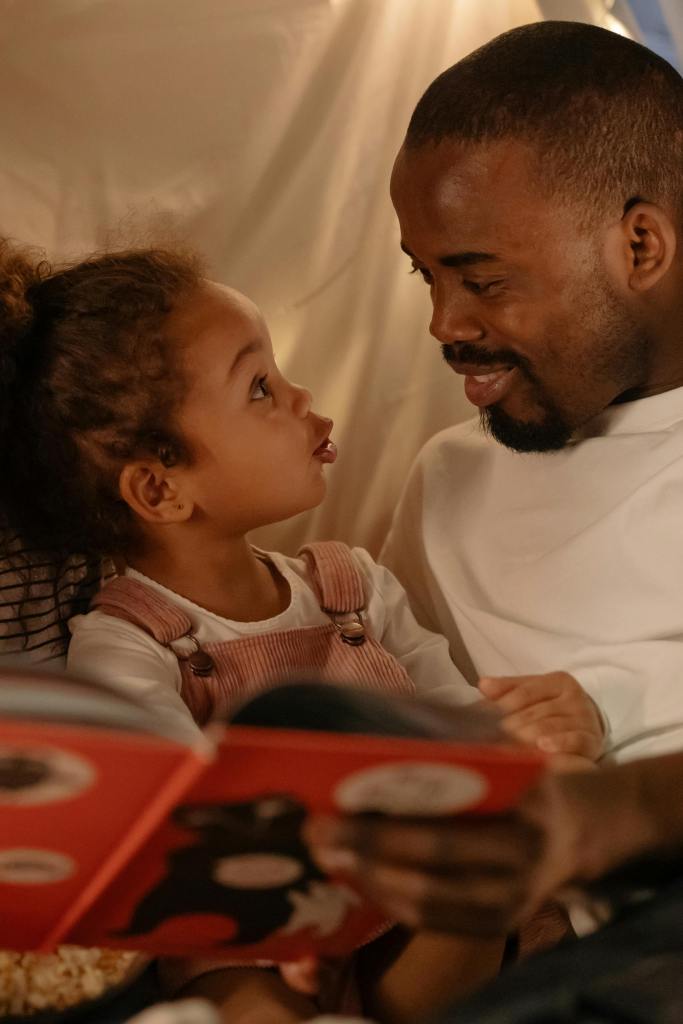
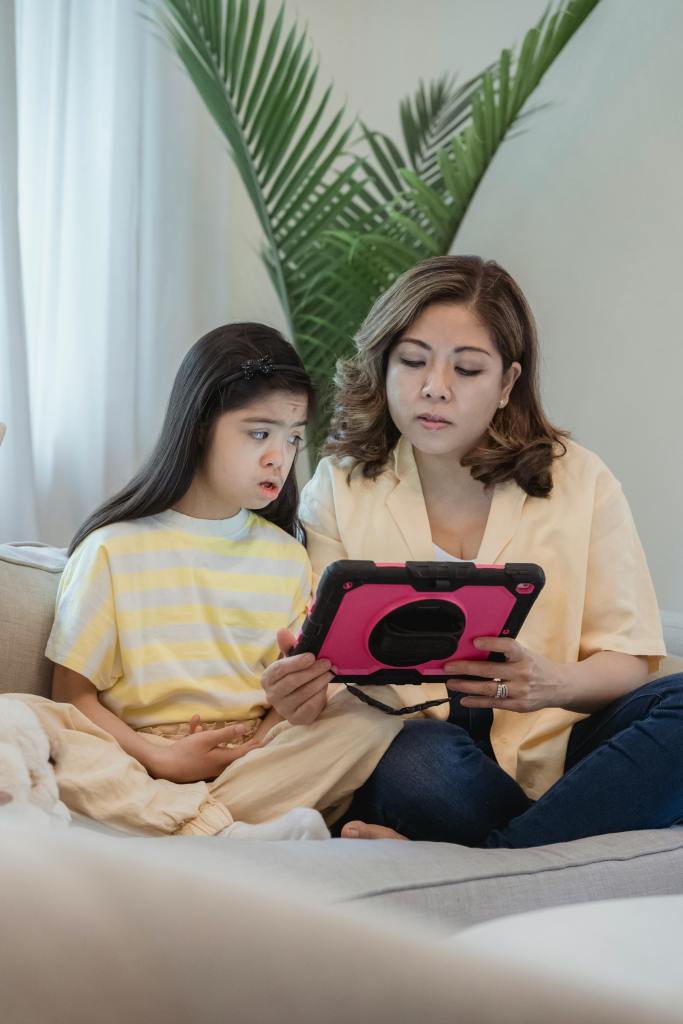
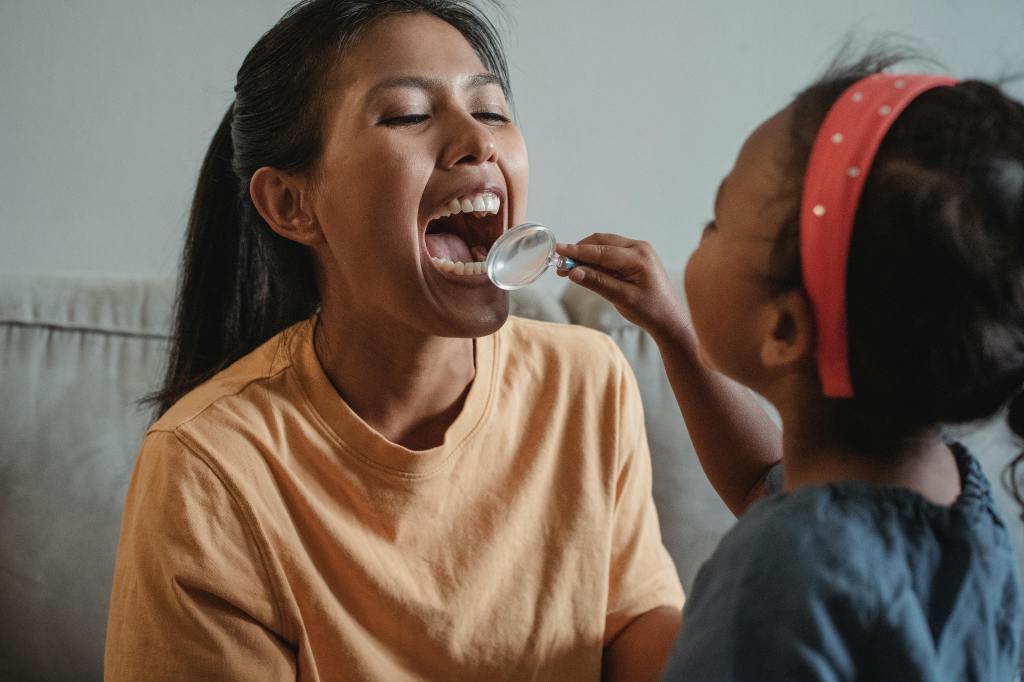
We’re Reading Our Social Story So I Can Check My Daughter’s TeethI Look At Mommy’s Teeth, Then Mommy Looks At My Teeth
Parent’s Role In Early Detection Of Tooth Decay
Become the tooth detective of your home.
Be on the look out for:
Complaining about teeth hurting when eating or drinking cold foods, beverages, and ice cream
Avoiding chewing on one side or eating less
White or brown spots that don’t go away no matter how much you brush
Bad breath
Gums that bleed when brushed
When your child tells you they have a bad taste in their mouth
Let Me Tell You About My TeethMy Teeth, My Teeth
What To Remember
Tooth decay often starts silently.
As a parent, you’re always looking for anything unexpected when it comes to your child’s health, and that includes their teeth.
So if you’ve spotted something on your child’s pearly whites, you’ll be wondering what’s going on. Whether your child has baby teeth or newly erupted adult teeth, knowing what to look for can give you peace of mind.
When is the last time you looked in your child’s mouth? And looked at their teeth? How did they look? How did their breath smell? Tell Us, We’d really like to know! Send us an email at kidstoothhotline@proton.me Like Us on Facebook
More tips? We have lots. We’re here just for kids!
The holiday spirit is in the air! Spending time enjoying family, friends and food is here. Chocolates, candies, cookies, cakes and donuts are everywhere.
Mostly everything our children eat this time of year is tied to tradition, especially the sweets. As parents we want to create new memories and enjoy family traditions.
This is also a great time to start new family traditions to help your child maintain healthy tooth habits even during your hectic holiday schedule.
How do you do this?
I’ve put together some tips for keeping teeth healthy while enjoying the holidays.
Strive For Moderation
We’ve all heard this from our parents. You can enjoy everything but everything in moderation.
And you know this is true, especially for sugary and starchy foods. But why?
Holiday time with big family meals and lots of special foods and tons of deserts increase the number of times children are eating sweets.
The natural bacteria in their mouth also love all those sugary and starchy foods. When the sugars and starches stay on the teeth, the bacteria release acids that eat away at tooth enamel. Eating away at the enamel is a cause of cavities.
What to do? When your entertaining and festive meals are planned, make sure your child’s other meals and snacks are full of foods that help strengthen teeth, like fresh vegetables, whole grains, low-fat dairy and lean protein.
If you’ve been invited out for the holidays, stock your own refrigerator and kitchen cabinets with healthy food. This way you know that when you’re at home, your child is enjoying foods with less sugar and important nutrients.
Re-think The Classics
Family time together with home made cookies and hot chocolate is the best. With minor alterations in the recipe these special treats can be even better.
Instead of using all purpose flour, perhaps you can find a recipe that replaces some of the regular flour with whole wheat flour. Maybe you experiment to see how much frosting, icing, sprinkles, jimmies and sugar decorations you can remove from your baked goods and your children and guests will still absolutely love them.
There’s something so special about drinking hot chocolate with marshmallows when it’s cold outside. Maybe instead of mixing up those pre-packaged mixes (which are loaded with sugar), you make it from scratch. This way you can keep the hot chocolate on the yummy side but not the sugary sweet side. Or maybe you’ll add a dash of cinnamon. Remember, that peppermint stick candy is just for decoration.
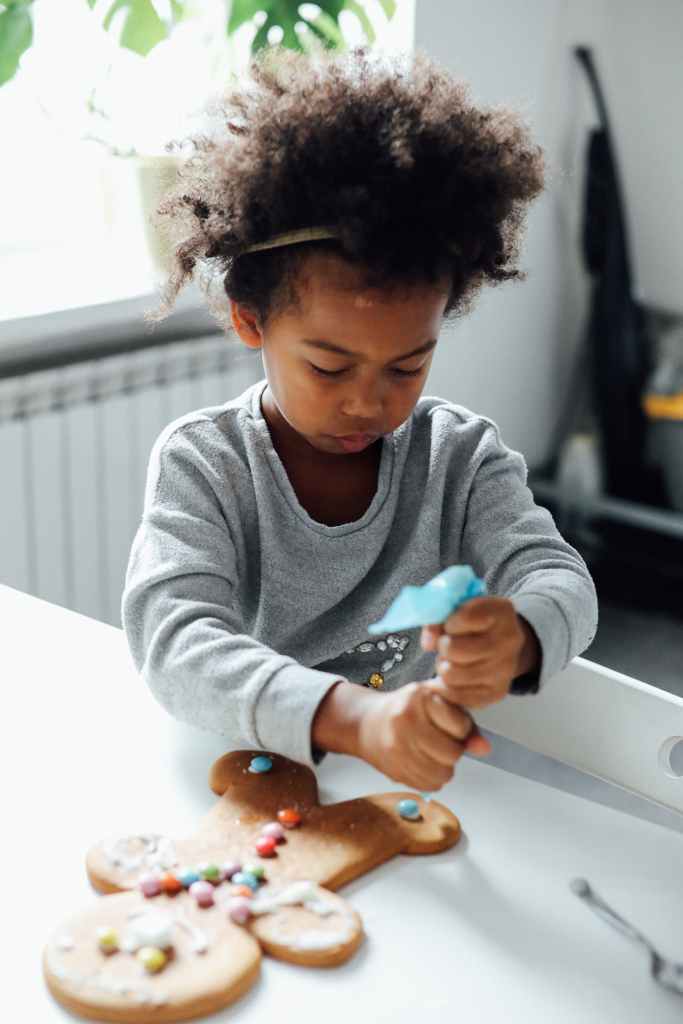
My Not So Small Mug Of Hot ChocolateCelebrating Kwanzaa with Our FamilyHow Much Powdered Sugar Do You Like On Your Jelly Donut?I’m Decorating My Christmas Cookie By Myself
Make Brushing And Flossing A Priority
Set aside a dedicated time each morning after breakfast and each night before bed devoted especially for you and your child as “our together time.” This way you’ll be reinforcing good toothbrushing and flossing habits.
Making oral hygiene even more of a priority during the holidays can help go a long way to protecting your child’s teeth.
Remember to brush your child’s teeth with a fluoride toothpaste for 2 minutes in the morning and 2 minutes before bed, and floss before their bed time brushing.
If you’re traveling for the holidays, pack all your children’s brushing supplies in your easy to access luggage before you head out on the road.
Checklist:
Toothbrush,
Toothpaste,
Floss.
Try To Avoid Grazing While Enjoying Family Time
Spending time together in the kitchen enjoying all the cooking and baking, or at the table reminiscing after a luxurious meal is amazing and heart warming.
But it’s actually not that great for teeth.
Did you know that the first 30 minutes after eating are the most vulnerable time for teeth? This is when teeth are the most susceptible to those bacterial acids. So eating a cookie here, grabbing a candy there, actually restarts the clock each time.
It’s really better to eat and drink all at once. If your child is having their special treat, juice or soda, it’s best for them to have it with their meal. This is so that it gets neutralized by their saliva.
Give Some Tooth Friendly Holiday Gifts
Include a few tooth friendly gifts into your holiday gift mix as a good way towards keeping your child’s teeth healthy during the holidays and afterwards.
Gift Tips:
Cool character toothbrush,
Cool color toothbrush,
Tempting flavored fluoride toothpaste,
Travel-size dental kit,
Fun brushing timers,
Flavored floss,
Electric toothbrush for an older child.
Encourage Drinking Water
Drinking water helps wash away the residual food that stays around in the mouth as we eat and after we eat. Water also helps to stimulate more saliva to be released into the mouth, which neutralizes the pH of the mouth.
This is a good thing because there isn’t any sugar in water. Which also helps to neutralize the acid caused by bacteria in the mouth.
Drinking water is always a good idea, whether it’s with a meal, after a meal, instead of juice and soda, or after a sugary drink.
An added bonus of water is that it keeps everyone hydrated.
What To Remember
The holidays are hectic enough. Help your child brush like a champ.
Being watchful about the amount of sugary treats they eat during the festivities and downtime at home, and keeping up with their regular dental check-ups goes a long way to happy mouths and bright smiles.
Sugar bugs love to eat sugar and teeth. What do you think is their most favorite time of the year? What is your child’s favorite holiday story? Does your child have a favorite holiday food? Tell Us, We’d really like to know! Send us an email at kidstoothhotline@proton.me Like Us on Facebook
Happy holidays for all, and for all a bright smile!
More tips? We have lots. We’re here just for kids!
Growing up it seemed that at every dental check-up I had another cavity. My parents didn’t know why. Doesn’t everyone have cavities?
During dental school the whole issue around cavities became clear. Then when I became a pediatric dentist it became crystal clear. There wasn’t only one thing that caused cavities. It’s a cycle. A never ending daily cycle.
I want to share with you how you can help protect your child’s teeth.
Protecting Your Child’s Teeth From Cavities
Baby teeth are important for 4 BIG reasons. They help your child learn where to put their tongue and cheeks so they can speak clearly, allow them to chew their food well, help in the growth of their jaws, and guide their adult teeth into position.
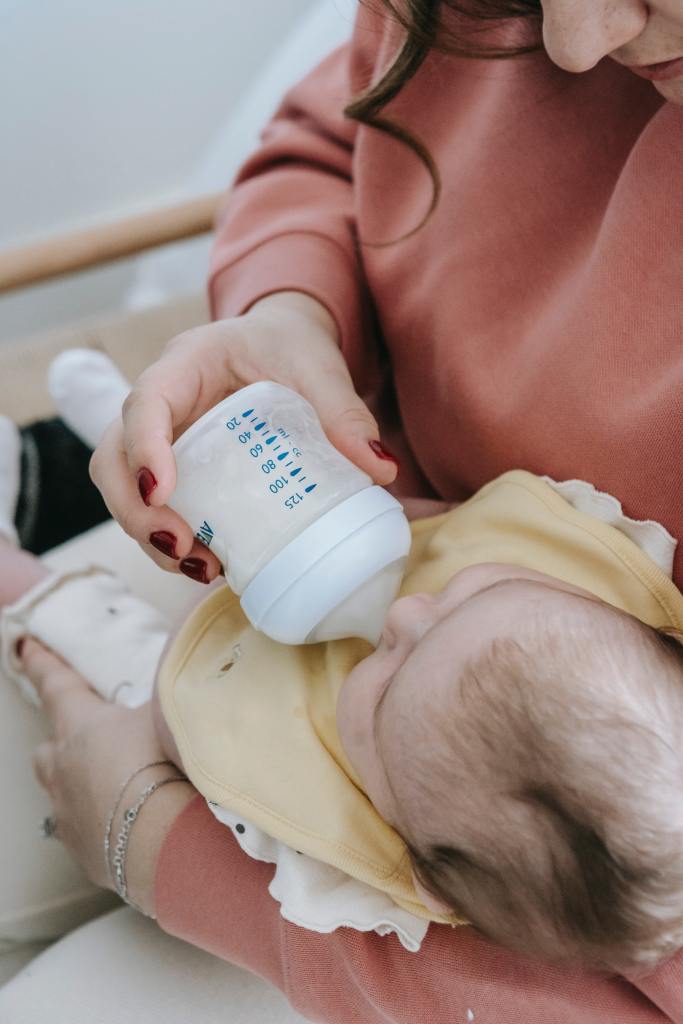
Children can get cavities from their bottle or from nursing. Yes, even if they don’t have teeth yet. Don’t put your child to bed with a bottle or nurse them while they are sleeping. The liquid in the bottle or breast milk causes cavities because it stays on their gums and teeth. This allows the sugar in the milk, juice, breast milk to eat away at their teeth. So it’s important to wipe their gums and teeth with a damp wash cloth after each feeding and before nap and bed time.
As soon as your child’s first tooth peaks through their gums it’s time to do 2 things. Make their first dental appointment. Start brushing with a (dry) rice grain size amount of fluoridated toothpaste twice a day.
For your pre-K child (over 3 years old) brush twice a day with a pea size amount of fluoride toothpaste. When 2 teeth are touching, it’s time to start flossing.
Sealants are effective in preventing cavities. Dental sealants are a protective coating over the deep crevices of back teeth (aka molars) so food, sweets, beverages and plaque don’t get caught in the grooves.
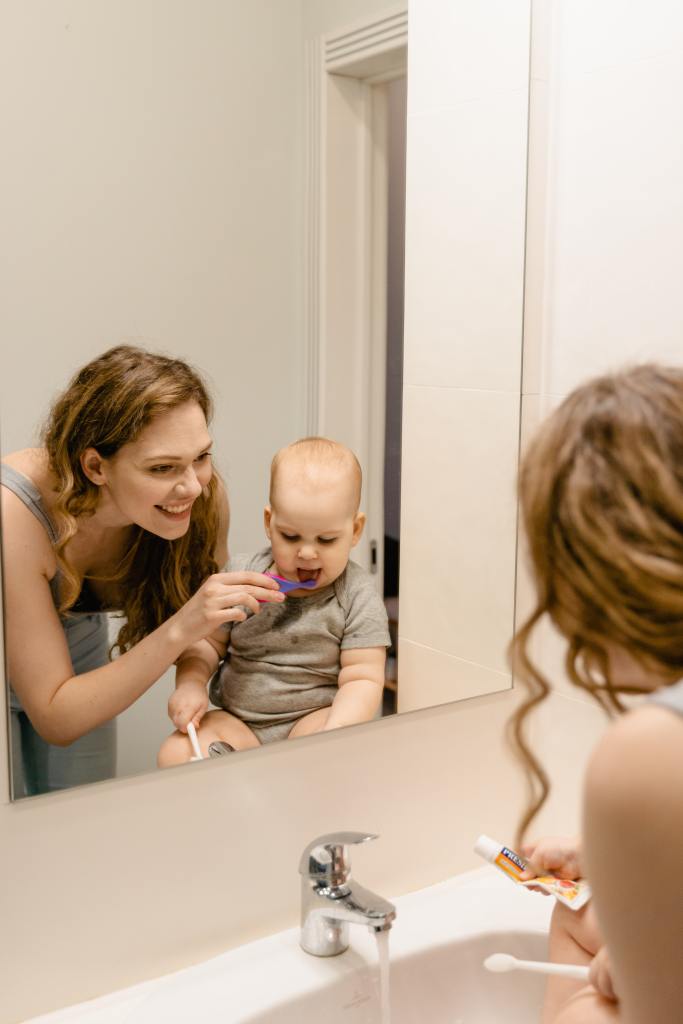
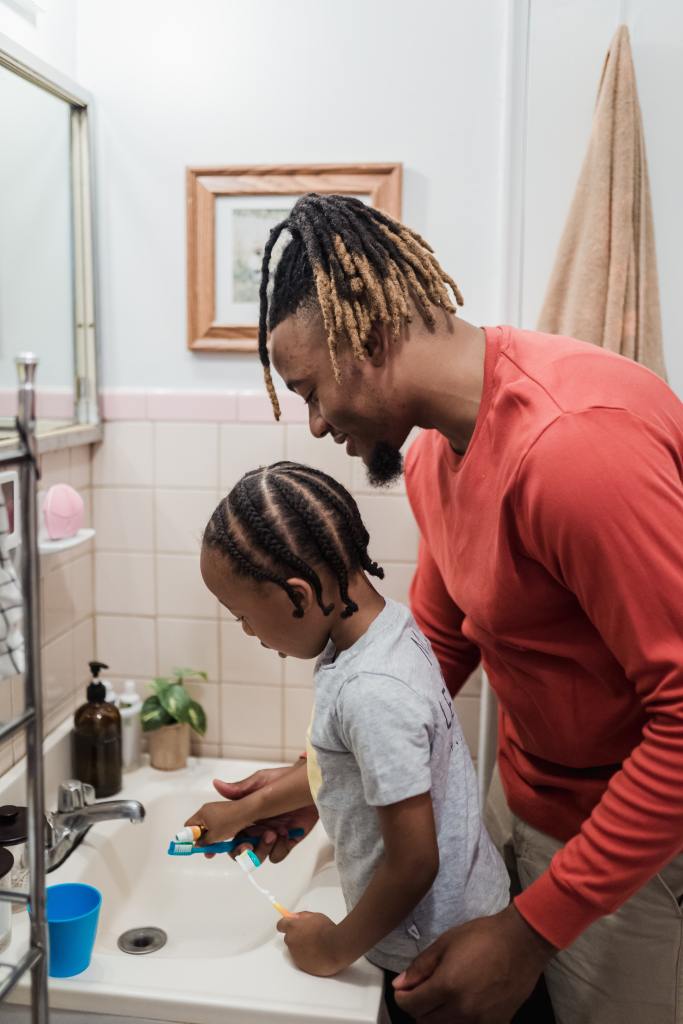
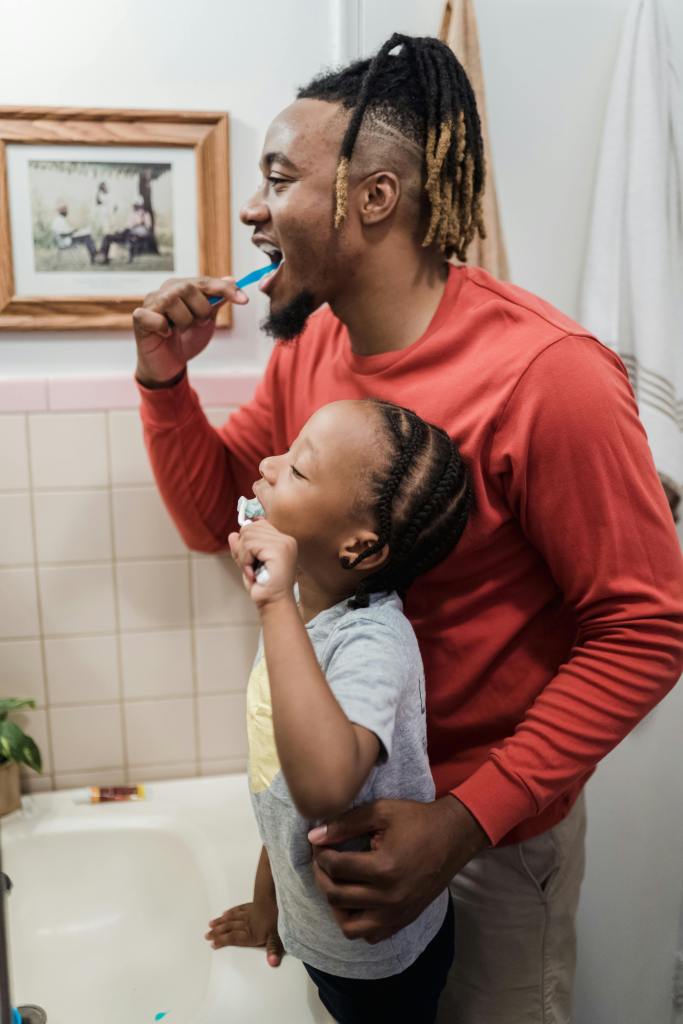
After Your Bottle Daddy And I Will Wipe Your Mouth And Then It’s Off To SleepClean Mouth For A Good Night’s SleepNow You Have Teeth Mommy Is BrushingGetting Ready to Brush My Teeth with My DadChecking My SealantsCan You Believe It? My Sealants Are The Same Color As My Teeth
What To Remember
Don’t leave your child’s oral health up to genetics or luck. It’s not luck that contributes to good teeth. It’s about planning, consistency and adapting as your child grows.
With everything you have to do, it may be tempting to skip a day. Turns out diligence is the key.
What are your tips for keeping teeth cavity free? Do you have a routine that works for your family? Tell Us, We’d really like to know! Send us an email at kidstoothhotline@proton.me Like Us on Facebook
More tips? We have lots. We’re here just for kids!
I’m Making Something Special For My Pediatric Dentist
In the Know for You to Know
Choosing a pediatric dentist for your child is a significant decision. A visit to the pediatric dentist needs be a positive experience for your child. So it’s important to find a dental practice where you and your child feel comfortable.
As a mom, I want my child to have pleasant and positive experiences at their dental appointments. Their visits should also be adapted to their age, as they grow and take on a more active role in their dental care.
Whether it’s playing games in the arcade off the waiting room, telling their dentist about the new pair of sneakers they just got, or letting their hygienist know the plans for the park after their visit; you know these things only happen when your child is happy and excited. They’re happy and excited when they know they are going to a friendly, comfortable, and fun place.
But this doesn’t happen at just any dental office. It happens at the right pediatric dental office.
Pediatric Dentist’s Approach To Dental Care
A pediatric dentist’s approach is to provide a calm and welcoming atmosphere.
Our goals are to provide you and your child with exceptional dental care. To help your child develop positive attitudes toward dentistry. As well as to educate and teach them the skills needed to care for healthy teeth and a healthy smile for their whole life.
My Pediatric Dentist Always Tells Me EverythingMy Pediatric Dentist Always Makes Me SmileMy Pediatric Dentist Encourages Me To Ask Questions, And She Answers Them
Characteristics To Consider In A Potential Pediatric Dentist
An attentive pediatric dentist encourages your child to ask questions.
They go at your child’s pace to allow them to feel comfortable.
A thoughtful pediatric dentist can make your child laugh, smile and enjoy themselves.
They engage your child in their own dental care.
They and their office are trained in accommodating children with special needs as well as having designed their office to be accessible.
An engaged pediatric dentist is eager to chat with you and values your questions and input as a parent.
Their whole office is passionate and excited to work with children.
Their office design makes your child feel welcome.
Their education continues. They receive extensive education and training on how to best serve your child and their dental needs.
Your child is eager to see them again and looks forward to their next appointment.
As a mom and a pediatric dentist, I can tell you it’s about 3 things ~
Specialized care,
Compassionate approach,
Child focused.
We Want To Be Just Like Our Pediatric Dentist
Have you found a pediatric dentist you and your child adore? Have you found the pediatric dental office you can see your child growing up going to? What was the spark that led you to this office? If you’re looking for your pediatric dentist, which 3 characteristics are most important for you? Do you have any suggestions about what’s important to you in choosing your child’s pediatric dentist? Tell Us, We’d really like to know! Send us an email at kidstoothhotline@proton.me Like Us on Facebook
More tips? We have lots. We’re here just for kids!
Guess Who’s Looking Forward To Her Pediatric Dentist Visit?
Times have changed. Back in the day no child wanted to go to the dentist. Today dentistry, especially children’s dentistry is about communication, education, and feeling good about visiting your dentist. As a pediatric dentist, our philosophy is centered around nurturing a positive relationship with oral health from a young age.
As a Mom, this is game changing. Think about it. Has your child ever told you how excited they are and they can’t wait to go to their dentist’s appointment?
Have you heard your child say ~ They’re counting the days until they get to go to their dentist? They can’t wait to have their teeth counted and tickled? What flavors they’ll pick to treat their tongue and bedazzle their smile? What prizes they’ll choose and what their goody bag will hold?
How Do Pediatric Dentists Do This?
Our main concern is what is best for your child.
We combine state of the art dental techniques in a friendly, compassionate atmosphere, making every visit a delightful experience for both your child and your family.
Pediatric dentists understand there are unique challenges and concerns. We’re committed to providing a supportive environment where children can feel at ease.
This allows us to help you create a strong foundation for a lifetime of healthy smiles for your child.
I Love My Pediatric DentistMouth Guard In My Mouth And I’m Ready To Play Basketball, My Pediatric Dentist Is The Best
Catering To = Caring For Children’s Dental Needs
Children have distinct needs and specific concerns when it comes to dental care. Pediatric Dentists have a deep understanding of the physical, emotional, and developmental aspects of children’s oral health.
This allows us to create an inviting atmosphere to help alleviate any anxiety or fear a child may have about the dentist.
Pediatric Dentists understand children and are dedicated to making their dental experience enjoyable, educational, comfortable and fun.
Our offices are designed with children in mind. They feature colorful decor, engaging activities, and child friendly equipment to ensure a positive experience for children and parents alike. And prizes, we can’t forget about the prizes or the stickers.
Look What I Got At My Pediatric Dentist’s AppointmentI Always Get A Balloon After My Pediatric Dentist’s Visit
Happy Experiences
As a parent you know it’s about more than teeth. It’s about your child’s experience in a place that’s fun and magical, educational and comfortable. This is the world of pediatric dentistry.
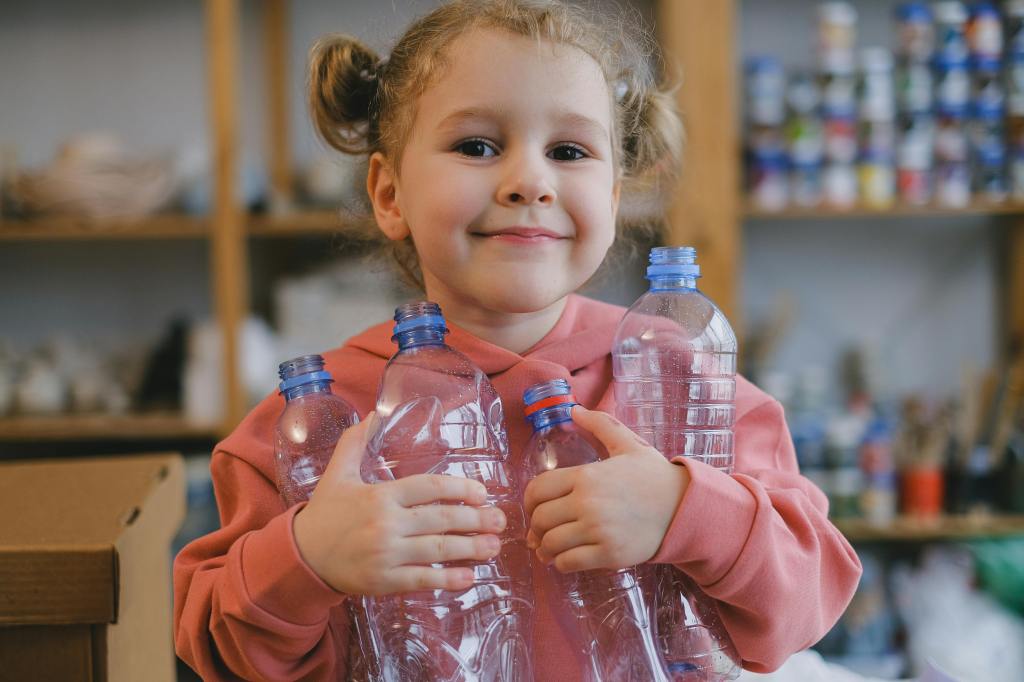
I Made This For My Pediatric DentistI’m Taking My Water Bottles To My Pediatric Dentist To Show Her How Much Water I Drink
Has your child ever told you they’re excited and can’t wait to go to their dentist’s appointment? Has your child ever said, they’re counting the days until they get to go to their dentist appointment? Have you ever heard your child say, they can’t wait to have their teeth counted and tickled? Has your child asked you to call and find out if they have the same flavors as last time? Has your child told you what prizes they’ll choose and what they hope will be in their goody bag? Tell us, we’d really like to know! Send us an email to kidstoothhotline@proton.me Like Us on Facebook
More tips? We have lots. We’re here just for kids!
Dental health is much more than healthy teeth, it is integral to overall good health. This is true for newborns, infants and babies just like it is for mom and dad.
Dental health care during pregnancy is particularly important for you, and ultimately for your baby. The bacteria that cause cavities are infectious and can be passed by you (or daddy or grandma or grandpa) to your baby after she or he is born.
First teeth can start to come in as early as 4 1/2 months old. The average age for teeth to make their appearance is 6 months of age. This is the time for you to call and schedule your infant’s first dental examination.
Your baby’s first dental examination gives you the opportunity to learn how to prevent dental disease for your child.
There are so many things to talk about concerning your baby’s mouth and teeth at this young age. Where do we start? Well, with your questions. They could be about teething, tooth development, jaw growth, oral hygiene, fluoride, diet, thumb sucking, pacifiers, or injury prevention.
You may want to know how often you should bring your baby for their dental examination. Or maybe your husband, mom, or mother-in-law has a question or two.
Are you asking yourself, what makes pediatric dentists so special? Pediatric Dentists educate you and make dental visits fun, positive and stress free for your child (and you). This journey starts in infancy.
Your child deserves a dentist who lays the foundation for a lifetime of good oral health.
No Cavities For You Our Love
How old was your baby when you saw their first toothy smile? When did you make their first dental appointment? What did you learn at that appointment? Tell us, we’d really like to know! Send us an email at kidstoothhotline@proton.me Like Us on Facebook
More tips? We have lots. We’re here just for kids!
Nighty Nite After Mommy And Daddy Cleaned My Mouth
As a pediatric dentist, my focus is to advise and educate you about good oral health for your child. As a mom, I know how important this is for our children’s future. The reason is simple. Starting oral health care when children are new borns and infants sets the foundation for a lifetime of healthy smiles.
We’re receiving lots of questions from parents about why taking care of their newborn’s and infant’s mouth is important, as well as how and when to start doing this.
Today we’re answering your questions about prenatal and infant oral health care.
What can a woman do during pregnancy to help her child develop healthier teeth?
Nutrition is very important for the oral health of your developing baby. Taking prenatal vitamins and minerals, as recommended by your Obstetrician, is key since their teeth are forming along with the other structures of the body between 7 weeks and 3 months of gestation.
We’re Having A Baby
Is there anything else a mother-to-be can do?
Expectant mom’s need to take good care of their own dental health during pregnancy and after their baby is born. A mother with a buildup of bacteria in her own mouth due to tooth decay (aka cavities) and/or periodontal (aka gum) disease, can actually transmit bacteria to her baby when kissing, sharing spoons, or licking a pacifier “clean”.
Same goes for dads and grandparents.
Drinking Water For Me and My Baby
At what age should a baby have their first examination with the Pediatric Dentist?
When you see their first tooth coming into their mouth, that’s the time to call for your child’s first dental examination.
There’s a lot to cover. Not only are their tooth/teeth examined, it’s important to discuss their diet, pacifier and thumb sucking, and the importance of cleaning the inside of your baby’s mouth with a wet washcloth to remove any sugar residue from milk, formula or juices. In addition, to talking about fluoride and testing well water for fluoride content.
Do regular Dentists see children this early?
Adult and family dentists don’t see children until at least age 3. But the impact of early childhood dental care is significant. If cavities form during this time, they need to be addressed before infection and tooth loss occurs.
How can I prevent tooth decay from a bottle or nursing?
Children should not fall asleep with a bottle or after breast feeding. It’s best to clean their mouth after their feeding. Cleaning their mouth after each feeding helps stop the milk, formula, or juice from staying on their gums and teeth.
After Your Bottle Mommy Is Going To Clean Your MouthBreastfeeding My Baby Then I Will Clean His Mouth
When should bottle feeding be stopped?
Children should begin to be weaned from their bottle when you’re introducing table food. At this time they should also be introduced to drinking from a cup.
This is important for your child’s teeth. Prolonged use of the bottle means having milk or juice in contact with teeth for long periods of time, which can lead to tooth decay.
Should I worry about my infant’s thumb and finger sucking?
Digit sucking (thumb or finger or both) is perfectly normal for newborns and infants. Generally most children stop by age 2.
When should I start cleaning my baby’s teeth?
The sooner the better! Starting at birth, clean your child’s gums and mouth with a wet washcloth after each feeding and before you put them down for a nap or to bed.
Mommy Fed You And Cleaned Your Mouth Now It’s Time For Bed
Any advice on teething?
From 6 months to age 3, your child may have sore gums as teeth come into their mouths. Many children like a clean teething ring, cool spoon, or cold wet washcloth. Some parents swear by a chilled (refrigerator never freezer) teething ring; others simply rub the baby’s gums with a clean finger.
Remember, no numbing liquids, gel teething beads, teething necklaces, teething bracelets. The liquids and gel are toxic. While teething jewelry can be swallowed and cause choking.
How prevalent is tooth decay in children?
Tooth decay is the most common chronic disease in childhood.
Cavities are an infectious and transmissible disease established early in life and seen throughout life.
More children have tooth decay than have asthma. 20% of preschoolers, 50% of second graders and 75% of 15 year olds have cavities.
Grandma’s Kisses Make Me Smile
Have we answered your questions? Do you have any questions we haven’t addressed? What are your questions? How old was your baby when you started to clean their mouth? When did you make their 1st dental appointment? Did your baby ever go to sleep after breast feeding or with a bottle? Tell us, we’d really like to know! Send us an email at kidstoothhotline@proton.me Like Us on Facebook
Yes, there was a time when it was thought that baby teeth weren’t real teeth. It was common to hear “they’re just baby teeth, ” and “they’re going to fall out any way.”
Well, that was then and now this couldn’t be further from the truth. Baby (aka primary) teeth are important in their own right and important for the adult (aka permanent) teeth which come later on.
Baby teeth begin to form when you’re 12 weeks into your pregnancy.
All 20 of your child’s baby teeth are forming during your pregnancy. Not only that, at the time you’re ready to give birth, their first set of adult molars are also starting to form.
I Will Protect You Forever
At What Age Does An Infant Get Their First Teeth?
Teething usually begins when a baby is about 4 to 6 months old. This continues intermittently until they’re 24 to 30 months old.
First Teeth
The first teeth to come into the mouth (aka eruption) are the bottom front teeth. The bottom teeth are followed by their top front teeth. By the time a baby is 12 months old, they have 10 baby teeth. When a child is about 24 months old they usually have all 20 of their baby teeth.
Getting Teeth
Why Baby Teeth Really Are That Important
Baby teeth may be small but they are a big deal for 4 important reasons~
They help children speak clearly,
Baby teeth allow children to chew their food,
They aid in normal growth of their jaws,
Baby teeth form the path that permanent teeth can follow when they are ready to come into their mouth.
Taking care of baby teeth early ensures that your child’s mouth is healthy and strong.
What are your thoughts about baby teeth? Have you given them much thought? Do you feel that since their baby teeth are only in your child’s mouth for a short time they aren’t important? Tell us, we’d really like to know! Send us an email at kidstoothhotline@proton.me Like Us on Facebook
We hear a lot about cavities in children’s teeth. Most of the time the response is “All children have cavities.”
Cavities (aka tooth decay) is common in children. However, if you’ve thought to yourself “Is it normal for children to have cavities?”, you’re not alone.
Today, we’re taking a look at what causes cavities, how to prevent them, and if it really is normal for children to have cavities.
What Is Demineralization?
Did you know that teeth are the only part of the human body that can’t repair itself?
Tooth enamel is the outer most layer of teeth and is made up of specific proteins, crystals, and minerals like calcium and phosphorus.
When teeth are in constant contact with foods which are high in carbohydrates (aka sugars), carbonated beverages (aka soda), and there are longer times (than you would like) between tooth brushings these minerals in enamel begin to breakdown and dissolve.
How Does Demineralization Work?
Everyone has bacteria in their mouths, even newborns.
When the bacteria comes in contact with the yummy sweet foods and drinks they produce an acidic environment in the mouth which causes the tooth enamel to weaken.
Why Is Demineralization Important?
Demineralization is important because the weakened enamel makes children’s teeth more vulnerable to cavities forming.
Cavities grow fast, especially in baby teeth because the enamel is super thin.
This is also important since it’s usually not only 1 cavity that forms. It’s several that form at the same time.
What To Do
We’ve put together some tips for you on taking care of your child’s teeth ~
For Your Newborn, Infant And Baby
Use a clean moist washcloth to wipe their mouths after every feeding and before putting them to bed.
Mommy’s Checking Your Beautiful Clean MouthMommy Always Cleans My Teeth And Gums
For Your Toddler, Preschooler and Kindergartener
You can also use a clean washcloth twice a day (as you would with a toothbrush) and add a rice grain size (think uncooked grain of rice) amount of fluoride toothpaste. Or if they allow you can use a soft toothbrush, use a rice grain size of fluoride toothpaste and brush for 2 minutes in the AM after breakfast and in the PM floss first and then brush for 2 minutes before bedtime.
And Now We Are Going To Brush Your TeethNo Cavity Club Member
For Your School Age Child
Use a soft toothbrush, a pea size (think small green pea) amount of fluoride toothpaste and brush for 2 minutes in the AM after breakfast and in the PM floss first and then brush for 2 minutes before bedtime.
Another Year Of Healthy Happy TeethClean Teeth, Ready For BedChecking Off That We Teeth Flossed And Brushed Tonight
For Your Tween And Teen
Watch them as they use a soft toothbrush, a pea size amount of fluoride toothpaste and brush for 2 minutes in the AM after breakfast and in the PM floss first and then brush for 2 minutes before bedtime.
Cavity Free, That’s Me
For Your College Student
You may still need to advise them and make sure they use a soft toothbrush, a larger pea size (think regular green pea size) amount of fluoride toothpaste and brush for 2 minutes in the AM after breakfast and in the PM floss first and then brush for 2 minutes before bedtime.
No Cavities Make Our Parents So Proud
What’s The Answer?
The good news is that cavities are preventable. With consistent oral care habits, you can reduce the risk of tooth decay for your child.
The key to cavity prevention is to start early. Even before your child’s first tooth comes into their mouth, you can start cleaning their gums with a soft cloth to remove any food and bacteria.
While cavities are a common concern for many parents, the truth is that with proper care, they can largely be prevented.
Do you think cavities are normal for children? How old was your child when you started their oral care routine? What tips do you have that works for your child? Tell us. We’d really like to know! Send us an Email at kidstoothhotline@protonmail.me Like Us on Facebook
More tips? We have lots. We’re here just for kids!
Growing up I was always the child in the dental chair. Check ups were a breeze for my siblings. For me, each check up brought another cavity or two. My parents chalked it up to “soft teeth.”
Fast forward to now. I’m a Mom and a Pediatric Dentist. I learned some tips and tricks that wouldn’t leave my children’s oral health up to genetics or luck. I’m happy to say that this approach has kept my children from having cavities.
It isn’t luck that contributes to good teeth. It’s about planning, consistency and adaptability.
Today, I’m sharing with you what I did to turn around my family trend of cavities and crowded teeth for my children; starting from when they were infants through their teenage years.
Cavity Prevention Tips
Before your infant’s 1st tooth even comes into their mouth, it’s important to wipe their gums. Use a damp washcloth after each feeding and before nap and bed-time to clean their gums and their mouth. Why? This way they become used to you being in their mouth so they won’t give you a hard time when they get older. Second, because you get used to being in their mouth so that when their teeth come in you’re in your routine.
Teething rings (never use gel or liquid filled) should be placed in the refrigerator only, never in the freezer. Why? Cool and cold is comforting. Frozen hurts and can stick to their gums.
As soon as your infant’s 1st tooth peaks through their gums it’s important to start brushing that tooth. The same goes as they get more teeth. When your child is younger than 3 years old, place a rice grain size (think of an uncooked piece of rice) amount of fluoridated toothpaste on a washcloth or soft baby brush twice a day.
For your toddler and pre-schooler child (starting at 3 years old) brush their teeth twice a day with a pea size (think of a small green pea) amount of fluoride toothpaste. They can spit the toothpaste out in the sink, they can let the paste drool out, or you can wipe the toothpaste off with a wash cloth.
Schedule your baby’s 1st dentist visit when their 1st tooth comes in. The latest should be by the time they turn 1 year old.
The same way every child’s tooth development is different, every child’s tooth positioning is different. For some children, orthodontic treatment may be beneficial even before their permanent teeth come in.
When your school age child starts playing sports, it’s time to consider a mouth guard. Why? A mouth guard protects your child’s teeth from injuries (think broken teeth).
Sealants are effective for preventing cavities on molars. They cover the groovy tooth surfaces with a protective coating. Why? This way nothing gets caught in the grooves of these teeth.
Always replace your child’s toothbrush when the bristles start to wear down. Why? They become less effective when they’re worn down.
With everything you have to do, it may be tempting to skip a day. Why not to? Turns out diligence and routine are the key.
Happy Mommy, Happy Baby, Clean MouthMommy’s Brushing My TeethThis Is The Way We Brush My TeethI Make Mommy And Daddy So Happy When We Brush My TeethMy Cavity Free SmileCan You See My Sealants?Brushing My Teeth Just Like My Mom And Dad Taught MeMy 2 Minutes Of Toothbrushing Before Going To SchoolThanks Mom And Dad For Keeping Me Cavity FreeWe’re So Happy To Be Cavity Free
How is this going for you? What tip will you share? What’s your strategy to keep your child cavity free? Tell us. We’d really like to know! Send us an email at kidstoothhotline@protonmail.me Like Us on Facebook
More tips? We have lots. We’re here just for kids!