
Caring for Your Toddlers Teeth

In the Know for You to Know

You’re already doing so much to make sure your Toddler is healthy and happy. Did you know your Toddler’s teeth are amazingly important? Yes they are, they truly are.

20 Teeth Make A Complete Set

Teething is over! By the time your Toddler is 3 years old they will have all of their 20 teeth. Up until this time the teeth have been like an iceberg with parts peaking through their gums while the rest is still growing underneath the gums.

Brushing Starts And Ends Your Day

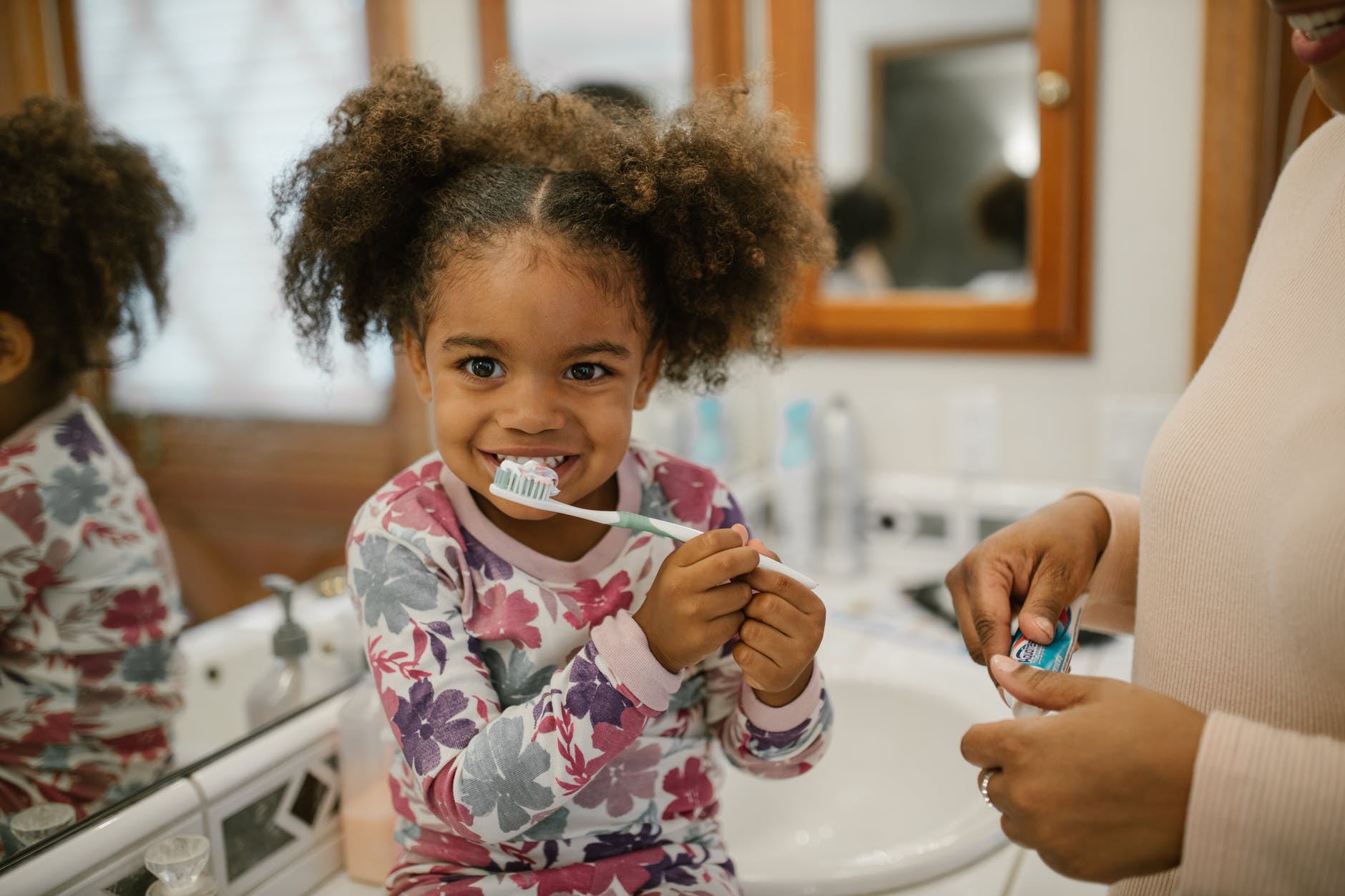
Make a game out of brushing your child’s teeth 2 Minutes 2X’s A Day – Once in the morning after breakfast and once at night right before their bedtime.

The rule of thumb is also to begin flossing all their teeth once they have any two teeth touching.

Flossing is recommended with your nightly tooth brushing routine. If your child lets you floss more often then definitely make that part of your habit.

There are so many yummy flavors of toothpaste and flossers to entice your child, BUT remember all you need is a small pea-size amount of paste on their soft brush and floss before you brush. Flossing first allows you to remove everything that is between their teeth (and there is always something there) so that you can then brush everything away.

Your child can’t spit out? No worries, have a moistened soft wash cloth handy to wipe their mouth and teeth, and a dry cloth to wipe their face.

Handy Tip — The last thing that touches their teeth at night is their toothbrush.
Tooth Enamel Is Hard, BUT …

The hard outer shell of teeth is enamel. While tooth enamel is the hardest substance in the body, it can also be weakened.

2 of the best ways to keep enamel strong and strengthen weakened enamel is to drink fluoridated tap water and brush with fluoride toothpaste.

Bottled water more often than not contains little to no fluoride. If you use a carbon or charcoal filter in a pitcher, the filter leaves most of the fluoride in the water.

Not sure about fluoride in your water? Call your village hall, town hall, county hall, the company you pay your water bill to, or your well servicer, ask them for the current water report and specifically ask about fluoride.

Keep An Eye On Snacking And Juice

It’s important to avoid all day snacking. Toddlers should have 2-3 healthy snacks per day. These snacks are an opportunity to provide nutrients because toddlers actually need more nutrients than they can get at meal time.

Juice is not a way for your Toddler to meet their daily fruit and vegetable needs. Juice, soda, and sports drinks are sugar sweetened beverages with no real nutritional value and put you on the fast track to cavities.

Drinking water and plain low fat milk are the healthiest choices. Water is the best choice in-between meals and for hydration.

Your Power Is Your Goal

Taking good care of your Toddler’s teeth gives you the power to protect your child from cavities and provide them with good oral health for life.

More tips? We have lots. We’re here just for kids!

Can I Really Prevent My Baby From Getting Cavities?

In the Know for You to Know

The simple answer is Yes. Yes, you can because tooth decay (aka cavities) is preventable.

TOP TIPS TO PREVENT CAVITIES

  • Cavities can begin just as a tooth is coming into their mouth

This is why even before your Baby gets their teeth it is important for you to clean their whole mouth, including their gums, cheeks, and tongue with a soft wash cloth after every feeding and before you put them to sleep.

Your Baby has to eat to grow. Any type of milk, formula, or juice contains sugar which may not do any apparent harm initially but once teeth begin coming in things change quickly. The sugar in these liquids adheres to each tooth’s surface and hurts the young developing teeth. Using a wash cloth or finger brush to clean these growing teeth after each feeding goes a long way and remember to lift their upper and lower lips so you can see their whole tooth.

The same goes for jam, honey, or anything sweet put on the pacifier. Once the binky is in their mouth their teeth take a sugar bath. Your baby is sweet enough. So nix the sweet stuff and keep those teeth sugar free.

  • It’s best not to put Babies to bed with a bottle

Sometimes there’s no other way for them to go to sleep. So if you must put only water in the bottle and watch them so that you can take the bottle out of their crib as soon as they fall asleep .

  • Cavities can be spread through saliva

The bacteria that causes cavities is in everyone’s mouth. It’s how they are kept in check that make the difference.

So there are 3 things you can do

1st resist the feeling to lick clean your child’s pacifier, spoon or anything that goes into their mouths, what’s in your mouth will soon be in theirs

2nd don’t share plates or utensils because sharing saliva can also share cavities

3rd while you’re making sure to clean and brush your child’s teeth don’t forget your own

  • Some times Children need to take medicine

It’s the flavorings that make children like them that are simply sugar. So what’s a parent to do? Keep a wet washcloth with toothpaste close by to wipe their mouths and teeth after the medicine is swallowed.

  • How much toothpaste?

For children under 3 years old, a smear (meaning a dab) of fluoridated toothpaste on a baby toothbrush or finger brush or wash cloth is the right amount. Keep a wet wash cloth close by to wipe off the teeth.

For children from 3 to 6 years old a rice grain size (which is quite small) of fluoridated toothpaste is all you need on a small soft toothbrush, finger brush or wash cloth and with a parent, grandparent, or caregiver’s help.

The #1 way to prevent cavities is to brush your child’s teeth each and every day.

Taking care of your child’s teeth with these tips allows you to begin good oral health at an early age.

More tips? We have lots. We’re here just for kids!

Want Green Teeth and Purple Lips?

Just Ignore these 6 Healthy Tips

In the Know for You to Know

You can have all the gum or candy you want! For 15 minutes once a month! Have braces? That’s 0 minutes a month!

Brush your teeth in the morning and at night. Be sure to brush for 2 minutes or 120 seconds or 120000 milliseconds. It takes that long to get all the stuff out. And don’t forget to floss every night before you brush. How many minutes, seconds, milliseconds do you think that takes?

If water is good for a shark’s teeth, think what it can do for yours? Choose water when you can. Sharks don’t drink soda or sports drinks, so why should you?

If you don’t want to eat a puck (or a ball) use a mouth guard when you play sports.

If it’s sticky, it gets stucky and that’s so yucky! Stay away from fruity snack rolls, caramels and all chewy, sticky candy. Otherwise that’s the fast track to a cavity.

Two healthy snacks a day keep the fillings away! Limit snacking to twice a day and drink water to wash it down.

More tips? We have lots. We’re here just for kids!
Yesterday was Halloween, Do You know what Today is?

Nice Clean Teeth

In the Know for You to Know

Yes today is the day after Halloween, and today is also a special day. Try to guess —

Think you know? You’re getting there. YES, today is NATIONAL BRUSH DAY

Happy National Brush Day

Every year we celebrate National Brush Day on November 1st. To make up for those extra sweet indulgences from yesterday we celebrate today so we can get back into our healthy routine including brushing our teeth.

2 Minutes 2 X’s A Day

How do we celebrate?

On this day it’s being especially mindful of how important brushing your family’s teeth for 2 minutes 2x’s a day is for everyone. Brushing is fun when you do it together and watch videos to make sure you get into all the nooks and crannies. Check out www.2min2x.org for fun brushing.

What equipment do I need?

So it’s game on. The 3 pieces of equipment you need are a soft tooth brush (age appropriate size), a “dab will do ya” size of toothpaste (fluoride preferred), and a flosser.

What comes next?

Remember to floss first. I know everyone says to brush and floss. Flossing first allows you to take out the yucky stuff that gets caught in between their teeth (there’s always stuff) and then you brush all that away at once.

If you floss second, you’ll have to brush again to take the in between teeth icky stuff away.

When do we do this?

Brushing for 2 minutes in the morning after breakfast and for 2 minutes before bed (and after flossing) is a great way to healthy teeth and gums.

Your child eats breakfast at school? Bring their tooth brush and tooth paste with you in a plastic bag and ask the Cafeteria Monitor which bathroom you can use to brush their teeth.

Your child doesn’t like to eat breakfast? We all know that although this is not a good idea there are some children who just can’t eat in the morning, BUT they still need to brush their teeth before going to school.

How often do we do this?

7 days a week/365 days a year. Yes even on school days, holidays, vacations and weekends.

When should we start?

If you haven’t already, today is a great day to start. So this way, National Brush Day will always be your anniversary for good oral health!

HAPPY NATIONAL BRUSH DAY from US to YOU!

More Tips? We have lots. We’re here just for kids!

Taking your Preschooler to the Dentist

In the Know for You to Know

Wondering how often your Preschooler should see your Pediatric Dentist?

Or, What you should be doing at home? Maybe you’ve been thinking it’s time for your appointment but you’re not sure because your child loves to explore and sitting still is challenging, but you need to go because there’s that tooth that is turning color from when they were running and tripped and you’re really concerned. So what do you do?

First things first – make the appointment. This way you and your Dentist will approach this together. For 2, 3, and sometimes 4 year olds you may sit facing each other with your knees touching and laying your child across both of your laps. This is known as knee-to-knee with your child’s legs around your waist and their head in your Dentist’s lap facing you. There are times when they will want to climb up onto the dental chair and sit there smiling from ear to ear and opening wide to have their teeth counted. Sometimes a little reassurance is needed to sit in the chair alone, or they may want to sit on your lap. What’s important is to be positive and have fun.

What do you do at these visits?

Your child is growing fast. During these visits we examine the growth of their head and neck, their mouth, their teeth, their bite and so much more. We also talk about your oral hygiene routine for them, if your child needs fluoride supplements, diet and how it affects their teeth, and what you can expect in terms of their growth and dental development over the next few months. We also discuss any habits like thumb sucking, finger sucking, or pacifiers.

Brushing teeth at home

Children really do need help brushing their teeth. It’s adorable to watch them brush their front teeth, but what about their back teeth? For young children it’s a good idea to lie them down on the bed with you sitting to their side so you have the best view of their mouths and support their head. If you are right handed sit to their right. If you are left handed (like me!) sit to their left. If there are two of you you both can do this. You can use a soft wet wash cloth or a toddler size soft toothbrush with a teeny tiny rice grain size of fluoridated tooth paste on the brush. Remember a dab will do ya and lift their lips to see the full teeth. Keep some wet wash cloths close at hand to wipe their teeth, tongue, gums, and cheeks when you’ve finished brushing.

Let your child watch you brush and floss. They love to do things you do, so watching you and being a part of your daily oral hygiene routine instills this in them even at this young age, and best of all you are doing this together.

What do I do if an unexpected injury happens?

Children love to explore. Whether they toddle, walk, run, climb or jump the possibility of teeth getting hurt is there. Falls are also causes of tooth or mouth injuries. Children who have seizures are at risk for tooth and/or mouth injury. The teeth most often hurt are the top and bottom front teeth. Teeth can be moved or broken, they can change color, and the gums, tongue, cheeks or lips can be cut or bruised. Always keep your Pediatric Dentist’s phone number in your phone and call for help if anything happens or go to the nearest emergency room.

Pediatric Dentists stand by their families to lay the foundation for a lifetime of good oral health.

More tips? We have lots. We’re here just for kids!

Halloween Tips for Healthy Teeth

In the Know for You to Know

Halloween will soon be here

What costume will you wear?

Will it be trick or will it be treat?

If you choose treats, what will they bee?

and what will you do to keep your teeth healthy?

If it’s sticky, it gets stucky and that’s so yucky!

Stay away from gooey fruities, caramels, and other chewy candy.

Drink water to help wash away the sticky chewies.

Water is really good for you and your teeth. Have you ever seen a vampire with a cavity?

Brush your teeth in the morning and at night, and remember to floss before you brush.

It takes 2 minutes of brushing to clean away all the candy that’s on your teeth and flossing to remove what’s gotten in between your teeth.

Smooth chocolate is the best. It sliddddes off your teeth.

Choose 5 pieces of candy, eat them all at the same time and you’re done.

No hiding those other candies for snacking later.

Follow these tips and your teeth will be Spooktacularrr!

More tips? We have lots. We’re here just for kids!

Putting Your Baby to bed with a Bottle, What’s all the fuss about?

In the Know for You to Know

It’s about keeping your Baby’s and Toddler’s teeth healthy.

Did you know frequent and prolonged exposure of a Baby’s teeth to sugary liquids can lead to cavities at an early age?

This used to be called “Bottle Rot” and “Baby Bottle Cavities.” Today we call this Early Childhood Caries or ECC.

What is Early Childhood Caries?

Early Childhood Caries are cavities which happen with frequent sleep time bottle feeding or breast feeding on demand, or using a bottle as a pacifier when babies are fussy and you’re trying to to put them to bed. Bottle feedings and sippy cups with juice, milk with flavored syrups, and frequently consuming sugar-added snacks and drinks.

How do I know this is happening?

What does this look like?

There is a very specific look to the teeth and pattern in how this happens.

Have you noticed white spots on the teeth or around the gum lines? This is what early stage cavities look like. Those extra white chalky looking spots that don’t match up with the rest of the tooth color. This is the time to visit your Pediatric Dentist for early treatment.

As cavities get bigger those white spots change color to brown or black and become holes in the teeth. The holes continue to get bigger and pieces of tooth start to break off. You may notice red swollen gums or bad breath. You may notice a pimple on the gums, or a new onset fever which indicates an infection is brewing.

Which teeth are involved?

The most noticeable are the top front teeth. Eventually, some sooner than others, they all become involved. You may notice this on the back teeth when your Baby opens really wide and pulls their head back.

This is the point when you really have to see the Pediatric Dentist. Letting this go any further is not an option.

They’re Baby Teeth, why are they so important?

A lot of people feel that because baby teeth will eventually fall out and adult teeth grow in, there is no reason to take care of baby teeth; however this is a very common misconception.

Cavity ridden and infected baby teeth have an impact on a child’s health and can cause many health problems.

Healthy baby teeth are important to allow your Child to be pain free, help them chew their food properly, give them their adorable smile, allow them to speak well, and to grow healthy and happy.

What can I do to decrease the risk of my Baby developing cavities?

The answer comes down to 4 simple to do things –

Clean your Child’s mouth with a wet wash cloth after each feeding from the time they’re born,

Avoid letting them go to sleep without cleaning their mouths,

Avoid sugary and starchy liquids and foods,

Schedule your first Pediatric Dentist appointment as your Child’s first tooth is coming into their mouth.

Now tell me, What is Your Goal for Your Child?

More tips? We have lots. We’re here just for kids!