The Children's Dental Blog for Mom's and Dad's about All Things That Matter
Author: kidstoothhotline
As a Board Certified Pediatric Dentist with over ten years of experience practicing Pediatric Dentistry, I understand that parents and caregivers are in need for information to care for their children's oral health. You may not have your normal lines of communication open or you cannot easily call or visit your child’s Dentist and obtain answers to your questions. Some families may not yet have a Pediatric Dentist to call.
My expertise and knowledge can help serve as your source as I provide answers with information that is current, informative and the Gold Standards of Care which are the practice Guidelines approved by the American Academy of Pediatric Dentistry.
I want to help you access this important information by answering your questions through this site. You may want to submit your own individual questions or you can view my postings and answers to other families questions that may apply to your child's needs.
I am committed to helping you stay informed, after all it is all about your child.
Body piercing is a popular style of self expression. You may not be surprised to see someone with a face or mouth piercing, but it may be surprising how dangerous they can be.
While everyone likes to display their personal style, tongue, lip, or cheek piercings can cause dental problems and other health consequences.
How Bad Can Mouth Piercings Be?
These types of piercings can interfere with speaking, chewing or swallowing. They can also cause pain, swelling and infections. Some can also be allergic to the metal in the piercing.
Piercings on the face and lips can lead to facial scarring. Tongue piercings can lead to nerve damage and speech problems.
Anything Else To Know About Mouth Piercings?
These piercings can also injure the gums, crack teeth, scratch teeth, cause sensitive teeth, and they can also damage fillings. The mouth jewelry may even become trapped between the teeth. Also, having a piercing in the mouth can lead to excessive drooling.
Any Recommendations About Mouth Piercings?
If your child already has a piercing keep the piercing site clean and call your pediatrician immediately if your child shows any signs of infection.
Avoid clicking the jewelry against teeth and avoid stress on the piercing. Be gentle and aware of the jewelry’s movement when talking and chewing.
Check the tightness of their mouth jewelry daily (with clean hands) to help prevent swallowing or choking if the jewelry becomes dislodged.
When taking part in sports, remove the jewelry and protect their mouth with a mouthguard.
Regular check-ups are important, and remember to brush twice a day and floss every night.
The best option is to remove mouth jewelry before it causes a problem. Don’t pierce on a whim. And remember, the piercing will be an added responsibility to your child’s and your life needing constant attention.
Do you or your child have a face or mouth piercing? How do you take care of the piercing? What are your hacks? We’d really like to know! Send us an email at kidstoothhotline@protonmail.me Chat with us, Like Us on Facebook at facebook.com/kidstoothhotline
More tips? We have lots. We’re here just for kids!
You love seeing your child’s beautiful pearly white teeth. The pure whiteness has you thinking to yourself those are the cutest teeth ever.
Then one day you notice not all their teeth are sparkling white, and in fact some look yellow. You’re thinking wait, when did that happen?
Well you’re in good company. The most common time as a parent you’ll ask about yellow teeth is when your child’s first adult teeth begin to appear.
Will All My Teeth Be Sparkly And Bright?
Baby Teeth Are White, Adult Teeth Are Not
Baby teeth are actually whiter than adult teeth. As your child gets older and their adult teeth start to come in you may see a noticeable difference in the color between the teeth. While baby teeth are more white, adult teeth tend to appear more yellower in color.
The color differences are due to the differences in the thicknesses and actual color hues of the tooth layers. Baby teeth have thinner and whiter layers so they appear more translucent. Adult teeth have thicker and different deeply colored layers so they appear more opaque.
When you’re looking at new adult teeth coming in next to baby teeth the difference is more eye-catching. As more of your child’s adult teeth come in the difference becomes less obvious.
Are There Other Reasons For Yellow Teeth?
There are lots of causes, however the 2 most common for baby teeth and adult teeth are cavities and tooth injuries.
Cavities start out as super white spots on teeth that over time cause the outer enamel shell to disintegrate leaving the inner layer of the tooth (aka dentin) exposed. This exposed part of the tooth is yellow, and that can’t be brushed back to white.
If your child injures their tooth the baby tooth can turn yellow or in rare cases the adult tooth can come in with a yellow spot.
As A Parent What Can You Do?
Talk with your child. School age children and teens have insecurities about their appearance, and their teeth are part of that. If you’ve noticed the yellow chances are they have also. Let them know that while lots of families deal with yellow teeth it’s something that you can take care of together.
Big Girl Teeth-Yeah! Not As White-Why?
Whether you’re dealing with yellow baby teeth or adult teeth be sure to keep up with your child’s daily brushing and flossing routine.
Have you wondered if it was normal for your child to have yellow teeth? What did you do about it? Share your tips with us, we’d really like to know. Email us at kidstoothhotline@protonmail.me Like us on Facebook at facebook.com/kidstoothhotline
More tips? We have lots. We’re here just for kids!
For parents it’s all about finding creative ways to introduce and teach your child about tooth brushing and routine oral hygiene. Every child responds in their own way, and for children with Autism their reactions may be unforeseen because of communication challenges, or certain behavioral characteristics to new changes in routine and sensory sensitivities.
This is especially stressful for you when you’re trying to establish healthy dental hygiene habits and your child is overwhelmed by sounds, smells, tastes, textures, or flavors.
So what to do and where to start to overcome your tooth brushing struggles?
In our last post My Child Has Autism, How Can I Brush Their Teeth? we suggested 2 ideas. Creating a step by step picture guide book (aka story board) or an activity schedule. We included a step by step plan for you on how to assemble your own story board and activity sheet. Which one (or both) you choose, they are absolutely helpful and go a long way to establishing your daily routine.
Now that you have your story board or activity sheet ready to go it’s time for the next step–
Second, Let’s Practice
There are a lot of movements we make with our mouths when we brush, so it’s always good to practice.
1st, it’s great to start with opening wide, and staying open wide. Maybe you make it a game and count to see how long you can both stay open wide. Remember to use the phone timer to count those seconds.
2nd, let’s count teeth. How many teeth are in there? Yes you need to count all the way to the back so be sure to (you guessed it) stay open wide.
3rd, let’s brush. Put a dab of toothpaste on the brush, remember to open wide, and let’s brush those teeth slowly and gently. Maybe you can count teeth, sing a song, or use the phone timer to count. Remember your goal is 2Minutes 2X’s A Day.
For children who have taste or texture sensitivity, there are fluoride tooth pastes that come in different flavors (bubblegum, berry), or unflavored or non-foaming (sodium lauryl sulfate free). There are also choices for toothbrushes, such as a spinning or battery-powered toothbrush for children who like vibration.
4th, time to spit out the toothpaste. Spitting not happening? No problem, drooling out the toothpaste in the sink (or washcloth) and wiping with a wet washcloth is a good alternative, or skip the drooling and use the wet wash cloth.
Sometimes children need more assistance and more practice with brushing their teeth.
If brushing is challenging it may be the sensation is uncomfortable. If that’s the case then try showing the brushing on your finger first, then on their finger, then on the back of their hand, then on their lips, then just inside their mouth or pick the 2 front teeth (top or bottom their choice) and start with brushing those teeth.
Third, Help Your Child Learn The Steps For Toothbrushing
Your child’s age determines how much tooth paste goes on their brush. If they’re 3 years old and younger place a rice grain size of tooth paste on their brush. If they’re older than 3 years old place a peas size amount on their brush.
Brush the top front teeth (inside, outside, and chewing surfaces),
Brush the bottom front teeth (inside and outside),
Brush the bottom back teeth (outside, inside, and top surface),
Brush the top back teeth (inside, outside, and chewing surface),
Finally, brush all around and spit out the tooth paste.
Fourth, Develop A Reward System
Children adore receiving praise from their parents and parents are eager to show their pride in their child, so let your child know how proud of them you are.
You can also start a rewards system (such as a rewards jar or sticker book) to reinforce your pride and their positive behavior after toothbrushing is complete.
Medical and Dental Go Together
As parents you may be dealing with multiple pressing significant health issues for your child and you need to prioritize their needs. They may be taking medicines that are sugar flavored so that you can get them to take it. Going to bed with a bottle of a nutrition drink may be part of your nightly routine because your child needs to gain weight.
Please do not let their dental health take a back seat. It can be as easy as wiping their mouths, tongue and cheeks with a wet washcloth while you are holding them. Or alternating their bottle with water so they don’t fall asleep with the sugary liquid on their teeth even though you’re still wiping their teeth with a wash cloth. You can always slip in some water for them to drink during the day or begin by diluting their juice with 50% water then 75% water then 100% water.
Remember What’s Most Important
Lots of praise, hugs and smiles for both of you!
Tell us about your Story Board or Activity Sheet. How is brushing time for your family? What works for your family? Share your tip with us, we’d love to know. Email us at kidstoothhotline@protonmail.me Like Us on Facebook at facebook.com/kidstoothhotline.
More tips? We have lots. We’re here just for kids!
As parents we are always looking out for our children, empowering and supporting them to achieve their best quality of life while also promoting acceptance, inclusion, and celebrating our differences. This is especially true for parents whose child has Autism or is on the Autism Spectrum.
Every child responds in their own way to events they encounter every day. For children with Autism their reactions may be unforeseen because of communication challenges, or certain behavioral characteristics such as difficulty with changes in routine and sensory sensitivities.
As a parent it can be difficult for you to look in your child’s mouth, let alone brush their teeth. For some it may be difficult to let you know their teeth are bothering them. Sometimes you notice habits like grinding their teeth, hitting their mouth and teeth, chewing on non-food objects, or eating sugary foods and drinks; which can affect their dental health.
This is also stressful for you when you’re trying to establish healthy dental hygiene habits and your child is overwhelmed by sounds, smells, tastes, textures, flavors, and your child becomes anxious.
So what to do and where to start?
First Focus On Introducing Your Home Dental Hygiene Routine
A calm place is a great way to start.
Create a step by step picture guide book (aka social story or story board) or an activity schedule. Either one or both are quite helpful and go a long way to establishing your routine.
When putting together your picture book you may want to start talking about why we have teeth. The answer is that teeth help us eat, talk and give us our smiles.
You can begin by yourself or include your child while you talk about brushing teeth as you cut and paste pictures, take family photos, or make drawings of each step of your routine.
Your guide book can include picture sections for:
Today we going to brush my teeth in the bathroom (insert picture or photo of a bathroom)
These are the times we brush our teeth every day (pictures of clock with AM and PM times)
I am going to stand in the bathroom in front of the bathroom sink (picture of bathroom sink)
My Mommy/Daddy will be in the bathroom with me and I will look at my Mommy/Daddy (picture of parent)
We are going to use a tooth brush to brush my teeth. This is my tooth brush, it’s soft (picture of your child’s tooth brush)
We are going to use dental floss to clean between my teeth. This is my dental floss (picture of your child’s dental floss)
We are going to put tooth paste on my tooth brush. This is my toothpaste (picture of tooth paste on your child’s toothbrush)
I need to open my mouth. I will open my mouth wide and stay open (picture of your child with their mouth open wide)
I need to brush my teeth for 2 minutes. This is my timer to brush my teeth (picture of your child’s timer with 2 minutes showing)
This is how Mommy/Daddy wash the tooth paste off my teeth (picture of a wet wash cloth or your child spitting into the sink)
I like this and I’m doing great (picture of smiles or thumbs up)
Mommy/Daddy are flossing and brushing my teeth now (picture of flossing and brushing teeth), Then we’ll take the tooth paste off my teeth (picture of wash cloth or your child spitting into the sink)
This is my tooth brushing timer counting down the 2 minutes I’m brushing my teeth (picture of their timer counting down)
I did a great job (picture of you both smiling together)
I may get a prize (recommended but this is up to you to decide about a small reward like a sticker, then take a picture with the sticker).
You may want to put together an activity sheet. To do this print out fun monthly calendar pages and include 2 boxes for each day of the month, 1 box to check off for AM brushing and 1 box for PM brushing and flossing (recommended but totally your decision when to include).
1 AM Brushing PM Flossing and Brushing
2 AM Brushing PM Flossing and Brushing
3 AM Brushing PM Flossing and Brushing
4 AM Brushing PM Flossing and Brushing
5 AM Brushing PM Flossing and Brushing
6 AM Brushing PM Flossing and Brushing
7 AM Brushing PM Flossing and Brushing
8 AM Brushing PM Flossing and Brushing
9 AM Brushing PM Flossing and Brushing
10 AM Brushing PM Flossing and Brushing
11 AM Brushing PM Flossing and Brushing
12 AM Brushing PM Flossing and Brushing
13 AM Brushing PM Flossing and Brushing
14 AM Brushing PM Flossing and Brushing
15 AM Brushing PM Flossing and Brushing
16 AM Brushing PM Flossing and Brushing
17 AM Brushing PM Flossing and Brushing
18 AM Brushing PM Flossing and Brushing
19 AM Brushing PM Flossing and Brushing
20 AM Brushing PM Flossing and Brushing
21 AM Brushing PM Flossing and Brushing
22 AM Brushing PM Flossing and Brushing
23 AM Brushing PM Flossing and Brushing
24 AM Brushing PM Flossing and Brushing
25 AM Brushing PM Flossing and Brushing
26 AM Brushing PM Flossing and Brushing
27 AM Brushing PM Flossing and Brushing
28 AM Brushing PM Flossing and Brushing
29 AM Brushing PM Flossing and Brushing
30 AM Brushing PM Flossing and Brushing
31 AM Brushing PM Flossing and Brushing
Sometimes this can take one sitting to complete or it may take several. What’s important is to keep going because when you’re done your creation is going to be AMAZING!
For now start putting together your family’s picture guide book and/or activity sheet, so that you’re ready for next week’s post when we discuss steps 2 through 4.
As parents we are our child’s 1st health care role model.
Our Brushing Mojo
Like everything our children’s good dental health starts with good habits at home. As parents we play an important role in developing and encouraging healthy life style behaviors for our child, which are important for their lifelong well-being.
So how do you guide your child toward positive oral healthcare? I’m sharing with you some dental home care tips to help you be successful.
Dental Healthcare Tips For Your Child’s School Age Years
Show your child how to brush their teeth by letting them watch you. Use a small soft bristle toothbrush with a flexible head with a pea size amount of fluoride toothpaste.
Check out your child’s new teeth. New adult teeth (aka forever teeth) usually start coming in around the time your child is 6 years old and continues on and off until their middle teenage years.
When packing lunch and snacks for school and family outings make healthy eating fun and include your child in deciding what to prepare.
Limit sugar. Always easier said than done. It’s not only about candy. When you’re grocery shopping take a peak at the label on crackers, cookies, chips, ketchup.
Replace your child’s toothbrush every three months. Involve them by letting them pick out the color or design. Always look for and use a soft bristle toothbrush.
Playing sports for the school team or at after-school is the time to talk about mouth guards. It’s all about injury prevention.
Watch out for juices, sodas and soft drinks! Children love these sweet drinks, but they’re also a significant cause of cavities. Instead go with water and non-sweetened drinks.
Keep track of daily brushing and flossing habits. Your child should brush once in the morning and once at night after flossing.
Settle on a schedule. Like when they were toddlers, tying brushing habits to bedtime is a good idea to create a routine for them. Try 30 minutes before bed time every night. When you’re finished it’s a good time for cuddling or reading.
Begin a small reward system. Children respond well to positive reinforcement. Think about small rewards like stickers, extra snuggle time or reading an extra story with them after brushing and before it’s light’s out for bed. This goes a long way to having an enjoyable night every night.
This is challenging and sometimes frustrating. Don’t lose sight of your short term goals and your child’s long term prize. Your goals get you to your prize which is life long dental health for your family.
Most important, remember to have fun. Children love to have fun, so have fun with your child while you install in them good dental health habits that will last them their life-time.
You want your child to feel calm, comfortable and confident. Pediatric Dentists understand children’s needs and have designed their offices to make your child feel relaxed and special.
Sometimes, however there is a procedure your child needs that can make them feel anxious before or during treatment. Your child may need more support than a gentle, caring manner to feel comfortable. Nitrous Oxide (aka Laughing Gas) is a safe, effective remedy that is used to calm a child’s fears and enhance their ability to receive their dental treatment.
What is Nitrous Oxide?
Nitrous Oxide is a blended mixture of two gases, oxygen and nitrous oxide. A specially designed nose mask is placed over your child’s nose which allows them to breath in this mixture. It is carefully adjusted and monitored so that your child receives the right amount to make them feel happy, calm and comfortable. This is not a sedative, so your child never “goes to sleep.”
How does my child feel when breathing Nitrous Oxide?
The nose mask comes in a variety of scented flavors. Imagine having your choice of bubblegum, strawberry, orange, cherry, vanilla, plain or mint.
Your child will smell the sweet aroma and experience a sense of relaxation. They may also feel a sense of silliness and happiness. They may happily laugh. This is why this is often called “laughing gas.” Children sometimes say they feel silly or giggly and that their arms and legs feel “tingly.”
How safe is Laughing Gas?
Very safe, and well tolerated. It has a rapid onset, is reversible, can be adjusted to meet specific needs, and is non-allergenic. Your child is fully conscious, awake and aware of their surroundings when breathing Laughing Gas; and they are able to communicate at all times.
Laughing gas is considered safe for children by the American Academy of Pediatric Dentistry and American Academy of Pediatrics.
Laughing gas is administered by trained Pediatric Dentists and your child is monitored throughout the entire procedure for their safety.
Are there any Special Instructions?
First, it is recommended that your child have nothing to eat or drink for four hours before their appointment. This is so that your child will not become nauseous or vomit, which can happen with a full stomach. Bring something for them to drink after the procedure.
Second, if your child starts coughing, sneezing, develops a runny nose, is congested, or gets sick it’s better to reschedule your appointment.
Third, call your Pediatric Dentist if your child begins taking any medicine with in five days of your appointment to talk about the medicine.
Will this be effective for my Child?
Laughing Gas is safe and effective. Not all children are alike, so this is tailored to your child as an individual.
Before your treatment appointment your Pediatric Dentist will discuss with you any risks or concerns as they relate to your child.
In addition, Pediatric Dentists are very receptive and always happy to talk with you about your questions or concerns. All you have to do is ask.
Did you know that you are your child’s 1st dental health model?
You are. This is because good dental health for children starts with good habits at home. As parents you play an important role in developing healthy behaviors for your child at a young age, and that’s important for lifelong well-being.
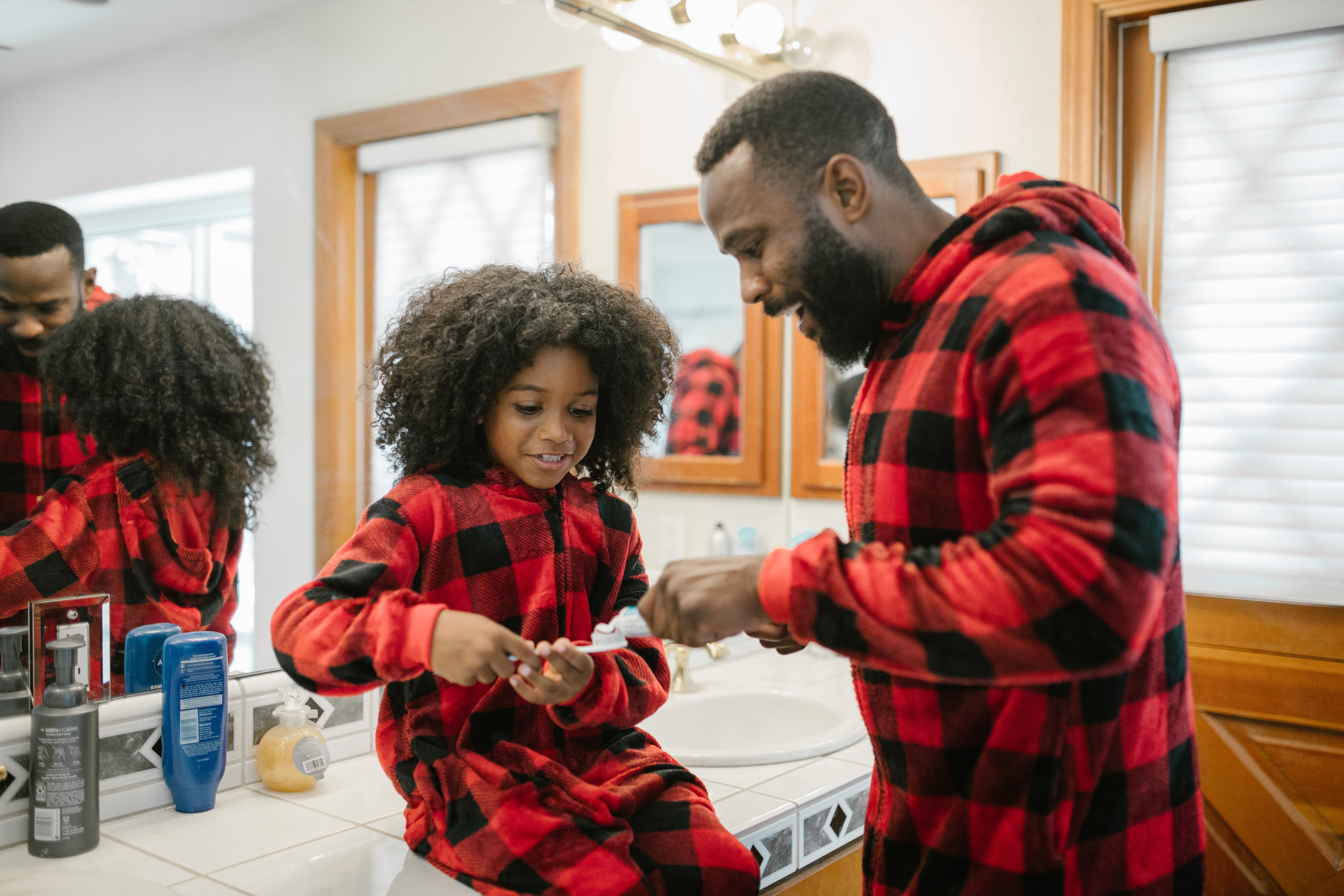
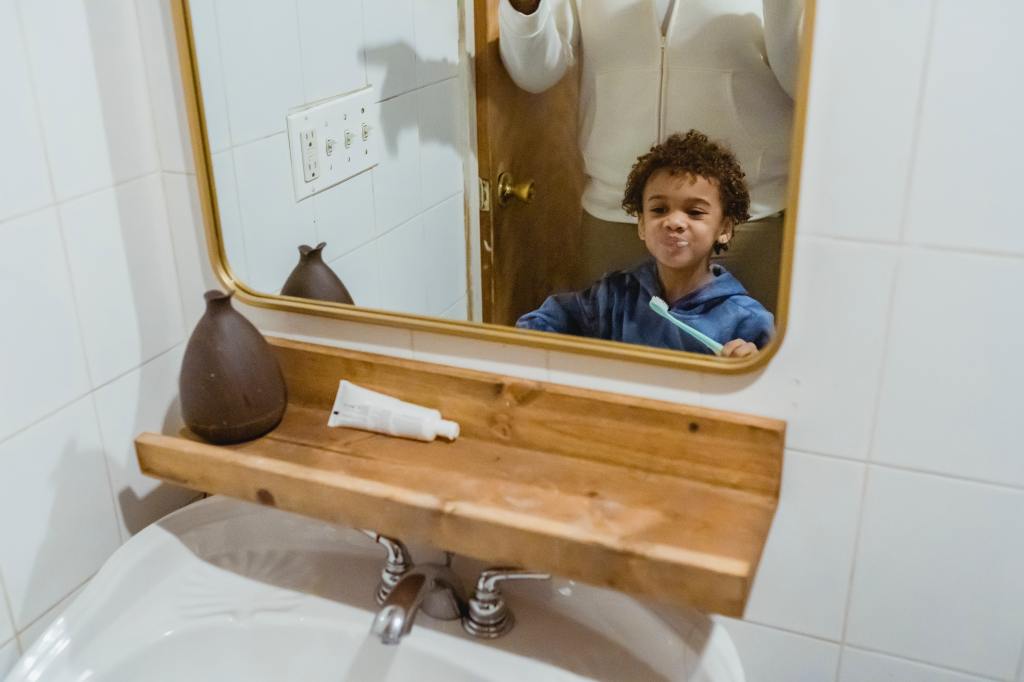
Brushing Teeth Like My Daddy
So how do you guide your child toward positive oral healthcare?
Here are some tips you’ll find helpful —
Dental Healthcare Tips For Your Child’s Toddler And Preschool Years
Show your toddler how to brush their teeth by letting them watch you. Use a small soft bristle toothbrush with a flexible head with a rice grain size amount of fluoride toothpaste.
Think of the mouth like a clock, start on the top right brushing from the back to the front of their mouth. As you go around brush the cheek side, then lift their lip to brush the front teeth and then back to the cheek side. Then brush the roof of the mouth side and the tongue side. Brush the chewing and biting surfaces last.
Begin a regular flossing routine. The best time to start is when your child has 2 teeth that are touching, and floss all their teeth before brushing. Flossing before brushing is a really good idea, so dislodged food particles can be washed away during brushing. A fun easy way to floss is with either the hand held flossers in cool colors and shapes or with waxed child-friendly flavored floss.
Start a routine by selecting a consistent time every night to floss and brush. Try 30 minutes before bed time every night. When you’re finished it’s a good time for cuddling or reading.
Begin a small reward system. Toddlers respond well to positive reinforcement. Think about small rewards like stickers, extra snuggle time or reading an extra story with them after brushing and before it’s light’s out for bed. This goes a long way to having an enjoyable night every night.
Our New Nightly Toothbrushing Saying – I Can and I Will
Don’t lose sight of your short term goals and the long term prize. Your goals get you to your prize which is life long dental health for your family. Also remember to have fun. Children love to have fun, so have fun with your child as you install in them good dental health habits that will last them a life time.
I Know My Daughter Likes The Taste Of Her Medicine
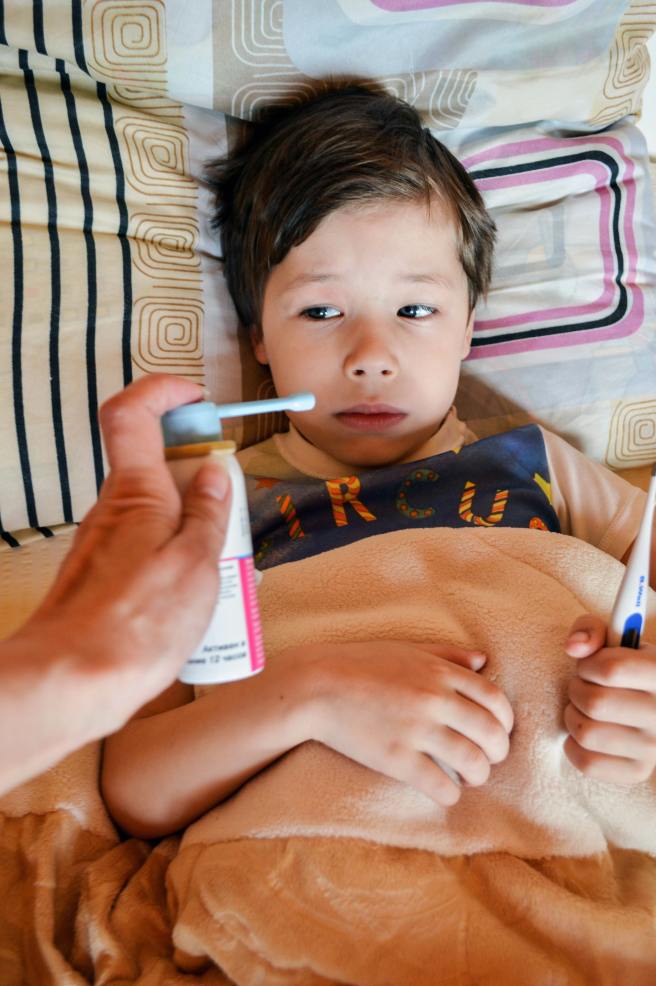
You know why your child asks for that pink or grape medicine when they’re sick, it’s because it tastes so good. The medicine tastes so good, and they’ll take it without a peep because of the sugar flavors which are added to the medicine.
There are also other medicines like asthma medicines, antihistamines and allergy medicines which can cause dry mouth by lowering the amount of saliva in the mouth. Saliva is important because it plays a part in helping to prevent cavities.
Whether your child needs to take medicine every day or is on a limited 7 or 10 day course here’s a few things to know —
Child-friendly Flavors
Depending on your child’s age and preference the top 6 medicine flavors are: Bubblegum, Grape, Cherry, Mint, Banana, and Vanilla.
My Children Always Ask For The Banana Flavor
If sugar free is available, ask your pharmacist if that flavor contains Xylitol. Xylitol is a sugar substitute and tooth friendly.
Medicine, Sugar and Teeth
Many of the medications contain sugar or sugar syrups to sweeten the taste. The longer and more frequently your child’s teeth are exposed to sugar, the greater the risk of cavities.
Another concern is that these sugared medicines are most often given right at nap time or bed time, which is when there is also a naturally occurring drop in saliva in the mouth.
Medicine, Dry Mouth, Saliva and Teeth
Asthma inhalers, nebulizers, antihistamines and allergy medicines decrease the amount of saliva in the mouth. They do this by decreasing the amount of saliva that is made by the glands.
These medicines are usually used ongoing leading to less saliva being produced so there is less saliva in the mouth, which is commonly referred to as dry mouth.
Saliva protects and coats the teeth while also washing away food particles and sugary liquids. When there is less saliva there is less protection for the teeth.
What’s A Parent To Do?
I’ve put together 3 suggestions which can help —
Give your child their liquid medicine between finishing a meal and nap time or bed time. This way you can brush their teeth after the medicine or use a wash cloth to wipe their mouth and teeth. Keep up with your regular brushing routine.
If your child has asthma you can rinse their mouth with water after their breathing treatment or using their inhaler. Then you can brush on your regular schedule.
Speak with your pharmacist about sugar free medicine options.
After My Medicine Mom’s Going To Brush My Teeth
Even My Son’s Asthma Medicine Can Affect His Teeth
I’m Going To Remember To Clean Their Teeth After This Medicine
My Daughter Likes The Vanilla Flavor Medicine
Rest assured you are doing your best and your child needs their medicine.
What’s your child’s favorite flavor? What are your hacks? We’d really like to hear from you!













































 kidstoothhotline